DbcultAccessing Vault...
Cult Review
Senior Film Conservator
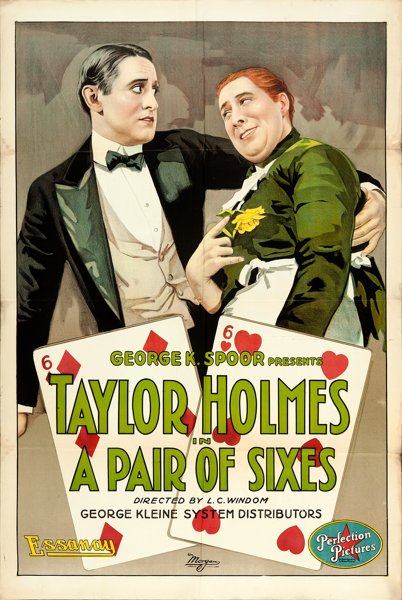
Plot in a sentence: two industrial kings bet their dignity on a poker hand; the loser becomes the winner’s butler, and the winner becomes the laughing-stock of his own household.
There is a moment—roughly three reels in—when Robert Conness, as the freshly minted manservant Boggs, pours champagne for his rival with the mechanical precision of a man counting down to detonation. The camera lingers on the bottle’s trembling neck; the bubbles rise like tiny acts of rebellion. In that quivering second you realize A Pair of Sixes is not the drawing-room trifle its marketing promised. It is a silent stick of dynamite wrapped in white gloves and starched collars, sizzling under the floorboards of American capitalism.
The Digestive Pile Manufacturing Company—yes, that’s the actual name—produces something the intertitles never care to explain. We glimpse only hulking vats and conveyor belts that look suspiciously like torture racks for cabbage. The vagueness is genius: the film insists that empire itself is the product, empire measured in smokestacks and the throat-clearing bluster of men who confuse net worth with net identity. Johns and Nettleton, equal partners, have spent years trying to swallow one another whole. When negotiation fails, they settle on the most American of arbitration methods: five cards, one table, zero introspection.
Edward Peple’s source play (already a Broadway hit in 1914) understood that poker is the purest democratic farce—every man equal until the river card, after which equality can be sold by the hour. Director Charles J. McGuirk translates that ethos into visual language: the wager is filmed like a pagan rite, shot from below so the table becomes an altar and the kerosene lamp a votive candle. The sequence lasts barely ninety seconds, yet the intertitles hammer each syllable of the contract into our skulls: “Should either party breathe a whisper of this pact, he shall forfeit five thousand dollars—more than the yearly salary of every face in this room.” The number is so specific it vibrates; you can almost see the Depression looming in the distance, licking its lips.
Once Boggs loses, the film relocates from the clangorous factory to the mausoleum of Nettleton’s mansion, a place so overdressed it seems to suffocate on its own drapery. The butler’s black tailcoat becomes a portable prison; every button is a rivet in the hull of a sinking identity. Conness—mostly remembered today for Danger Trail—gives a masterclass in micro-gesture: the way Boggs’s spine straightens when addressed by his first name, the fractional pause before answering “sir.” It’s a performance calibrated for the back row of a 1918 nickelodeon, yet it feels intimate enough to smell the stove polish on his shoes.
Meanwhile, Taylor Holmes’s Nettleton swells like a bullfrog in mating season, convinced that owning a man is the same as conquering him. Holmes was a veteran farceur, and he knows the secret: play the absurdity dead straight. Every time he berates Boggs for a smudge on the silver, his left eyebrow arches with the certainty of someone who has never imagined the world upside-down. That certainty is the film’s target; the bullet is Florence Cole.
Alice Mann’s Florence arrives in a gown the color of spilled merlot, framed against a doorway like a question mark nobody wants to answer. She is introduced as “the only stakeholder who never bought a share,” and the line lands like a slap. Mann—whose career ranged from Rebecca of Sunnybrook Farm to The School for Scandal—plays her as a woman who has already read the last page of every book in the room. When she discovers Boggs in livery, her eyes perform a rapid ledger: shame, love, fury, strategy. The film’s emotional pivot is not the revelation of the wager; it’s the moment she decides the wager itself is void.
Her weapon? Contract law, flavored with a dash of sexual geopolitics. In a bravura scene set in the moonlit conservatory—where ferns resemble green conspirators—Florence calmly informs Nettleton that a debt incurred through poker is “a promise written on cigarette smoke.” The intertitle glows yellow against a black background, as though the film itself is startled by its own audacity. She is correct, of course; in 1918 most courts would laugh such a clause into oblivion. Yet the triumph is not legal, it is existential: she unmasks the entire charade of male honor as a children’s game played with expensive toys.
McGuirk borrows from Sennett and Lubitsch in equal measure. Watch the dinner sequence: a twelve-foot table, a battalion of cutlery, and a butler who must serve soup while plotting psychological warfare. The camera positions itself at the far end so the table elongates into a battlefield; each course is a skirmish. When Boggs “accidentally” tips soup into Nettleton’s waistcoat, the splash is filmed in profile, a custard-yellow comet against starched white. The moment is pure slapstick, yet the stakes feel life-or-death because we have seen the contract—literally—burning in Boggs’s brain.
Color tinting amplifies the tonal whiplash: amber for daytime pomposity, sea-blue for clandestine huddles, crimson for the climactic exposure. Archives list the surviving print as “incomplete,” but even the truncated 46-minute version on YouTube carries the rhythm of a well-dealt deck. The sea-blue night scenes—shot in a garage in Fort Lee, New Jersey—carry a humid tremor, as though the film stock itself is sweating through its own scam.
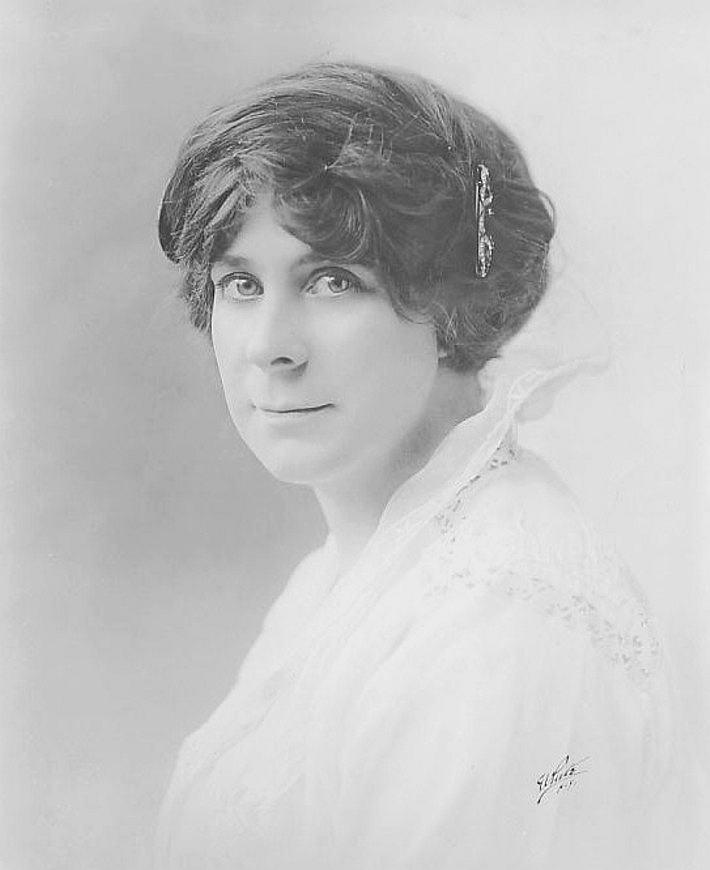
Silent cinema is littered with flappers and vamps who pay for their appetites in last-reel contrition; A Pair of Sixes refuses that debt. Florence does not beg forgiveness for derailing the boys’ club—she cashes in her chips. In the closing shot she leads Boggs by the hand out of the mansion’s porte-cochère, striding toward a sun-drenched medium shot that feels suspiciously like a new century. Nettleton is left amid his toppled chrysanthemums, clutching a fine-china teacup that cracks in his grip. The intertitle, almost whispered: “Some pots are too fragile for the kettle to call black.”
It’s a rare pre-Code moment before the Code existed, a moral victory claimed not by penitence but by exit velocity. Compare it to A Florida Enchantment where gender subversion ends in exile, or A Woman’s Way where the heroine must retreat to the mountains. Here, the lovers walk onto a public street, and the film does not bother to cut away. The camera stays stubbornly still, as if to say: let the audience squirm in the glare of an unclosed door.
Robert Conness never broke into the top tier of silent idols—he lacked Valentino’s cheekbones and Fairbanks’s biceps—but his Boggs is a study in compressed rage. Watch the way he polishes a candelabra: circular strokes that accelerate until the silver becomes a hypnotic disc, reflecting Nettleton’s bloated face in fish-eye distortion. The image lasts maybe two seconds, yet it lands like a political cartoon. Similarly, C.E. Ashley as the lawyer Vanderholt oozes oleaginous charm; his smile arrives a quarter-second too early, like a telegram announcing its own bad news.
Virginia Bowker’s Mrs. Nettleton, meanwhile, is the film’s secret weapon. She appears to be ornamental—lace handkerchief, wounded dove—but she weaponizes her own presumed fragility. During the staged seduction scene she reclines on a fainting couch, eyes half-lidded, while Boggs looms above her. The blocking evokes The Vampires: The Terrible Wedding, yet the power dynamic flips: she controls the gaze, he supplies the scandal. When Nettleton barges in, her scream is not of terror but timing—the sound of a guillotine she herself has released.
Viewed today, the film feels like an ur-text for zero-hour contracts and non-disparagement clauses. The $5,000 gag-order anticipates the modern NDA; the butler uniform is the ancestor of the rideshare driver’s glowing windshield icon. The poker wager—arbitrary, booze-soaked, binding—mirrors the algorithmic lottery of platform labor where a single customer rating can exile a worker to the wilderness. McGuirk could not have foreseen DoorDash, yet the DNA aligns: livelihood reduced to a shuffle of chance, dignity tucked into the fine print.
Even the comedy of manners feels freshly sharpened in an age when billionaires cosplay as astronauts and ranch hands alike. Nettleton’s triumphalism—his insistence that ownership equals identity—could slide seamlessly into a Twitter bio. The only thing missing is the blue checkmark.
For decades A Pair of Sixes was presumed lost, a casualty of nitrate rot and studio indifference. Then in 2019 a 35mm paper-print surfaced in the Library of Congress, misfiled under Ann’s Finish. Digital restoration added back the amber-sea-blue tinting scheme, though two reels remain missing. The current Kino Blu-ray runs 46 minutes; even truncated, it packs more satirical voltage than many three-hour prestige sagas.
Among cinephiles, the film has become a secret handshake—mentioned in the same breath as Die Abenteuer des Kapitän Hansen for its breezy nihilism, or Vem sköt? for its poker-faced social critique. It screens occasionally at MoMA, usually accompanied by a Toy-piano rendition of Maple Leaf Rag that makes the audience feel as if they are inside a cartoon about their own obsolescence.
Great farce should leave bruises beneath the laughter; A Pair of Sixes bruises like a blackjack wrapped in a joke. It understands that every wager is a small crucifixion of the self, every servant’s tray a potential guillotine. Nearly eighty years before Trading Places it staged class warfare as bedroom comedy, and it did so without the safety net of a redemption arc. When Florence and Boggs stride into daylight, they do not promise a better world—only a world where the next deal belongs to them.
That, in 1918 or 2024, is the rarest jackpot of all.
Verdict: a razor-edged silent gem that anticipates every modern workplace satire, restored to bittersweet life. Deal yourself in.
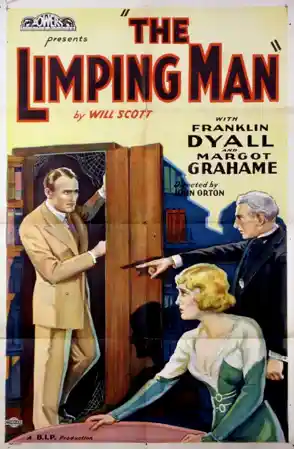
IMDb —
1931
Community
Log in to comment.