DbcultAccessing Vault...
Cult Review
Senior Film Conservator
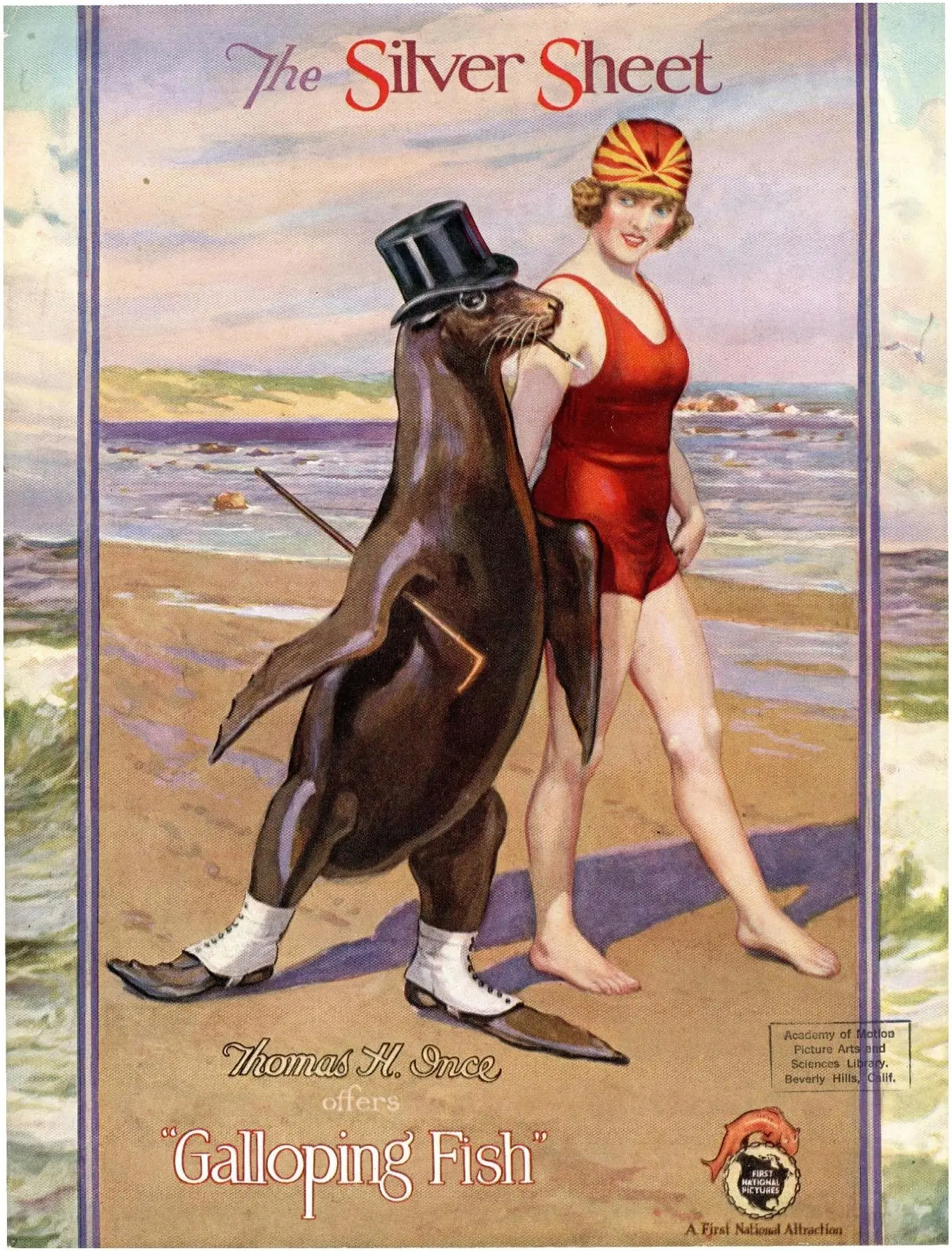
Step back into the roaring twenties, a cinematic epoch brimming with burgeoning innovation and unbridled comedic spirit. Amidst this vibrant landscape, a particular gem, The Galloping Fish, emerges as a testament to the era's unique blend of domestic farce, slapstick genius, and utterly improbable plotlines. Directed by Del Andrews and written by the inventive duo of Frank R. Adams and William Lambert, this 1924 silent film is far more than a mere relic; it's a boisterous, charming, and surprisingly ambitious foray into the realm of the absurd, propelled by a stellar cast and an aquatic star who truly steals the show. It asks us to suspend disbelief, not just willingly, but joyfully, as it cascades from a simple marital tiff into a full-blown hydro-apocalypse, complete with a menagerie of displaced circus animals and a stubbornly professional taxi driver.
Our narrative commences with Freddy Wetherill, portrayed with delightful exasperation by the inimitable Syd Chaplin, finding himself in the unenviable position of spousal exile. A nascent quarrel with his bride, Hyla (the wonderfully expressive Louise Fazenda), at her mother's idyllic beach cottage culminates in Freddy's ignominious dispatch homeward, alone. This initial domestic squabble, a common enough cinematic trope of the period, quickly veers into uncharted territory. Freddy, seeking solace or perhaps just distraction from his conjugal woes, stumbles into a vaudeville theater. It's here that the film truly finds its outlandish rhythm, introducing us to Undine, "the diving Venus," played with ethereal grace by Lucille Ricksen, and her truly extraordinary partner, Bubbles, the trained seal, brought to life by the remarkable Freddie the Seal. The sheer audacity of featuring a marine mammal as a central character in a silent comedy immediately sets The Galloping Fish apart, elevating it beyond the standard romantic entanglements of its contemporaries.
The plot thickens with a chance encounter outside the theater. Freddy crosses paths with Undine’s fiancé, George Fitzgerald (Ford Sterling, whose comedic timing is impeccable), a man in a desperate predicament. George is attempting to hide Bubbles from a tenacious bill collector, armed with an order of attachment stemming from an unpaid hotel bill. This sequence, fraught with frantic subterfuge and close calls, showcases the masterful physical comedy inherent in silent cinema. The frantic efforts to conceal a large, intelligent seal from a persistent creditor provide ample opportunity for intricate sight gags and escalating tension, all without a single spoken word. It's a ballet of silent panic and ingenious, if ill-conceived, solutions, setting a precedent for the escalating absurdity that defines the film's latter half. The burgeoning camaraderie between Freddy and George, born out of this shared, ridiculous crisis, forms an unexpected but pivotal bond, laying the groundwork for the ensuing, even more preposterous, adventures.
Just as Freddy believes his life couldn't possibly become more convoluted, a telegram arrives, plunging him into a new stratum of farcical intrigue. His dying, exceedingly wealthy uncle, Cato Dodd (John Steppling), expresses a fervent desire for Hyla to nurse him through his final days. The stakes are immediately raised: Freddy's inheritance hangs precariously in the balance, contingent upon satisfying his eccentric uncle's wishes. Here, the film deftly shifts gears from mere slapstick to a more elaborate comedic setup involving mistaken identity and a desperate attempt to secure financial stability. Freddy, ever the opportunist in a bind, hatches a plan as audacious as it is ill-advised: he will substitute Undine for Hyla, presenting the "diving Venus" as his dutiful wife. George, ever loyal and perhaps a little too easily swayed, is roped in as Freddy's "valet," ensuring that the entire charade remains under their watchful, albeit clumsy, control. And, naturally, Bubbles, the unwitting catalyst and star performer, must accompany them, adding an unpredictable element to an already precarious deception.
This segment of the film thrives on the inherent humor of sustained deception. The delicate dance of maintaining the illusion, particularly with a vibrant vaudeville performer attempting to pass as a demure, nursing wife, provides a rich vein of comedic potential. The interactions between the ailing Uncle Dodd, the faux-Hyla (Undine), the "valet" (George), and the ever-present, potentially disruptive seal are a masterclass in silent film performance, relying heavily on exaggerated gestures, expressive facial work, and expertly timed reactions. Syd Chaplin, known for his physical prowess and comedic timing, navigates this labyrinthine plot with a compelling blend of desperation and misguided confidence. The tension of discovery looms large, amplified by the inevitable arrival of the real Hyla, who, driven by a potent cocktail of jealousy and suspicion, is hot on Freddy's trail. This classic setup of the jealous spouse pursuing her errant husband finds a uniquely aquatic twist in
IMDb 4.9
1913
Community
Log in to comment.