DbcultAccessing Vault...
6.3/10
Senior Film Conservator
A definitive 6.3/10 rating for a film that redefined the boundaries of cult cinema. A Quiet Street remains a cornerstone of transgressive art.
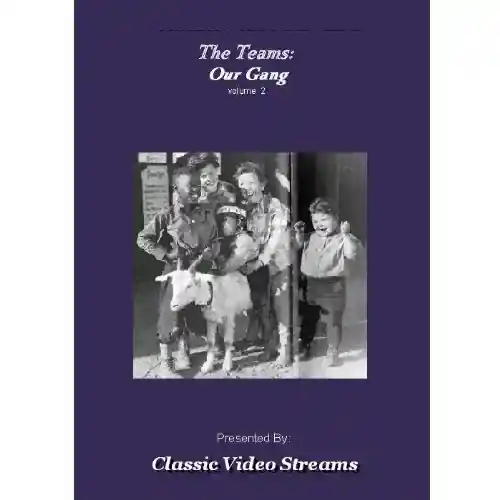
Stepping back into the nascent days of cinema, one often encounters gems that, despite their brevity and silent nature, speak volumes about the human condition, particularly through the lens of childhood. A Quiet Street, a delightful early offering from the inimitable Hal Roach, is precisely such a film. It’s a vibrant snapshot of youthful exuberance and misguided mischief, a testament to the timeless appeal of children navigating a world often too large for them. This particular entry, featuring the nascent talents of what would soon become the beloved ‘Our Gang’ or ‘Little Rascals,’ offers a compelling blend of slapstick, situational irony, and an underlying current of genuine street-level realism that elevates it beyond mere comedic frolic. Its narrative, deceptively simple, unfurls a scenario born from juvenile bravado and escalating paranoia, culminating in an entirely unexpected encounter with adult-world criminality.
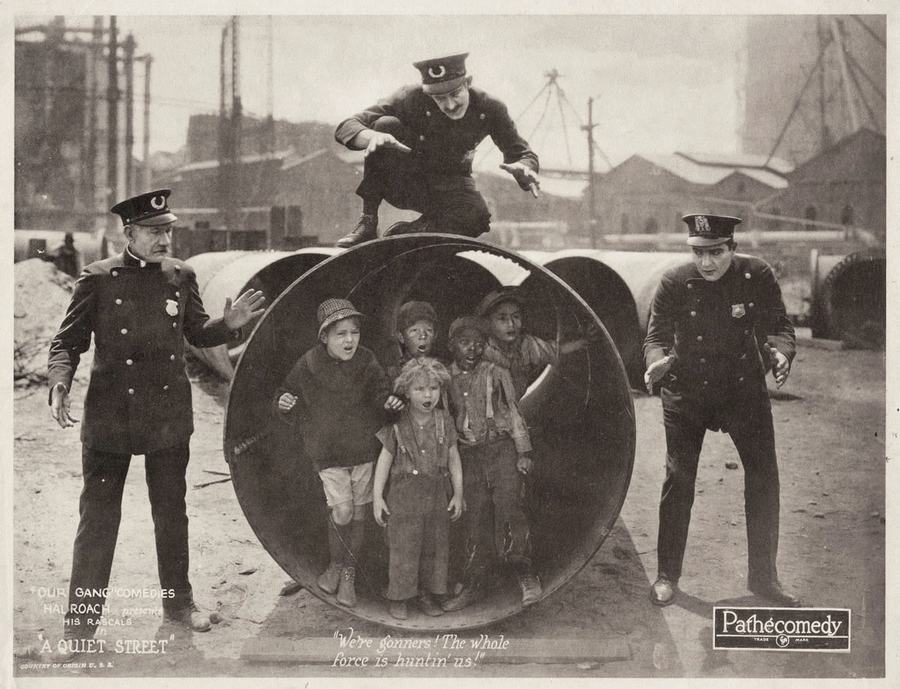
The film commences with the gang – a boisterous collection of spirited youngsters led by figures like Ernest Morrison, affectionately known as 'Sunshine Sammy,' and the precocious Peggy Cartwright – finding themselves in a predicament. They’ve engaged in a street skirmish, a common enough occurrence in the rough-and-tumble urban landscapes of the era, and have, perhaps a touch too vigorously, beaten up the son of a police officer. This act, whether fueled by youthful indignation or simple playground rivalry, sets the stage for a classic case of mistaken identity and escalating anxiety. The brilliance of Roach's storytelling lies in how he capitalizes on this initial transgression, allowing the children’s vivid imaginations and burgeoning sense of guilt to paint a picture far more dramatic than reality. A police patrol car, merely performing its routine duties, becomes an ominous harbinger of their impending doom, a direct consequence of their perceived wrongdoing. This immediate leap to self-incrimination, the frantic whispers and wide-eyed panic among the children, is exquisitely rendered through their expressive silent performances, a hallmark of the era's acting.
The ensuing chase sequence, a core comedic engine of the film, is a masterclass in physical comedy and timing. The children, convinced they are being pursued for their 'crime,' scramble through the labyrinthine alleys and bustling thoroughfares of their neighborhood. What makes this chase particularly compelling isn't just the sight gags, though there are plenty of delightful ones, but the palpable sense of urgency and fear that drives the young protagonists. Their efforts to evade the perceived long arm of the law are both hilarious and, in a strange way, endearing. They are children, after all, operating on a heightened sense of justice and consequence, their world view dramatically inflated by their recent actions. The film doesn't just show them running; it invites the audience to understand their reasoning, however flawed, and to empathize with their predicament. This human element, even in a silent comedy, is what gives A Quiet Street its enduring charm.
The narrative's true genius, however, unfolds as the children's frantic evasion inadvertently steers them into a far more significant, and genuinely dangerous, situation. The police, it turns out, are not after the gang for a playground scuffle. Their actual quarry is 'Red Mike,' a notorious criminal whose presence introduces a sudden, jarring shift in tone. This pivot is a stroke of storytelling brilliance. What begins as a lighthearted exploration of childhood misadventure abruptly collides with the gritty realities of adult crime. The juxtaposition of the children's innocent, albeit misguided, fear with the genuine threat posed by Red Mike creates a powerful dramatic irony. The audience, privy to the true nature of the police pursuit, watches as the children stumble into a scenario far grander and more perilous than their own minor transgression. This unexpected narrative turn is reminiscent of the way life often throws unexpected curveballs, where small choices can lead to large, unforeseen consequences.
The film's exploration of this theme – the accidental involvement of innocents in adult affairs – is handled with a delicate touch, balancing the inherent danger with the comedic sensibilities of the era. The children, still largely unaware of the true gravity of the situation, continue to react through their lens of self-preservation, their actions often inadvertently aiding or hindering the police's real efforts to apprehend Red Mike. This creates a delightful tension, as the audience wonders how these pint-sized protagonists will extricate themselves, or indeed, contribute to the resolution of a conflict that is entirely beyond their initial scope. The performances here are critical; the young cast, under Hal Roach's astute direction, manages to convey both the childlike innocence and the burgeoning awareness of danger, often through subtle gestures and wide-eyed reactions that transcend the lack of dialogue.
The cast of A Quiet Street is a formidable ensemble, particularly considering their tender ages. Peggy Cartwright, a captivating presence, brings a certain vivacity to her role, her expressions often conveying more than words ever could. Ernest Morrison, ‘Sunshine Sammy,’ is a natural, his comedic timing already evident, laying the groundwork for his future stardom as one of the original 'Little Rascals.' Dick Gilbert and Charles Stevenson, though often in supporting roles, add depth to the adult world that the children inhabit and occasionally disrupt. Mickey Daniels, another future Our Gang stalwart, exhibits the kind of impish charm that would define his career. The presence of Ernie Morrison Sr. (Ernest Morrison's father) and other seasoned actors like Jack Hill, Jack Davis, Gabe Saienz, Jackie Condon, William Gillespie, and Clara Guiol, provides a solid foundation for the young stars to shine. These adult actors, with their exaggerated gestures and clear characterizations, perfectly complement the youthful energy, creating a believable, if heightened, cinematic world. Their reactions to the children's antics, often a mix of exasperation and amusement, serve to ground the film in a relatable reality.
Hal Roach, a visionary in comedic filmmaking, along with H.M. Walker, crafted a screenplay that is lean, efficient, and perfectly paced. The story unfolds with a briskness that belies its silent nature, each scene building upon the last with a clear progression of action and emotion. Roach’s genius lay in his ability to extract genuine humor and pathos from everyday situations, particularly those involving children. He understood the rhythm of slapstick, the power of a well-timed pratfall, and the universal appeal of youthful rebellion. This film, like many of his early works, demonstrates his keen eye for talent and his masterful control over the comedic form. It’s a testament to the fact that compelling storytelling doesn't require elaborate dialogue or complex special effects; sometimes, all it takes is a group of spirited children and a simple misunderstanding to create cinematic magic.
A Quiet Street stands as a fascinating artifact of early American cinema, a period when the very language of film was still being defined. It predates the full blossoming of the 'Our Gang' series, offering a glimpse into the raw talent and foundational ideas that would later captivate audiences for decades. The film’s silent format, far from being a limitation, enhances its charm. It forces the viewer to pay closer attention to visual cues, to the exaggerated expressions and physical comedy that were the lingua franca of the era. This reliance on visual storytelling is a powerful reminder of cinema's roots, a time when images alone had to carry the entire weight of emotion, plot, and character.
Comparing it to other films of its time, A Quiet Street feels distinct in its focus on children as central protagonists driving a plot of consequence, rather than merely supporting adult narratives. While films like Divorce and the Daughter or The Rise of Jenny Cushing delved into the complex emotional landscapes of adult relationships and societal pressures, A Quiet Street grounds itself in the more immediate, tangible world of childhood mischief. Its thematic resonance, though lighter, is no less significant. It captures the universal experience of childhood guilt, the thrill of forbidden adventure, and the often-humorous collision of innocent intentions with unforeseen outcomes. Unlike the intense drama of The Hindu Nemesis or the sophisticated social commentary of The Polish Dancer, this film embraces a more whimsical, yet equally effective, form of narrative engagement.
The technical aspects of the film, while rudimentary by today's standards, are remarkably effective. The cinematography, though static compared to later innovations, captures the energy of the children and the urban setting with clarity. The editing is crisp, ensuring that the comedic beats land effectively and the narrative momentum never falters. It’s a testament to the skill of early filmmakers who, despite limited technology, understood the fundamentals of visual storytelling. The film's setting, evoking a sense of bustling early 20th-century urban life, provides a rich backdrop for the children's antics. The anonymous streets, the crowded sidewalks, and the imposing presence of the police create a believable environment for both the comedic chase and the dramatic confrontation with Red Mike. This attention to detail in creating a credible world, even a silent one, contributes significantly to the film's immersive quality.
At its heart, A Quiet Street explores themes that resonate far beyond its silent frames. The concept of perceived guilt versus actual culpability is central. The children’s self-incrimination, born from a relatively minor act, highlights the magnified sense of justice and consequence that often governs a child’s world. Their frantic attempts to escape are not just for comedic effect; they are a genuine manifestation of fear and a desire to avoid punishment. This psychological element, subtle as it may be, adds a layer of depth to the otherwise straightforward comedic plot. The film also touches upon the serendipitous nature of life, where seemingly unrelated events can converge with dramatic results. The gang's accidental encounter with Red Mike is a perfect illustration of this, demonstrating how the universe often has its own plans, irrespective of individual intentions. This unexpected convergence is what elevates the film from a simple chase comedy to something more complex and engaging.
The film’s portrayal of the police is also noteworthy. They are not depicted as bumbling figures, nor as overly menacing. Instead, they represent an impartial force of order, pursuing a genuine criminal, oblivious to the children’s self-imposed panic. This realistic portrayal of law enforcement, even within a comedic context, lends a certain gravitas to the proceedings. It reminds the audience that while the children’s antics are amusing, there are real-world stakes at play. The contrast between the children’s petty crime and Red Mike’s more serious offenses underscores this point, creating a nuanced understanding of justice, even in a film primarily aimed at entertainment. It’s a subtle yet effective way of injecting a degree of realism into a largely farcical narrative, making the world of A Quiet Street feel more robust and believable.
In an era dominated by dramatic narratives like Makkhetes or romantic entanglements akin to Tea for Two, A Quiet Street carved out its niche by celebrating the chaotic, often hilarious, world of childhood. It offers a refreshing counterpoint to the more serious or adult-oriented fare, reminding audiences of the simple joys and complex emotional landscapes of youth. Its influence on subsequent children's comedies, particularly the 'Our Gang' series, is undeniable. It established a template for portraying children as active agents in their own stories, not just as accessories to adult plots. This innovative approach helped shape the future of family entertainment and cemented Hal Roach's reputation as a pioneer in the genre. One could even draw parallels to the spirited independence seen in characters from films like Little Miss Nobody, though with a distinct comedic twist.
The enduring appeal of A Quiet Street lies in its universal themes and its expertly crafted humor. Despite the passage of a century, the film’s portrayal of childhood mischief, escalating paranoia, and accidental heroism remains remarkably fresh and relatable. It speaks to the inner child in all of us, recalling a time when a simple misunderstanding could feel like the end of the world, and an unexpected turn of events could lead to unforeseen adventures. The performances by the young cast are captivating, their expressive faces and energetic movements conveying a wealth of emotion without uttering a single word. This ability to communicate so effectively through purely visual means is a testament to their talent and to Hal Roach’s masterful direction. The film’s brevity ensures that it never overstays its welcome, leaving the viewer with a sense of joyous satisfaction and a renewed appreciation for the ingenuity of early cinema.
Watching A Quiet Street today is not just an exercise in historical appreciation; it’s a genuinely entertaining experience. It offers a window into a bygone era, allowing us to witness the foundational elements of comedic filmmaking that continue to influence storytellers today. From the intricate dance of mistaken identity to the thrill of an unexpected confrontation, the film delivers a compact yet potent narrative punch. It demonstrates that even the simplest premises, when executed with skill and heart, can yield rich and lasting cinematic rewards. Its charm is undeniable, its historical significance profound, and its ability to evoke laughter and wonder, even after all these years, truly remarkable. It stands as a vibrant testament to the power of silent cinema and the timeless magic of childhood stories. In essence, while the street may have been quiet, the film itself speaks volumes, echoing through the annals of film history with a delightful, mischievous chuckle.
The film's impact, though perhaps not as overtly dramatic as The Accident Attorney or as grand in scope as Cotton and Cattle, is deeply felt in the realm of character-driven comedy. It emphasizes the charm of personality over plot complexity, a characteristic that would define many successful comedies for decades to come. The naturalistic, if exaggerated, performances of the children set a precedent for future child actors, showcasing that young talent could carry an entire film. This focus on authentic, albeit comedic, juvenile behavior was groundbreaking, distinguishing it from films that might use children merely as props or symbols. Much like the earnest endeavors in The Path of Happiness or the familial bonds in Little Pal, A Quiet Street finds its strength in the genuine, if sometimes chaotic, interactions of its characters. Its influence, while subtle, is woven into the fabric of comedic filmmaking, reminding us that sometimes the biggest adventures begin with the smallest of misunderstandings on an otherwise quiet street.
IMDb 7.3
1926
Community
Log in to comment.