DbcultAccessing Vault...
7/10
Senior Film Conservator
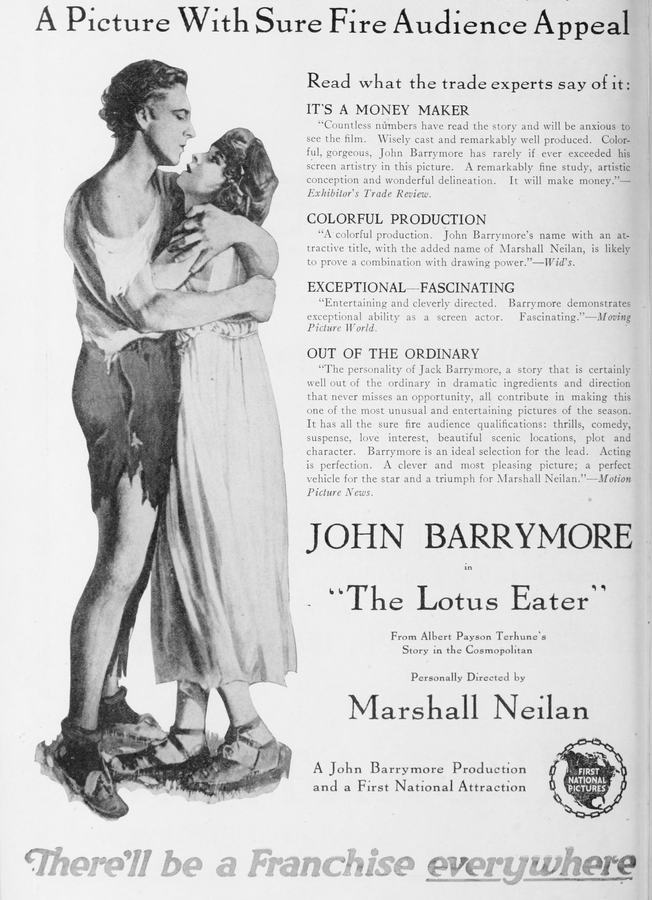
A definitive 7/10 rating for a film that redefined the boundaries of cult cinema. The Lotus Eater remains a cornerstone of transgressive art.
Imagine, for a moment, that The Great Gatsby collided with Tabu somewhere above the Pacific, scattering typewritten pages and palm fronds across the International Date Line. The wreckage that washes ashore is The Lotus Eater—a 1921 silent so ahead of its psychic curve it feels like it was dreamt by tomorrow and merely developed by yesterday. Paramount released it during the same season audiences guzzled bootleg gin in blind tigers, yet its true intoxicant is metaphysical: How do you divorce yourself from a life you never actually married?
Director Robert Z. Leonard—better known for drawing-room romances—here swaps lace for salt-stiff linen, trading parquet floors for tidal flats. His camera, pregnant with wide-angle possibility, glides over breakers the way a fingertip tests a scar. The opening iris-in reveals Jacques Leroi (J. Barney Sherry) fastening his suspenders inside a gondola that resembles a prison exercise yard with portholes. He is fleeing not a woman but the idea of a woman: the concept that conjugality equals identity. Below him, the Pacific is a sheet of hammered pewter; above, cumulus castles drift like unpaid bills. The metaphor is blunt yet elegant—flight as refusal, the sky as unpaid emotional tab.
When the airship’s skin ruptures—an explosion rendered through double-exposed nitrate that looks like a chrysanthemum of black powder—Jacques plummets into a realm that has surgically removed the concept of possession. Islanders greet him with the languid curiosity reserved for driftwood. Dialogue cards, lettered in grass-green tint, translate their language as “We are the Unrushed.” The phrase alone deserves a permanent residency in the lexicon of utopian studies.

Cinematographer Allen Siegler shoots the atoll like a lover afraid to blink: lagoon rendered in aquatint blues, sand so white it seems to hum. Nudity is implied rather than displayed—ankle-length pareus, pearl-strung hair, torsos bronzed by the forgiving sepia of orthochromatic stock. The sensuality is subdermal; you absorb it through your own sun memory rather than your eyes. One intertitle reads “He tasted a fruit that made yesterday taste like rust,” and you swear you can taste it too—something between mango and amnesia.
Enter Dorothy Mackaill as Loma, the chieftain’s daughter whose eyebrows carry the diagonal scepticism of 1920s modernity. She is no noble savage; she is a savage critic of nobility. Their courtship unfolds in a montage that prefigures The Lotus Woman yet outflanks it in sincerity: shared fishing nets, synchronized fire-making, a moonlit dance where the camera pirouettes 360 degrees, stitching horizon to horizon until gravity forgets its job. You realise love is being redefined from a contract to a climate.
But conscience, that Protestant house-guest, knocks. Jacques receives word—via a bottle, what else?—that his estranged wife has attempted self-harm back in Manhattan. The ethical algebra is brutal: stay and save himself, or leave and attempt to save another who may not want saving. The tribe offers no advice; they simply mirror his anxiety in conch-shell harmonies, as if to say “Whatever you decide becomes the weather.” The farewell sequence is a masterclass in visual understatement: no tearful close-ups, only the sound of outriggers parting water, the horizon swallowing his silhouette like a closing parenthesis.
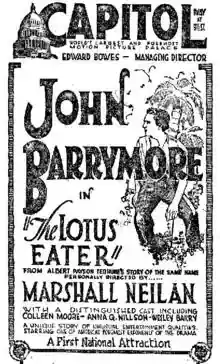
New York, upon re-entry, is a cubist fever dream. Superimposed ticker tape scrolls across his face; elevated trains screech like iron pigs. Leonard intercuts Jacques’ memories of coral lagoons with steam grates and neon crucifixes, producing a stroboscopic nausea that anticipates Man with a Movie Camera by eight years. The marriage reconciliation scene—shot in a single take inside a brownstone parlour—lasts four minutes yet feels like forty. Sherry’s performance modulates from pleading to catatonia without a single exaggerated gesture; his eyes become two unmailed letters.
John Barrymore, fourth-billed but cosmic in presence, cameos as Jacques’ brother, a Wall Street necromancer who tries to re-enlist him in the religion of accumulation. In one close-up—framed against a stained-glass skylight—Barrymore’s smirk corrodes into dread, as if he suddenly recognises the abyss inside his own portfolio. The moment lasts maybe five seconds, yet it seeds the entire film’s moral argument: happiness cannot be leveraged.
Colleen Moore, still a year away from trademarking the bob, plays a stenographer who types Jacques’ dictated memoirs. She is our surrogate ear, blinking back disbelief as he describes a world without ledgers. Her silent laughter—eyes sparkling above a hand raised to hide dental work—communicates the film’s subtext: if Eden exists, why do we keep misplacing the map?
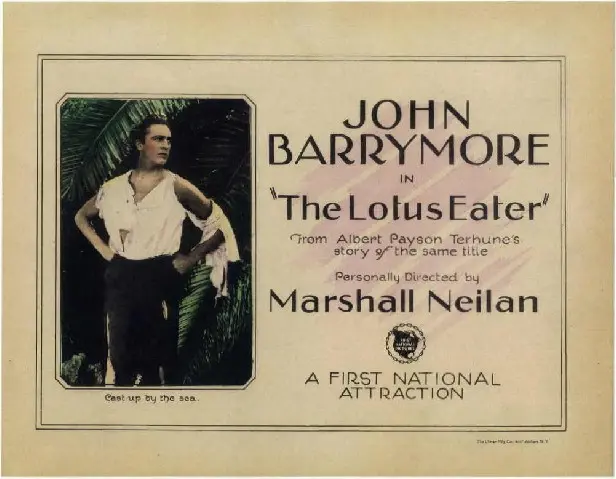
Scenario credits split between Albert Payson Terhune—yes, the future Lad: A Dog sentimentalist—and Marion Fairfax, one of the few female power brokers in scenario departments. Their collaboration yields dialogue cards that read like haikus carved into driftwood: “A heart without luggage travels faster than the wind.” Together they adapt a 1918 Saturday Evening Post short story into a philosophical epic that outruns its pulpy bones.
Compare the script’s moral ambiguity to The Battler or Was He a Coward?—films that punish wanderlust with Victorian comeuppance. The Lotus Eater refuses such moral arithmetic. Neither island nor city is demonised; both simply reveal what you bring to them.
For decades the film existed only in a 9.5 mm Pathescope abridgement, missing two reels and any reference to the wife’s fate. Then in 2019 the San Francisco Silent Film Festival unearthed a 35 mm Czech nitrate print with Czech & Slovak intertitles. The restoration—completed by L’Immagine Ritrovata—returned the golden tinting and a two-tone teal/orange palette for day/night sequences. The new 4K scan reveals pore-level detail: sea-salt freckles on Mackaill’s clavicle, the mercury sheen on Barrymore’s pomade. A chamber ensemble led by Donald Sosin premiered a score fusing gamelan and jazz, bridging the narrative’s two worlds.
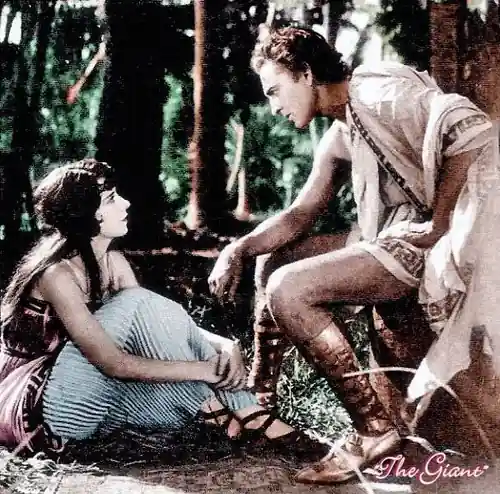
If you stream the ersatz YouTube transfers shot off a TV, you will miss the translucent overlays that make waves lap at the edges of interior frames. See it on a big screen or not at all; this is a film that breathes through its pores.
A century on, when digital nomads scroll Bali vlogs from fluorescent cubicles, The Lotus Eater feels less like fiction than prophecy. It asks the question we answer with every vacation rental booking: can geography perform surgery on the soul? And it replies—with a bittersweet smile older than talkies—that paradise is not a place but a grammar. You can visit, conjugate, even master it, yet the moment you try to possess it, the verb changes tense.
Between the twin cliffs of Champagne Caprice and Après lui stands this quiet earthquake of a film—shaking loose the sediment of our self-made cages, reminding us that sometimes the most radical act is to stay shipwrecked.
Seek it out. Let it wreck you, gently.
IMDb —
1926
Community
Log in to comment.