DbcultAccessing Vault...
Cult Review
Senior Film Conservator
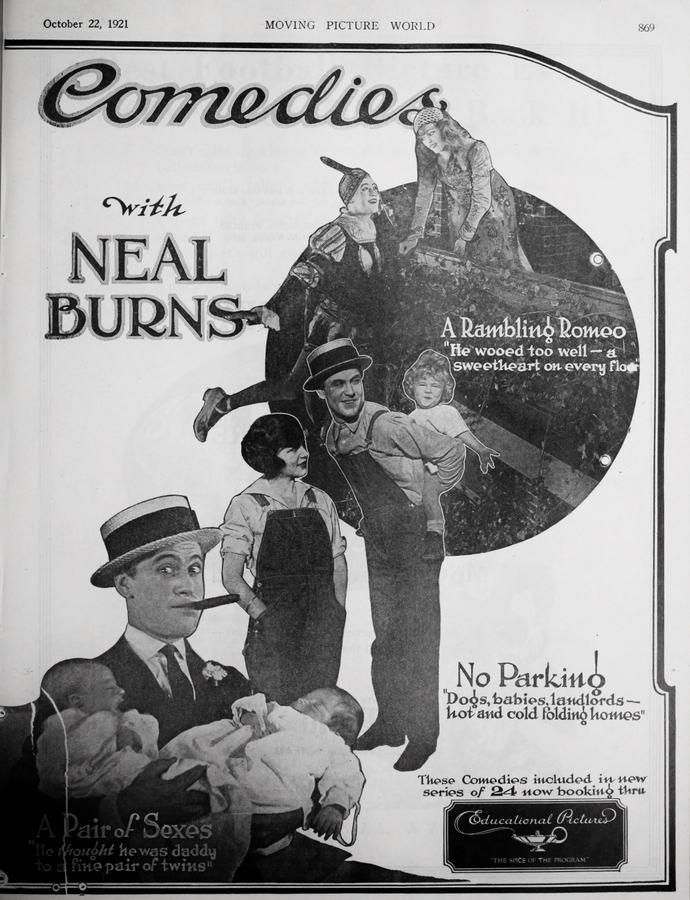
Stepping into the world of early 20th-century cinema, one often encounters narratives that, while seemingly straightforward on the surface, conceal layers of social commentary and comedic ingenuity. Such is the case with Frank Roland Conklin's 'A Rambling Romeo,' a film that, despite its brevity, delivers a masterclass in situational comedy and the charming chaos of human relationships. At its core, this silent gem presents a scenario so delightfully convoluted that it could only spring from the fertile imagination of a bygone era, where misunderstandings reigned supreme and a well-placed glance could spark a romantic inferno or a comedic catastrophe. It's a testament to the enduring appeal of the mistaken identity trope, elevated here by a protagonist whose good intentions pave a road straight to romantic pandemonium.
The plot, a beautifully intricate contraption, hinges on a seemingly simple act of friendship. Our titular 'rambling Romeo' — a character whose very moniker hints at his propensity for wandering into romantic predicaments — resolves to aid a bashful companion in securing the affection of his beloved. This is where the narrative begins its delightful spiral into absurdity. In an effort to articulate his friend's unspoken sentiments, or perhaps to simply break the ice, our hero finds himself in an unexpected and utterly bewildering predicament: he becomes engaged to the very sweetheart he was meant to woo for his reticent pal. The comedic timing of this development is impeccable, magnified by the crucial detail that this second, entirely accidental, engagement occurs almost immediately after he has solidified his own commitment to his 'best girl.' It's a classic setup for comedic gold, a tangled web of well-meaning interference leading to a double engagement, a quartet of confused hearts, and, undoubtedly, a series of uproarious visual gags that only the silent screen could truly master.
Frank Roland Conklin, the architect of this romantic imbroglio, demonstrates a keen understanding of comedic pacing and character motivation. The premise, while simple, provides an ideal canvas for exploring the social anxieties and romantic conventions of the period. The bashful friend, a common archetype in silent comedies, serves as the catalyst for the entire escalating farce, highlighting a societal expectation for men to be assertive in courtship, and the comedic potential when they are not. The 'rambling Romeo' himself embodies a different kind of male archetype – the well-meaning but ultimately clumsy intervener, whose confidence often outstrips his foresight. This juxtaposition of personalities is fertile ground for humor, allowing Conklin to craft a narrative that, despite its potential for melodrama, steers firmly into the realm of lighthearted amusement.
Comparing 'A Rambling Romeo' to other films of its era helps contextualize its particular brand of humor. While a film like East Lynne with Variations might play on dramatic irony and class distinctions, 'A Rambling Romeo' leans heavily into the comedy of errors and the physical humor inherent in navigating such a delicate social dance. Similarly, where Bringing Home Father or His Only Father might explore familial dynamics and generational clashes, Conklin's work focuses more intently on the chaotic ripple effects of personal choices and misunderstandings within a peer group. The narrative doesn't rely on grand pronouncements or moralizing; instead, it finds its strength in the escalating absurdity of the protagonist's self-inflicted predicament. It’s a delicate balancing act, one that requires precise plotting to ensure that the audience remains invested in the characters’ plight while simultaneously reveling in their increasingly complex entanglements.
The success of any silent comedy rests heavily on the shoulders of its performers, and 'A Rambling Romeo' is fortunate to boast a talented ensemble. Neal Burns, likely embodying the titular Romeo, would have been tasked with conveying a spectrum of emotions – from genuine concern for his friend to utter bewilderment at his own romantic missteps. Silent film acting, with its reliance on exaggerated facial expressions and broad physical gestures, demands a unique skill set, and Burns, a prolific actor of the era, would undoubtedly have brought a vibrant energy to the role, making his character's plight both sympathetic and side-splittingly funny. His ability to project earnestness even in the midst of utter chaos would be crucial to anchoring the film's comedic tone.
Alice Maison, presumably playing one of the two entangled sweethearts, would have brought her own brand of charm and expressiveness to the screen. Silent film heroines often had to convey innocence, confusion, and budding affection with subtle shifts in posture and gaze. Her role, whether as the 'best girl' or the friend's sweetheart, would require her to react to the Romeo's blunders with a believable mix of affection and exasperation. Helen Darling, likely portraying the other female lead, would complement Maison, creating a dynamic duo whose reactions to the male protagonist's escalating romantic predicaments would drive much of the humor. Earle Rodney, the bashful friend, would have the challenging task of portraying timidity and awkwardness without resorting to caricature, making his character's initial plight understandable and his subsequent confusion all the more amusing. The interplay between these actors, their non-verbal cues and synchronized reactions, would be the very heart of the film's comedic rhythm.
What makes 'A Rambling Romeo' resonate even today, beyond its historical significance, is its universal theme: the complexities and absurdities of love and friendship. Who hasn't, at some point, tried to help a friend only to inadvertently complicate matters? The film taps into a timeless wellspring of human experience, albeit through the exaggerated lens of silent comedy. The predicament of the protagonist, caught between two engagements, speaks to the perils of impulsivity and the unexpected consequences of even the best intentions. It reminds us that sometimes, the path to true love is paved with unexpected detours and amusing miscommunications. This kind of narrative dexterity is also evident in films like Love's Pay Day, which might explore similar themes of romantic complications, though perhaps with a different focus on the outcomes of such entanglements. The charm of 'A Rambling Romeo' lies in its ability to generate laughter from awkwardness, to find humor in the very human tendency to stumble through life's most delicate affairs.
The visual storytelling, a hallmark of silent cinema, would have been paramount here. Imagine the scene: the Romeo, perhaps with a confident swagger, approaching the friend's sweetheart, only for his gestures and words (conveyed through intertitles) to be misinterpreted as a personal declaration. The escalating panic in his eyes, the subtle shift in the sweetheart's demeanor from polite interest to reciprocal affection, and the friend's oblivious delight or growing bewilderment – these are the moments where the film truly shines. The absence of spoken dialogue forces a heightened reliance on visual cues, making every gesture, every prop, and every camera angle crucial to conveying the narrative and eliciting comedic effect. One can almost picture the frantic attempts by the Romeo to extricate himself from the burgeoning engagement, only to dig himself deeper into the romantic mire with each successive, ill-fated attempt.
'A Rambling Romeo' also offers a fascinating window into the social mores of its time. The concept of engagement, its solemnity, and the scandal of breaking one were far more pronounced in the early 20th century. This societal context amplifies the comedic tension, as the protagonist's double engagement isn't just a personal faux pas but a significant social transgression. The humor thus arises not just from the absurdity of the situation but from the character's desperate attempts to navigate these strict social codes without causing irreparable damage to his reputation or, more importantly, to the feelings of the women involved. This contrasts with films like Caves and Coquettes, which might explore more overt social satire, or Ladies' Pets, which might delve into the dynamics of male-female interactions from a different comedic angle. Conklin's film uses the rigidity of social expectations as a spring-board for its central conflict, making the hero's predicament all the more relatable and laugh-inducing.
The film's exploration of friendship, loyalty, and the delicate balance between personal desires and social obligations is remarkably nuanced for a silent comedy. It doesn't shy away from the awkwardness inherent in such a situation, but rather embraces it, turning potential tragedy into triumphant farce. The resolution, though not explicitly detailed, would undoubtedly involve some form of frantic explanation, perhaps a dramatic revelation, and ultimately, a return to a more harmonious, if slightly bruised, romantic order. This journey from blissful ignorance to frantic damage control, and finally to some semblance of resolution, is the very essence of comedic storytelling, and 'A Rambling Romeo' executes it with flair.
In the grand tapestry of silent cinema, 'A Rambling Romeo' stands as a charming example of how early filmmakers mastered the art of visual storytelling and comedic timing. It might not possess the dramatic gravitas of The Cavell Case or the epic scope of Australia's Peril, but its modest ambition allows it to shine brightly as a well-crafted piece of entertainment. It's a reminder that sometimes, the most complex human emotions and situations can be distilled into a series of perfectly timed gags and expressive performances.
The film's enduring appeal lies in its fundamental relatability. While few of us will ever find ourselves accidentally engaged to two people simultaneously, the underlying themes of miscommunication, good intentions gone awry, and the search for love are universal. It teaches us, perhaps with a chuckle, that helping a friend can sometimes lead to unforeseen complications, and that clarity in romantic declarations is always, always advisable. Conklin's creation, brought to life by the spirited performances of Maison, Burns, Rodney, and Darling, remains a delightful artifact from an era that perfected the art of making us laugh without uttering a single word. It is a testament to the power of pure, unadulterated comedic storytelling, proving that a well-constructed plot, engaging characters, and precise comedic timing are truly timeless ingredients for cinematic success. Even today, its premise evokes a smile, a testament to its clever construction and the timeless nature of its particular brand of romantic chaos.
Ultimately, 'A Rambling Romeo' is more than just a historical curiosity; it's a vibrant, engaging piece of early cinema that continues to amuse and entertain. It showcases the foundational elements of comedic narrative, demonstrating how a simple premise can be expanded into a rich tapestry of misunderstandings and heartfelt moments. For those who appreciate the subtle artistry of silent film, or simply enjoy a good laugh at the expense of a well-meaning but hopelessly entangled protagonist, this film offers a charming and insightful viewing experience. It's a small but significant entry in the annals of romantic comedy, proving that the heart's labyrinthine paths have always been fertile ground for both drama and delightful farce.
IMDb —
1929
Community
Log in to comment.