DbcultAccessing Vault...
Cult Review
Senior Film Conservator
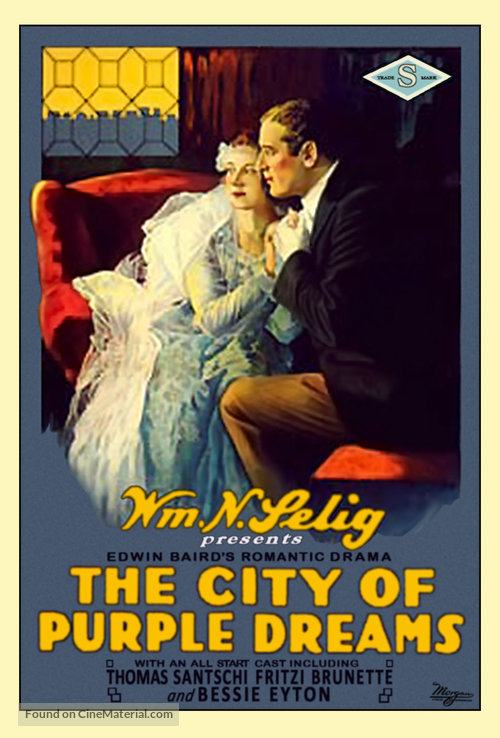
In the annals of early cinema, where narratives often painted in broad strokes of good versus evil, a film occasionally emerges that dares to explore the more nuanced, morally ambiguous corners of the human psyche. The City of Purple Dreams, a compelling silent-era drama, stands as one such audacious endeavor. It is not merely a tale of rags-to-riches, but a searing examination of the cost of ambition, the malleability of morality, and the profound impact of chance encounters on one's destiny. This is a film that, despite its vintage, resonates with a startling contemporary relevance, reflecting on the intoxicating allure of status and the often-unseen sacrifices made in its pursuit.
The narrative unfurls with a pivotal moment, almost prosaic in its simplicity, yet cataclysmic in its implications. A derelict, a man stripped of name, dignity, and prospects, finds himself on the cusp of an accidental tragedy, nearly struck by the automobile of Miss Otis. Her subsequent act of charity—a sum of money accompanied by the rather imperious, if well-intentioned, advice to "clean up and keep clean"—serves not as a balm, but as a catalyst. It's a moment pregnant with both condescension and possibility, an unwitting spark that ignites a dormant fire within the derelict. This isn't merely about survival anymore; it's about transcending the very strata that produced his destitution. The film masterfully sets up this initial encounter, hinting at the profound ripple effects of seemingly minor interactions, a theme also subtly explored in the complex social dynamics of a film like The Wrong Door, where a single misstep can alter an entire trajectory.
The derelict's nascent aspirations soon intertwine with the radical ideology of Esther, an anarchist whose fervent beliefs offer him a different kind of salvation, or perhaps, a different kind of damnation. She draws him into a conspiracy to blackmail a prominent banker, a scheme born of revolutionary fervor and a desire to redistribute wealth. This segment of the film is particularly potent, showcasing the slippery slope between desperation and moral compromise. The derelict, still raw from his previous existence, is easily swayed by Esther's charismatic conviction, seeing in her plan a shortcut to the very respectability Miss Otis had inadvertently dangled before him. The irony, brutal and swift, strikes when he realizes his intended victim is Miss Otis's own father. This revelation forces a momentary crisis of conscience, prompting him to destroy the incriminating check. Yet, this fleeting act of rectitude is met not with absolution, but with arrest and commitment to an asylum, a stark commentary on the unforgiving nature of a society quick to condemn the vulnerable, regardless of their intentions. This echoes the societal injustices and often arbitrary nature of legal systems depicted in films such as The Truth Wagon, where the powerful often dictate the fate of the less fortunate.
Esther, a figure of complex loyalties and deep, if unreciprocated, affection, becomes his unlikely liberator. Her unwavering belief in him, coupled with her revolutionary spirit, fuels his escape from the confines of the asylum. This act, born of love and defiance, sets him on a new, more determined trajectory. The derelict, now free, sheds the last vestiges of his past self. His ambition hardens into an unyielding resolve: he will not merely survive; he will ascend. He commits himself wholly to the pursuit of wealth and importance, viewing it as the ultimate vindication against a world that had once cast him aside. This transformation from a sympathetic figure to one driven by a singular, almost ruthless, purpose is one of the film's most compelling arcs. It explores the intoxicating power of societal validation through material success, a theme that finds parallels in the aspirational narratives of films like Aladdin and the Wonderful Lamp, albeit without the magical intervention, relying instead on sheer, grinding will.
Years pass, and the derelict, now a man of immense fortune and consequence, returns to the scene of his former humiliation. He is no longer the downtrodden figure, but a titan of industry, meticulously crafted in the image of the society that once rejected him. Yet, this transformation comes at a profound personal cost. Esther, who risked everything for him, who loved him unconditionally, is coldly cast aside. Her revolutionary ideals and unwavering devotion are now inconvenient reminders of a past he desperately wishes to erase. His rejection of her is a poignant, almost heartbreaking, moment, revealing the hollowness at the heart of his triumph. Instead, he turns his attention to Miss Otis, the unwitting muse of his ambition. His proposal of marriage to her is not born of love, but of a calculated desire for ultimate social integration, a final, symbolic conquest. It is the culmination of his journey, but one that leaves the audience questioning the true meaning of success and happiness. This stark choice between genuine connection and social advancement echoes the dilemmas faced by protagonists in films such as Temptation, where moral purity often gives way to the allure of power and prestige.
The cast of The City of Purple Dreams, though operating within the expressive confines of silent cinema, delivers performances that convey the intricate emotional landscape of the narrative. Harry Lonsdale, as the derelict-turned-magnate, embodies this transformation with a palpable intensity. His initial portrayal of destitution is compelling, but it is his gradual hardening, the subtle shifts in his demeanor from desperation to ruthless self-possession, that truly captivates. One can observe the evolution through his posture, his gaze, and the deliberate movements that replace his earlier uncertainty. His journey is a testament to the power of a single-minded pursuit, yet also a cautionary tale about the erosion of one's soul.
Bessie Eyton, as Esther, is the film's moral compass, albeit one rooted in radicalism. Her passion is undeniable, her love for the protagonist unwavering, even in the face of his ultimate betrayal. She represents an alternative path—one of communal solidarity and genuine affection—that is ultimately sacrificed on the altar of individual ambition. Her portrayal brings a much-needed emotional depth, highlighting the human cost of the protagonist's choices. Her character stands in stark contrast to more conventional female portrayals of the era, such as those found in Polly Ann or Cecilia of the Pink Roses, which often emphasized innocence or domesticity. Esther is a force of nature, a woman of conviction who dares to challenge the established order.
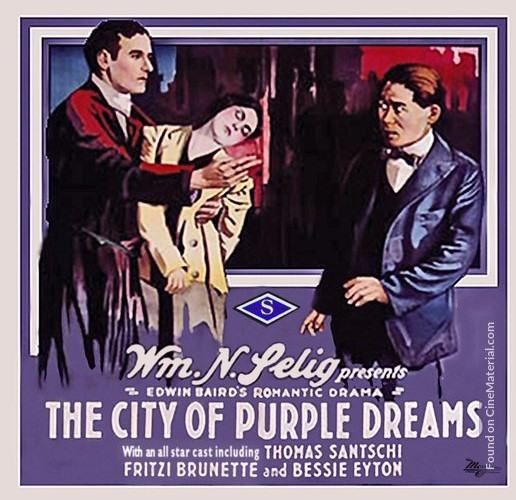
Fritzi Brunette, as Miss Otis, embodies the upper-class ideal, a figure of unwitting influence whose initial act of charity inadvertently sets the entire plot in motion. She is less a character of active agency and more a symbol—the ultimate prize, the embodiment of the social acceptance and wealth the protagonist so desperately craves. Her innocence and unawareness of the machinations around her serve to underscore the moral complexities of the protagonist's journey. The supporting cast, including Eugenie Besserer and Tom Santschi, further enriches the tapestry, providing the societal backdrop against which this intensely personal drama unfolds. Their presence, though sometimes fleeting, helps ground the narrative in a believable world of social stratification and moral compromise.
The City of Purple Dreams is a rich tapestry of themes that remain remarkably pertinent even today. At its core, it is a profound commentary on social mobility and the seemingly insurmountable barriers of class. The protagonist's journey is a brutal exposé of the idea that one can simply 'pull oneself up by one's bootstraps.' His initial attempts at honest reform are met with incarceration, suggesting that society is less forgiving of past transgressions than it is accepting of new wealth, however acquired. The film forces us to confront the hypocrisy of a system that judges individuals based on their current status rather than their inherent worth or their moral journey.
The corrupting influence of wealth is another central pillar of the narrative. The derelict's ambition, initially a noble desire for self-improvement and dignity, morphs into a cold, calculating drive for power and status. The rejection of Esther, the one person who offered unconditional love and support, is the ultimate manifestation of this corruption. It suggests that the pursuit of material success can lead to a spiritual impoverishment, a sacrifice of genuine human connection for a superficial veneer of achievement. This theme is explored with a certain gravitas, reminiscent of the moral quandaries presented in films like The Seventh Sin, where personal integrity is often tested by external pressures and desires.
Furthermore, the film delves into the elusive nature of happiness. Does the protagonist achieve true happiness by attaining his 'purple dreams' of wealth and social standing? The ending, though seemingly triumphant from a societal perspective, is tinged with a profound sadness, hinting at a victory that feels hollow. His final choice, marrying Miss Otis not out of love but as a symbol of his ultimate conquest, leaves a lingering question: at what cost does one achieve their aspirations? This complex portrayal of success invites contemplation, challenging the audience to consider their own definitions of a life well-lived.
Despite the technological limitations of its time, The City of Purple Dreams showcases a remarkable command of visual storytelling. The directors, Edwin Baird and Gilson Willets, effectively utilize the language of silent cinema—expressive acting, dramatic intertitles, and thoughtful mise-en-scène—to convey the narrative's emotional weight and thematic depth. The cinematography, though perhaps not as groundbreaking as later works, is functional and effective, often employing stark contrasts to highlight the protagonist's journey from darkness to a superficial light. The visual depiction of the asylum, for instance, would have been particularly impactful, emphasizing the protagonist's sense of entrapment and despair.
The pacing of the film is deliberate, allowing the audience to absorb the nuances of the protagonist's transformation. The use of close-ups, where available, would have emphasized the internal struggles and shifting motivations of the characters, particularly the derelict and Esther. The film's ability to maintain tension and emotional engagement without spoken dialogue is a testament to the skill of its creators and performers. It reminds us of the raw power of visual narrative, where gestures, expressions, and symbolic imagery carry the full burden of meaning. In this regard, it shares a common thread with other visually driven narratives of its time, where the absence of sound necessitated a heightened focus on the visual spectacle and the emotional impact conveyed through physical performance, much like the evocative storytelling seen in Hoodman Blind.
In conclusion, The City of Purple Dreams is far more than a historical curiosity; it is a timeless exploration of human ambition, moral compromise, and the often-elusive nature of true fulfillment. Its unflinching look at the societal pressures that shape individual choices, and the personal sacrifices made in the pursuit of an idealized existence, ensures its continued resonance. The film challenges us to scrutinize the foundations of our own aspirations, urging us to question whether the 'purple dreams' we chase are truly worth the price we pay. It reminds us that sometimes, the greatest tragedy lies not in failing to achieve our goals, but in achieving them at the expense of our very humanity. For those willing to delve into the rich, complex narratives of silent cinema, this film offers a profound and deeply reflective experience, a mirror held up to the enduring human struggle between what we desire and what we truly need. It's a film that lingers long after the final intertitle fades, prompting introspection on the nature of success and the often-circuitous path to self-discovery.

IMDb 5.7
1920
Community
Log in to comment.