DbcultAccessing Vault...
7.2/10
Senior Film Conservator
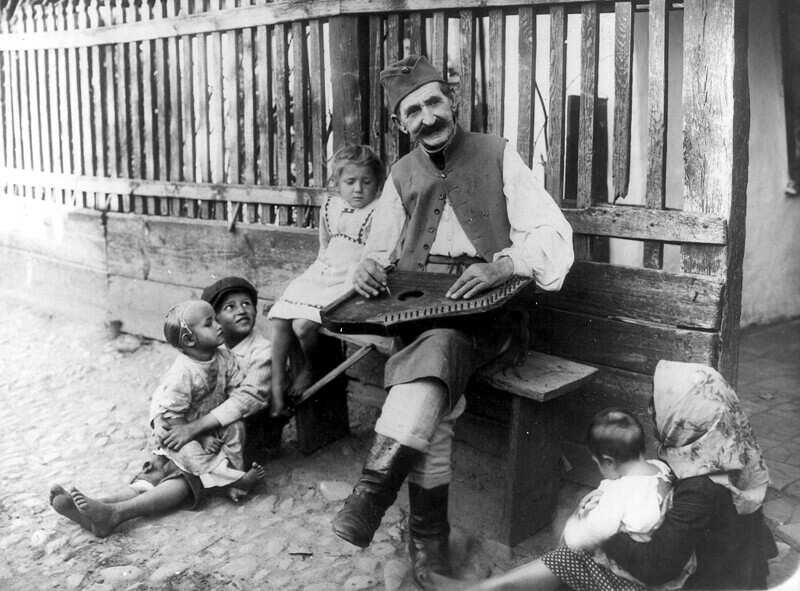
A definitive 7.2/10 rating for a film that redefined the boundaries of cult cinema. A vén bakancsos és fia, a huszár remains a cornerstone of transgressive art.
To understand the profound impact of A vén bakancsos és fia, a huszár, one must first acknowledge the gravitational center of its creation: Kolozsvár. Under the stewardship of Jenő Janovics, this city became a beacon of cinematic innovation that rivaled the burgeoning studios of Hollywood and the established houses of Berlin. This 1917 production is a quintessential artifact of that era, a time when the boundaries between the proscenium arch and the silver screen were fluid and experimental. Unlike the gritty realism found in contemporaneous works like Prestuplenie i nakazanie, Janovics’s work here leans into the népszínmű—a traditional Hungarian folk-play genre—elevating it through the nascent language of film.
The film functions as a bridge between centuries. While the script by József Szigeti and Janovics himself is rooted in 19th-century theatricality, the visual execution hints at the sweeping vistas and dynamic movement that would eventually define the career of Michael Curtiz (Mihály Kertész), who was deeply integrated into this milieu. The narrative arc, focusing on the veteran soldier and his hussar son, serves as a microcosm for the Austro-Hungarian Empire's own struggle with modernity. It is a film of heavy boots and polished sabers, of mud-caked loyalty and the shimmering promise of officerhood.
The casting of Ödön Réthely as the venerable patriarch provides the film with its emotional anchor. Réthely’s performance is a masterclass in silent-era restraint; his face is a map of past campaigns and domestic hardships. When contrasted with the youthful exuberance of the hussar, the film achieves a rhythmic counterpoint that is rare for its time. This isn't the melodramatic excess seen in The Unchastened Woman; rather, it is a grounded, almost tactile exploration of familial duty.
The presence of Lili Poór, the undisputed queen of the Transylvanian stage, adds a layer of lyrical intensity. Her ability to convey complex internal monologues through a single glance provides the film with its soul. In scenes where the domestic sphere is threatened by the rigid demands of military honor, Poór’s performance reminds us of the human cost of glory. The ensemble cast, including Hugó Kozma and Aranka Laczkó, functions like a well-oiled machine, reflecting the disciplined choreography of the theatrical troupes from which they emerged.
Comparing this to the American sentimentality of The Littlest Rebel, one finds a much darker, more nuanced grit in the Hungarian approach. There is no easy resolution here; the 'old boot' must reconcile his rugged past with a future he barely recognizes, a theme that resonates with the existential dread found in Ahasver, 1. Teil. The film asks: what remains of a man when his service is done, and his legacy is carried by a son who walks in a different world?
Technically, A vén bakancsos és fia, a huszár is a fascinating study in the evolution of cinematography. The use of natural light in the exterior sequences captures the atmospheric haze of the Hungarian plains, creating a sense of place that is almost palpable. While it may lack the avant-garde shadows of Sodoms Ende, it compensates with a robust, clear-eyed verisimilitude. The camera placement often favors deep focus, allowing the background activities of the village or the barracks to provide a rich, living context to the central drama.
The editing, though linear, shows a sophisticated understanding of tension. The juxtaposition of the father's slow, deliberate movements with the kinetic energy of the hussar's cavalry drills creates a visual metaphor for the passing of the torch. This cinematic language is far more advanced than the static staginess of many 1917 productions. It shares a certain pastoral honesty with Wildflower, yet it possesses a masculine, martial edge that is entirely its own.
One cannot overlook the production design. The costumes are not merely outfits but historical documents. The texture of the 'old boot's' worn tunic versus the crisp, braided dolman of the hussar tells a story of social mobility and the heavy price of status. This attention to detail elevates the film from a simple folk-tale to a historical drama of significant weight, much like the thematic density found in The Land of Promise.
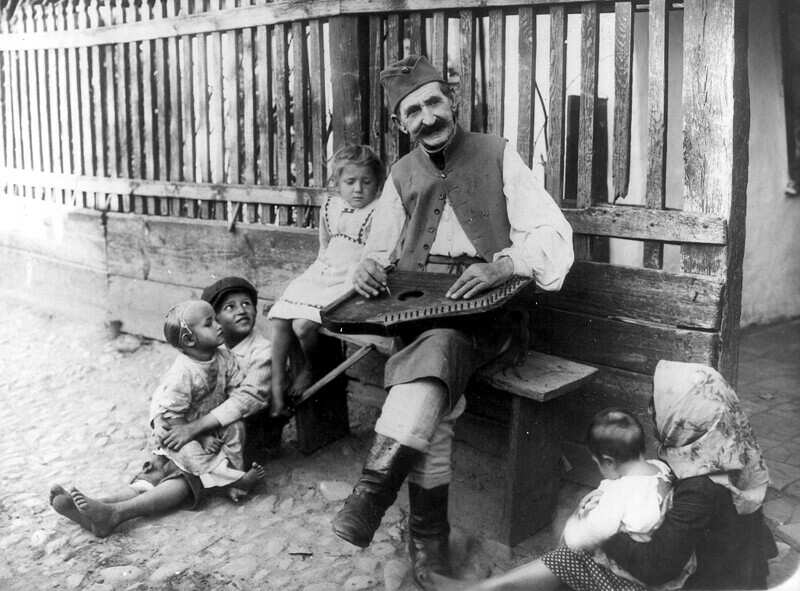
When we look at the cinematic output of 1917, A vén bakancsos és fia, a huszár stands as a proud outlier. While Hollywood was busy refining the star system with films like The Battle of the Sexes, Janovics was attempting to create a national cinema that was both artistically ambitious and culturally specific. There is a moral gravity here that parallels The Right to Be Happy, yet the Hungarian work is less concerned with Victorian morality and more with the primal codes of the land.
Consider the thematic overlap with Brother Officers. Both films deal with the rigid structures of military life, but where the British perspective often focuses on class friction, the Hungarian view is more concerned with the continuity of bloodlines. The 'old boot' isn't just a soldier; he is a progenitor. His son's success is his own vindication. This sense of inherited destiny is also explored, albeit in a more chaotic fashion, in The Turmoil.
Furthermore, the film’s exploration of the 'veteran' experience offers a fascinating precursor to the post-war cinema that would follow. Even though it was filmed during the Great War, it looks back to a more romanticized era of conflict, much like the western tropes being established in On the Night Stage. However, the stakes in Janovics’s world feel more intimate, more deeply rooted in the soil of the Carpathian Basin.
The release of this film in 1917 occurred at a tipping point in history. The Austro-Hungarian Empire was in its death throes, yet A vén bakancsos és fia, a huszár presents a world of steadfast values. This creates a haunting subtext for the modern viewer. We see a world that was about to vanish, captured on nitrate film with a clarity that is almost spectral. The film doesn't just tell a story; it preserves a state of mind. It shares this quality of 'captured time' with The Avalanche, where the environment itself becomes a character in the drama.
The relationship between the father and son can be read as a metaphor for the relationship between the old empire and the new, burgeoning national identities. The 'old boot' is the foundation—cracked, worn, but essential—while the hussar is the flash of color and the sharp edge of the future. This dynamic is handled with a delicacy that avoids the heavy-handedness of The Lifeguardsman, opting instead for a slow-burn emotional payoff.
In the wider context of Janovics’s filmography, this work represents a peak of his 'folk-melodrama' phase. It possesses the heart of The Heart of Ezra Greer but filters it through a uniquely Eastern European lens. The result is a film that feels both universal in its themes of family and honor, and hyper-local in its specific cultural textures.
To watch A vén bakancsos és fia, a huszár today is to engage in a form of cinematic archaeology. Many of the films from this period have been lost to the ravages of time and chemical decay, making the survival of this narrative all the more precious. It is a testament to the power of the Kolozsvár school and the enduring vision of Jenő Janovics.
The film succeeds because it does not try to be more than it is. It is a story of two men, a uniform, and the unspoken love that binds them across the chasm of time and rank. Its lexical diversity—not in words, but in visual cues and emotional beats—is staggering. From the subtle tilt of Ödön Réthely’s head to the grand sweep of the hussar’s charge, the film speaks a language that transcends the need for intertitles.
In an era of hyper-kinetic modern cinema, there is a profound peace to be found in the deliberate pacing of this 1917 masterpiece. It reminds us that at the heart of every great story is a simple human truth. Whether you are a scholar of silent film or a casual viewer looking for a window into a lost world, this film offers a journey that is as rewarding as it is beautiful. It is, quite simply, a cornerstone of Central European cinematic history, a vibrant 'old boot' that still has plenty of miles left in it.
IMDb 5.9
1932
Community
Log in to comment.