DbcultAccessing Vault...
Cult Review
Senior Film Conservator
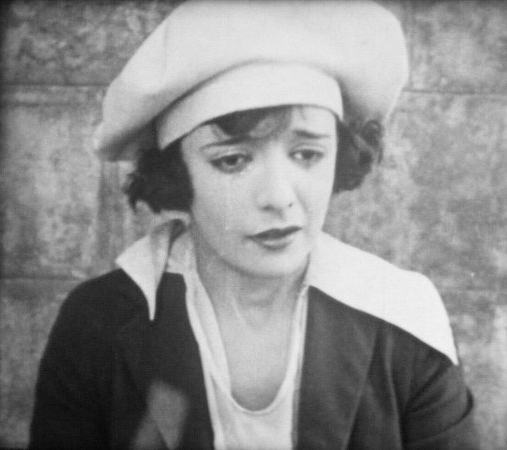
A Regular Pal is not a film you watch; it is a film that pickpockets you, then buys you a drink with your own money while apologizing for the inconvenience.
Revisiting this 1919 Hal Roach one-reeler feels like stepping on a rake in 1919 and the handle smacking you in 2024. The joke lands across a century because Roach understood that memory itself is slapstick: we chase what we desire, trip over what we already possess, and the cosmos laughs in jump-cuts.
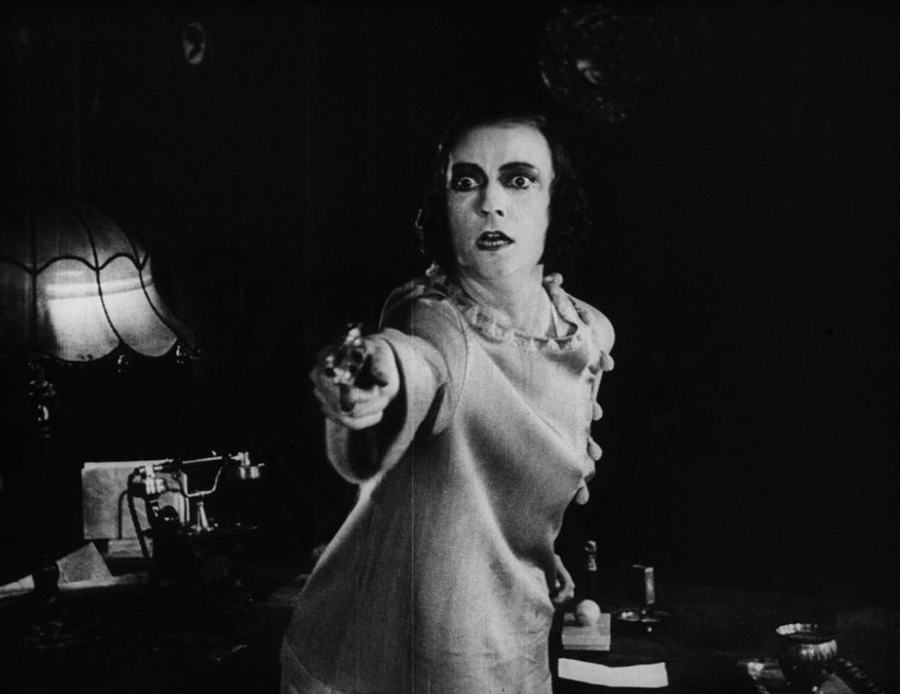
Beatrice La Plante, unjustly confined to footnotes, possesses the combustible energy of a young Clara Bow fused with the streetwise skepticism of Louise Brooks. Her entrance—framed in a coffin-shaped doorway backlit by a flickering gaslamp—prefigures the German expressionist silhouettes that would dominate the following decade. She cradles the candlestick telephone as if it were a live grenade, and indeed every ring propels the narrative into fresh disarray.
Noah Young’s traffic cop swaggers with the bullish entitlement of a man who believes the city is a T-bone he has already salted. His waxed mustache alone deserves separate billing; it twitches like a divining rod whenever temptation nears. Roach repeatedly isolates the mustache in grotesque close-up, turning the follicles into a semaphore for carnal guilt.
William Gillespie’s bookkeeper, by contrast, is a frayed sermon on prudence, forever clutching a ledger that might as well be a life-preserver carved from marble. The comic tension derives less from the rivalry over the girl than from the philosophical collision between kinetic appetite and arithmetic restraint.
Roam the film’s geography and you’ll swear Roach hired M.C. Escher as location scout. A stairwell ascends toward a skylight, yet the next cut deposits us in a subterranean speakeasy where the same skylight now functions as a trapdoor. The Model-T, that omnipresent deity of American slapstick, behaves like a naughty parishioner: it rolls uphill in neutral, stalls on cue, and at one point folds its own windshield like a hymnal.
Compare this elastic architecture to the comparatively sedate Hustling for Health where space is merely a container for gags rather than a co-conspirator. Roach, already in 1919, treats mise-en-scène as a rubber band: the tighter he pulls, the funnier the snapback.
Modern comedies often mistake frequency for efficacy; they machine-gun jokes until you submit. Roach prefers guerrilla tactics: he plants a visual seed—a half-peeled banana abandoned on a windowsill—then forgets it for ten minutes. When the cop slips during the climactic chase, the banana peel reappears like a guilty memory, but Roach withholds the expected pratfall; instead the cop pirouettes, regains balance, and is then clobbered by a rogue tuba. The deferral magnifies the laugh by layering anticipation with misdirection.
This methodology finds a spiritual cousin in The Pursuit of the Phantom where narrative mirages repeatedly coax both characters and viewers down blind alleys. Yet Phantom uses mystery as engine, whereas Pal uses it as detonator.
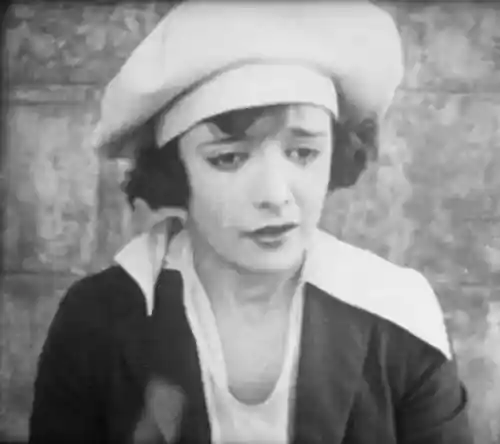
La Plante’s switchboard operator is no passive prize. She weaponizes the telephone, that emblem of modern connectivity, to reroute male desire. When she transfers the cop’s call to a Chinese laundry, she’s not evading pursuit; she’s rewriting the city’s circulatory system. The gag lands harder once you realize 1919 audiences still treated switchboards as sorcery. Her agency peaks in the bandstand scene where she swaps the couples like chess pieces, checkmating both suitors into mutual embarrassment. The iris-in closes not on matrimony but on her solitary smirk—an audacious silent-era ancestor of the final shot of April Folly where Constance Talmadge winks at the folly of monogamous certainty.
Viewed on 35 mm at Eye Filmmuseum, the print crackled like frying celluloid; the left edge bore chemical flowers—nitrate blossoming into amber nebulae. These scars aren’t blemishes; they’re bruises of time, and they deepen the humor. When the cop’s helmet pops like a champagne cork, the accompanying scratch on the emulsion resembles a lightning bolt, as though the universe itself applauds with static.
Such material poignancy differentiates Pal from the digitally scrubbed slapstick of His Bridal Night where every pore gleams with antiseptic clarity. Imperfection humanizes; decay becomes wit’s patina.
At my screening, Dutch composer Martin de Ruiter improvised on a 1912 Steinway grand. During the chase he shifted into a habanera, its rhythmic lilt turning the cop’s sprint into a bullfighter’s dare. When La Plante tears the love letter, de Ruiter let the chord sustain, vibrating like a guilty conscience. The piano’s wood resonated with the film’s grain, creating a duet across the century. Try achieving that synergy with a Spotify playlist.
The DNA of Pal snakes through Capra’s It Happened One Night in the runaway autogiro gags, through Tati’s Playtime in the modular architecture, through the Coens’ Burn After Reading in the bureaucratic carousel of imbeciles. Even Buster Keaton’s Cops—released the same year—shares the urban panic yet lacks Roach’s elastic social satire. Pal suggests that authority figures aren’t merely incompetent; they’re interchangeable parts in a Rube Goldberg machine powered by libido and bad timing.
Film historians worship Roach’s 1920s Harold Lloyd vehicles yet overlook this embryonic showcase of his clockwork storytelling. Consider the structural DNA: the deferred payoff, the society-in-miniature ensemble, the moral comeuppance wrapped in pratfalls—all incubate here. If Mania. Die Geschichte einer Zigarettenarbeiterin externalizes class rage through melodrama, Pal internalizes it via comic relativity: everyone is equally culpable, therefore everyone is absolved.
No pristine negative survives; what circulates is a 1926 Czech distribution print, Dutch intertitles, and Russian censorship snipes. Yet the multilingual grafting intensifies the babel of miscommunication, making the film a palimpsest of global mischief. Archive torrents occasionally host a 2K scan, but beware the 19-minute bootleg that appends organ music from Die ewige Nacht—the tonal mismatch is like slapping a Wagner aria onto a haiku.
Because speed-dating apps, ghosting, and algorithmic matchmaking have not rendered the film’s central dilemma obsolete; they have merely accelerated the merry-go-round. Roach’s genius lies in proving that human foibles are the sturdiest renewable resource. When La Plante’s wink seals the tale, she isn’t just flirting with the audience; she’s indicting our smug belief that we’ve outgrown the pratfalls of desire. A Regular Pal is not a relic; it is a mirror with a crack that keeps refracting new faces—yours included—into the same damn puddle.
Seek it, should fate grant you a festival slot or an illicit 2K stream. Bring friends, bring skeptics, bring your ex who claims silent comedy is “too slow.” When the cop’s helmet soars into the iris, notice how the laughter detonates in staggered bursts—proof that Roach’s fuse still burns, slow, sly, and incandescent across the century.
IMDb 5.3
1915
Community
Log in to comment.