DbcultAccessing Vault...
Cult Review
Senior Film Conservator
Is "Babes in the Jungle" worth watching today? Short answer: yes, but with significant caveats. This film is an essential, if uneven, experience for serious silent film historians and those with a keen interest in early cinematic adaptations of literary works, especially O. Henry. However, it will likely prove a frustrating, perhaps even impenetrable, watch for casual viewers accustomed to contemporary narrative pacing and visual language.
Let’s get straight to it.
"Babes in the Jungle" emerges from a fascinating period in cinematic history, a time when the language of film was still finding its voice, often borrowing heavily from theatrical conventions and the narrative structures of popular literature. To approach this film with the same expectations one brings to a contemporary blockbuster would be a disservice, akin to judging a horse-drawn carriage by the speed of a sports car. It demands a different critical lens, one that appreciates its historical context as much as its artistic merit.
The core premise of "Babes in the Jungle" is deceptively simple: a valuable painting vanishes, and a man named Hallam, portrayed by Hallam Cooley, offers to retrieve it. His true prize, however, isn't the artwork itself, but the art collector’s daughter. This setup, derived from the pen of O. Henry, immediately signals a narrative steeped in human desire and the often-cynical pursuit of personal gain.
What makes this plot intriguing, even decades later, is its exploration of perceived value. Is the painting truly priceless, or is it merely a MacGuffin to facilitate Hallam's deeper, more personal quest? The film subtly suggests the latter, elevating the human element – the daughter – to the ultimate object of desire. This shift in focus from inanimate object to living person is a hallmark of O. Henry’s often ironic and character-driven storytelling.
The 'jungle' of the title, I suspect, is less about literal exotic locales and more about the treacherous, unpredictable landscape of human ambition and social maneuvering. The art collector’s world, with its hidden treasures and desperate measures, becomes a metaphorical wilderness where Hallam, ostensibly a rescuer, is in fact a predator eyeing his prey. This metaphorical interpretation is what gives the film a surprising depth, elevating it beyond a simple caper.
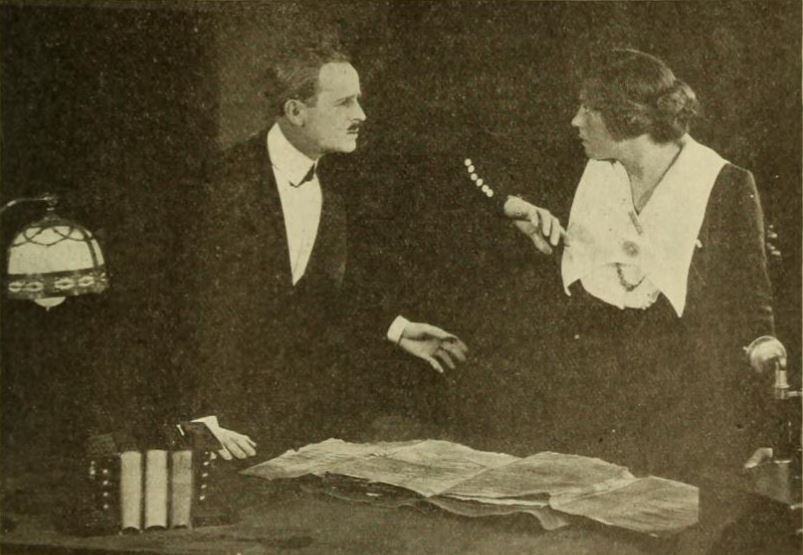
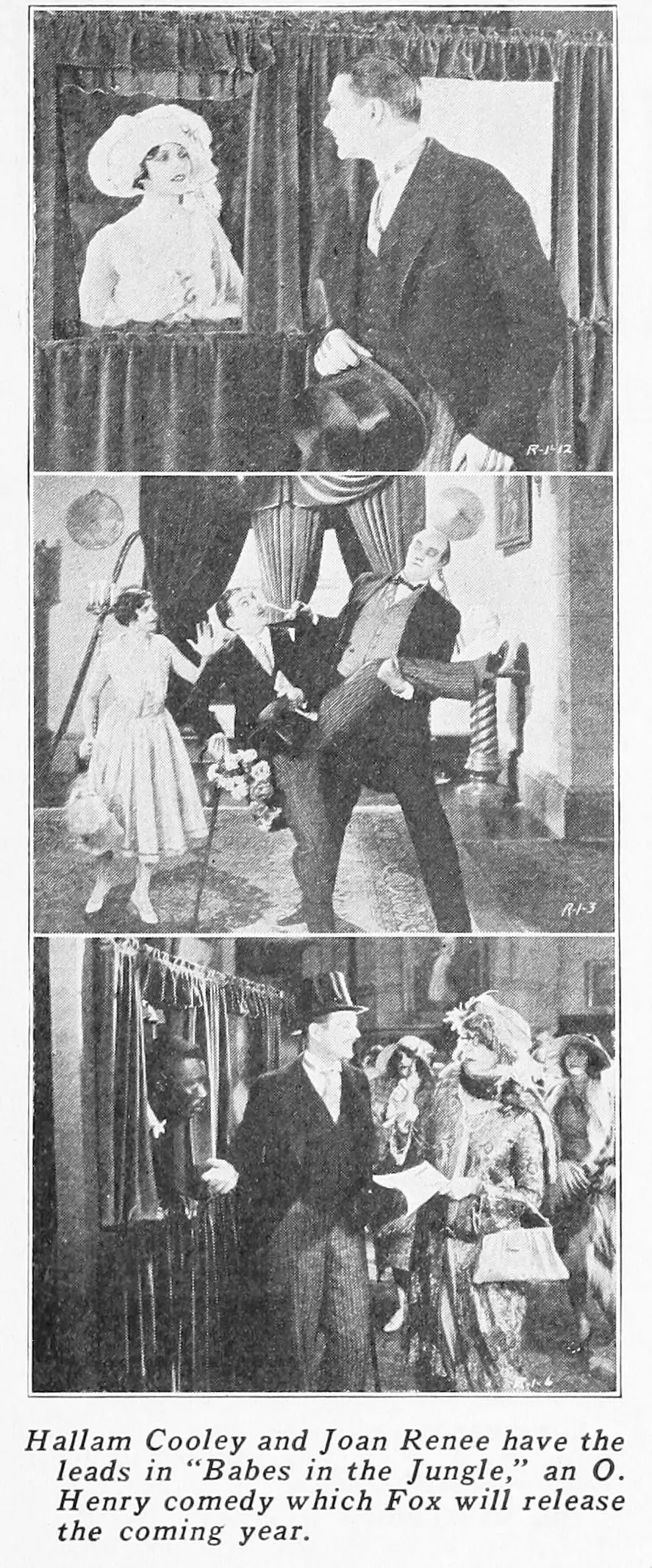
In silent cinema, acting was a delicate balance of exaggerated expression and subtle gesture, a language often lost on modern viewers. "Babes in the Jungle" showcases this evolving art form through its ensemble, particularly Hallam Cooley as the opportunistic Hallam, and Joan Renee as the coveted daughter.
Hallam Cooley, a prolific actor of the era, brings a certain suave menace to his role. His performance is less about internal monologue and more about externalized intent. One can almost see the calculating gears turning behind his eyes as he offers his 'help' to the distressed collector. His gestures, broad as they may seem now, would have been clear signals to an audience accustomed to stagecraft, conveying a blend of charm and ulterior motive.
Joan Renee, as the daughter, embodies the archetypal 'damsel in distress' of the period, yet with glimpses of an independent spirit. Her portrayal relies heavily on expressive eyes and a posture that shifts from vulnerability to defiance. In a particularly telling scene, her subtle flinch when Hallam's gaze lingers too long on her, rather than the painting, speaks volumes without a single intertitle. It’s a quiet moment, easily missed, but crucial for understanding the film's subtext.
Harry Woods and Walter Regan, though perhaps less central, contribute to the film’s atmosphere. Woods often played villains or tough characters, and his presence, even in a supporting capacity, adds a layer of potential danger or complication. The interactions between these performers, while lacking the nuanced dialogue of sound film, create a distinct dramatic tension that is surprisingly effective when viewed through the right historical lens. Their work is a masterclass in silent film communication, even if it feels alien today.
IMDb 8
1914
Community
Log in to comment.