DbcultAccessing Vault...
7.6/10
Senior Film Conservator
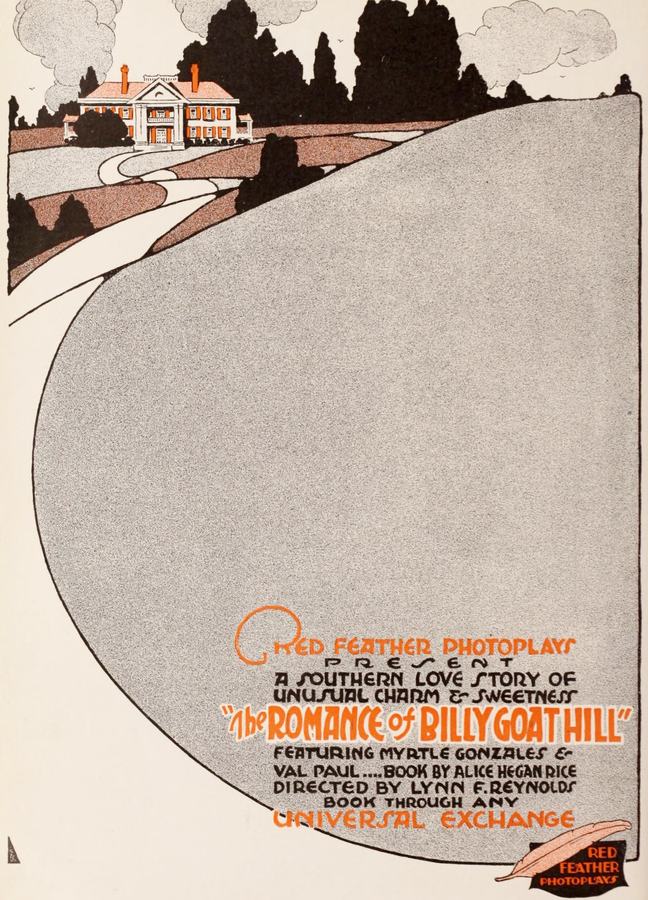
A definitive 7.6/10 rating for a film that redefined the boundaries of cult cinema. A Romance of Billy Goat Hill remains a cornerstone of transgressive art.
Stepping into the flickering, sepia-toned world of A Romance of Billy Goat Hill is akin to unearthing a forgotten diary, its pages filled with the grand passions and intricate deceptions characteristic of early 20th-century melodrama. Directed by an uncredited hand, but penned with a keen sense of narrative tension by Lynn Reynolds, this 1916 feature, starring the luminous Myrtle Gonzalez and the earnest Fred Church, offers a compelling, if convoluted, journey through love, loyalty, and the devastating power of miscommunication. It's a film that, despite its age and the inherent theatricality of the era, manages to resonate with a timeless exploration of human frailty and resilience.
At its heart lies Myrtle, affectionately known as 'Miss Lady' by the Black servants of her father, the Colonel. Played with a delicate blend of innocence and burgeoning strength by Gonzalez, Myrtle is a woman caught between societal expectations and the stirrings of her own heart. Her initial suitor, Don Morley (Fred Church), is introduced under a cloud of scandal, his 'passion for gay life' an immediate impediment to Myrtle's affections. This intriguing detail, presented with a surprising frankness for the period, immediately establishes a moral dilemma that sets the stage for Don's desperate promise of reformation. It's a fascinating touch, hinting at societal taboos and the pressure to conform, even if the film ultimately steers away from a deeper exploration of Don's initial inclinations, instead using it as a catalyst for his initial rejection and subsequent attempts at redemption. Church imbues Don with a certain boyish charm, making his earnest pleas for Myrtle's hand believable, even against the backdrop of his checkered past.
The narrative, however, quickly introduces a pivotal character whose silent presence becomes the fulcrum upon which much of the drama hinges: Chick, a little mute chap portrayed with remarkable sensitivity by Frankie Lee. Their first encounter, born from a near-accident caused by Chick's foster-father's carelessness, is a moment of pure serendipity, forging an unlikely bond between the privileged 'Miss Lady' and the vulnerable child. Chick's muteness is not merely a plot device; it transforms him into an all-seeing, all-knowing witness, a silent sentinel whose inability to speak becomes the very engine of misdirection and, ultimately, revelation. This is a brilliant narrative choice, elevating a potentially secondary character to a position of profound importance, reminiscent of the innocent, unwitting observers in films like The Price of Silence, where unspoken truths fester and warp lives.
The plot thickens with the introduction of Lee Dillingham (Jack Curtis), the film's quintessential villain, whose malevolent machinations drive much of the ensuing tragedy. A chance storm forces Don and Lee to seek shelter in a saloon, leading to a violent confrontation with the proprietor, Sheely. Lee shoots Sheely, wounding him, and then extracts a promise of silence from Don, who, perhaps out of a misguided sense of honor or fear of further scandal, agrees. This pivotal incident, witnessed in its entirety by the hidden Chick from the confines of an old barrel, sets in motion a chain of events that will unravel lives and test loyalties. Lee's subsequent distortion of the truth, fastening suspicion upon Don, is a classic melodramatic trope, expertly deployed here to engineer Don's exile. The Colonel, rigid in his belief of Don's culpability, forbids Myrtle from communicating with her disgraced suitor, condemning her to a period of agonizing uncertainty. This separation, fueled by deceit and enforced by patriarchal authority, echoes the tragic lovers in Camille, albeit with a different set of societal pressures.
Don's subsequent journey to the West and then the Orient, accompanied by a loyal friend (perhaps Burwell Hamrick or Val Paul, though the cast list is sparse on specific roles), is a period of anxious waiting, a poignant yearning for a letter from Myrtle that never arrives. This transatlantic longing, juxtaposed with Myrtle's forced isolation, paints a vivid picture of the communication barriers of the era, which Lee so cruelly exploits. The plot takes another tragic turn with a train derailment, again due to Chick's foster-father's negligence, claiming the life of the Colonel and injuring his friend, Professor Querrington (Thomas Jefferson). The Professor's subsequent convalescence in Myrtle's home, where she nurses him back to health, becomes another nexus of misfortune. He falls in love with her, and Myrtle, now financially embarrassed and utterly ignorant of Don's whereabouts, consents to marry him. This marriage, born of necessity and emotional vulnerability rather than true affection, is a classic device to heighten the tragic dimensions of the narrative, trapping Myrtle in a gilded cage of duty. The Professor, however, quickly becomes engrossed in his writing, neglecting Myrtle, a poignant depiction of emotional distance within marriage.
Lee's villainy reaches new heights when he sends a letter to Don, falsely informing him of Myrtle's marriage. Grief-stricken, Don decides to remain in the Orient, his dreams shattered. It is his unnamed friend who, returning home, calls upon the Professor and inadvertently reveals Lee's deceit to Myrtle. The shock of this revelation—that her lover was tricked, that her marriage was built on a foundation of lies—must have been devastating for contemporary audiences. The friend's urgent wire to Don to return home injects a desperate hope into the narrative, a race against time to mend what has been so thoroughly broken. This intricate web of lies, where a single malicious act can unravel so many lives, speaks to the fragile trust inherent in human relationships, a theme often explored in dramas like Gambier's Advocate where reputation and truth are constantly under siege.
The Christmas Eve party hosted by the Sequins provides the setting for a heart-wrenching reunion. The Professor, utterly absorbed in his intellectual pursuits, sends Myrtle alone, a clear sign of her emotional neglect. Don, having returned, attends the affair. The moment he meets Myrtle and she tells him she never received his letter is fraught with dramatic irony and raw emotion. His subsequent departure, believing her words to be a further deception, is a testament to the corrosive power of Lee's lies. Sequin's ill-advised financial counsel to Don, leading him to sell bank stock just before the bank fails, is another tragic domino. This catastrophic event wipes out the Professor's entire fortune and, eventually, contributes to his death, leaving Myrtle widowed and destitute, a stark contrast to her earlier privileged life. It's a classic turn of fate, where even well-intentioned advice can lead to ruin, echoing the precariousness of financial stability in the early 20th century. One can almost feel the weight of these misfortunes pressing down on Myrtle, much like the characters in The Discard who face unrelenting hardship.
In her darkest hour, Myrtle finds solace and purpose in her attachment to Chick. She returns to her own home, bringing the mute boy with her, a beautiful testament to their bond. Her decision to have Chick operated upon, in the hope of restoring his speech, is an act of profound compassion and a desperate gamble on the future. The successful operation, a moment of triumph amidst so much despair, is not just a medical miracle but a narrative turning point. Chick's restored voice becomes the instrument of justice, the key to unlocking the truth that has been so cruelly suppressed. This transformation of Chick from a passive observer to an active agent of change is arguably the film's most powerful element.
The climax arrives with Don's trial for Sheely's injury, where the evidence against him looks dire. It is here that Chick, overhearing Myrtle's heartbroken weeping over Don's impending fate, finally speaks the truth. His simple, yet profoundly impactful, declaration — that it was the 'dark-haired man, Lee,' who did the shooting — shatters the web of lies. The ensuing rush to Don's aid, the swift vindication, and the final, long-awaited marriage of Don and Myrtle bring the sprawling narrative to a satisfying, if somewhat abrupt, conclusion. The film, in its resolution, champions the power of truth, even when delivered by the most unexpected voice. It’s a testament to the enduring appeal of justice prevailing, a theme that resonates strongly in many early dramas, including those where hidden secrets threaten to destroy lives, much like the various mysteries unraveling in Mysteries of the Grand Hotel.
Lynn Reynolds' screenplay, while occasionally meandering through its many subplots, demonstrates a masterful understanding of how to build dramatic tension and character arcs. The film’s strength lies in its ability to intertwine personal tragedy with broader themes of moral rectitude and societal judgment. Myrtle Gonzalez delivers a performance that anchors the film, her expressive face conveying a spectrum of emotions from youthful optimism to profound despair. Frankie Lee, as Chick, creates a memorable character whose silent suffering and eventual heroism leave a lasting impression. While the direction remains uncredited, the pacing and visual storytelling are competent, effectively conveying the emotional stakes without the benefit of spoken dialogue. The film's reliance on facial expressions, body language, and intertitles is a beautiful reminder of the artistry of silent cinema, where every gesture carried immense weight.
A Romance of Billy Goat Hill, for all its melodramatic flourishes, is more than just a period piece; it's a profound exploration of human connection and the arduous path to truth. It asks us to consider the consequences of hasty judgments, the corrosive nature of deceit, and the redemptive power of a single, honest voice. The film's intricate plot, while demanding careful attention, ultimately rewards the viewer with a narrative tapestry rich in emotional depth and moral complexity. It stands as a compelling example of how silent cinema, even over a century ago, could craft tales of enduring power, navigating the treacherous landscapes of love, loss, and ultimate vindication with remarkable skill. The journey of Myrtle and Don, complicated by the silent witness of Chick, remains a testament to the enduring human spirit in the face of relentless adversity. This particular narrative, with its focus on the innocent caught in a web of adult deceit, serves as a poignant reminder that justice often finds its voice in the most unexpected corners, much like the various trials and tribulations faced by characters striving for recognition and truth in other forgotten gems of the era.
Reflecting on the film's title itself, "A Romance of Billy Goat Hill" evokes a pastoral simplicity that belies the tumultuous events unfolding within. Perhaps Billy Goat Hill is meant to symbolize a lost innocence, a simpler time before the advent of such intricate deceptions and tragic accidents. The 'romance' then, is not merely between Myrtle and Don, but also a romance with the idea of truth, of justice, and of a world where good ultimately triumphs over evil. It's a romance with the very fabric of human endurance and the unwavering hope that, even when all seems lost, a path to clarity and happiness can be found. The film, in its entirety, is a fascinating artifact, offering not just entertainment, but a window into the narrative sensibilities and moral compass of its time. It’s a compelling argument for revisiting these silent treasures, for within their seemingly simplistic forms often lie narratives of profound complexity and emotional resonance that continue to speak to contemporary audiences.
The performances, particularly from Myrtle Gonzalez, elevate the material beyond mere melodrama. Her ability to convey deep emotion through subtle gestures and powerful expressions is a masterclass in silent acting. Fred Church, as Don, manages to maintain audience sympathy despite his initial missteps and the unfortunate circumstances that lead to his exile and subsequent trials. The supporting cast, including Jack Curtis as the dastardly Lee, plays their roles with conviction, ensuring that the stakes always feel high. Even the seemingly minor characters contribute to the rich tapestry of the narrative, each playing a part in the grand design of fate and human choice. It's this collective effort, under the guidance of Lynn Reynolds' intricate script, that allows A Romance of Billy Goat Hill to transcend its genre conventions and emerge as a memorable, albeit overlooked, piece of cinematic history. This film, in its intricate plotting and character development, reminds us that even in the nascent days of cinema, storytellers were crafting narratives that could hold an audience rapt, proving that the silent screen was anything but quiet in its emotional impact.
IMDb —
1921
Community
Log in to comment.