DbcultAccessing Vault...
Cult Review
Senior Film Conservator
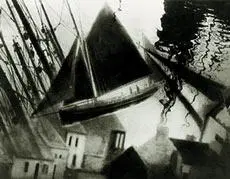
Is Jean Grémillon’s “Un tour au large” worth watching today? Short answer: yes, but with significant caveats. This isn't a film for the casual viewer seeking modern entertainment, but rather a compelling, albeit brief, journey for cinephiles, historians, and those fascinated by the early evolution of documentary filmmaking and experimental cinema.
It serves as a vital historical artifact, showcasing a pivotal moment in French cinema and Grémillon's burgeoning talent. However, its brevity and the challenges of experiencing its full intended impact mean it won't resonate with everyone.
"Un tour au large" stands as a testament to the adventurous spirit of early 20th-century filmmaking. Released in 1928, it predates the full dominance of sound cinema, yet Grémillon was already pushing boundaries, not just in visual storytelling but also in the integration of sound through his custom mechanical piano score. This is a crucial detail, often overlooked or impossible to fully appreciate in modern viewings, but it speaks volumes about the director's ambition.
This film works because of its sheer historical significance as an early impressionistic documentary and Grémillon's pioneering efforts in synchronized sound. It's a window into the artistic and technological ambitions of the era.
This film fails because its short runtime and the likely absence of its original, synchronized score diminish its intended impact for contemporary audiences. Without that meticulously crafted auditory layer, much of Grémillon's vision is lost, making it feel incomplete.
You should watch it if you are an academic, a film student, or someone with a deep interest in the history of cinema, particularly the transition from silent to sound, and the development of documentary forms. It’s not for those expecting a conventional narrative or high-octane action.
Jean Grémillon, often overshadowed by his more celebrated contemporaries, was a filmmaker of profound artistry and intellectual rigor. "Un tour au large" is a foundational piece in his filmography, revealing an early fascination with realism, the working class, and the elemental forces that shape human lives. While later he would craft powerful dramas like "Family Life" and "The Perils of Divorce", his experimental roots are clearly visible here.
The film’s 'impressionistic' label is key. Grémillon wasn't merely documenting tuna fishing; he was interpreting it. He sought to capture the feeling, the rhythm, the sheer physical exertion, and the stark beauty of the industry. This approach elevates it beyond a mere instructional film, positioning it firmly within the realm of art cinema.
Consider the way he frames the fishermen: not as heroic figures, but as integral parts of a larger, more ancient process. Their toil is presented with a raw honesty that avoids sentimentality, yet evokes a deep respect for their craft. It’s a subtle form of characterization, achieved purely through observation and aesthetic choices.
"Grémillon's early work, especially 'Un tour au large,' demonstrates a commitment to cinematic expression that transcends simple storytelling. He was exploring how film could convey emotion and experience through rhythm and imagery alone."
The decision to compose an accompaniment for mechanical piano is particularly fascinating. This wasn't just background music; it was designed to be an integral part of the experience, a precisely timed sonic counterpoint to the visuals. Imagine the clanking of the fishing gear, the splash of the waves, the tension of the catch, all mirrored and amplified by Grémillon's bespoke score. This level of synchronization was groundbreaking for its time, anticipating later innovations in film scoring.
Without that original score, modern viewers are left with a beautiful but somewhat incomplete puzzle. The film's silence, while allowing for personal interpretation, also highlights the absence of a crucial artistic layer. It’s a bit like looking at a blueprint of a magnificent building without ever seeing the finished structure.
The visual language of "Un tour au large" is its most immediate and enduring strength. Grémillon, along with his cinematographer, masterfully captures the volatile beauty of the open sea. The shots of the fishing boats, the vast expanse of water, and the struggle with the tuna are often breathtaking in their stark realism and artistic composition.
There's a palpable sense of the elements at play. The spray of the waves, the glint of sun on the water, the sheer scale of the ocean against the small human endeavor – it's all captured with an eye for both documentary truth and poetic abstraction. This is not a studio-bound film; it feels authentic, windswept, and wet.
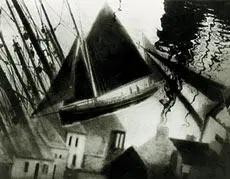
One can almost feel the rocking of the boat, the tension in the lines, the brute force required to haul in the catch. The close-ups on the fishermen's hands, their weathered faces, and the powerful, struggling fish are particularly effective. They convey a narrative without dialogue, telling a story of labor, perseverance, and the timeless cycle of life and death in the marine world.
Compared to other silent-era documentaries, such as Robert Flaherty's work, Grémillon's impressionistic leanings give "Un tour au large" a distinct flavor. It's less about ethnographic observation and more about sensory immersion. It’s a film that asks you to feel, rather than just to watch or learn.
The editing, too, plays a vital role. The rhythm of the cuts often mimics the rhythm of the waves, the casting of nets, or the struggle of the fish. It's a sophisticated interplay of visual tempo, designed to build tension and convey the relentless nature of the work. This attention to internal rhythm is a hallmark of Grémillon's directorial style, evident even in his later, more conventional narratives.
The pacing of "Un tour au large" is deliberate, almost meditative. It allows the viewer to soak in the details, to observe the cyclical nature of the fishing process. There are moments of calm, followed by bursts of intense activity, mirroring the unpredictable rhythms of the sea itself. It never feels rushed, nor does it drag, despite its lack of conventional plot points.
The tone is one of respect and stark realism. There's no romanticization of the fisherman's life, nor is there any overt misery. It simply presents the facts of their existence, the challenges they face, and the skill they employ. This neutrality, combined with the artistic framing, creates a powerful, almost anthropological, effect.
For a modern audience accustomed to rapid-fire editing and constant dialogue, this film demands a different kind of engagement. It requires patience and a willingness to interpret. The silence, in the absence of the mechanical piano, forces the viewer to focus entirely on the visual information, to create their own internal soundtrack of crashing waves and straining muscles.
I'd argue that the film's true power, for a contemporary viewer, lies in this enforced introspection. It becomes a Rorschach test of sorts, where the viewer's own experiences and expectations fill the void. This makes it a uniquely personal viewing experience, albeit one that might frustrate those seeking clear answers or an easy narrative.
Yes, for a specific audience, "Un tour au large" is absolutely worth watching today. It offers invaluable insight into early documentary techniques and the experimental spirit of French cinema.
It's a foundational work by an important director, showcasing his early mastery of visual storytelling. However, it's not a film for everyone.
Those who enjoy fast-paced narratives or modern, easily digestible content will likely find it challenging. It demands a historical perspective and an appreciation for film as an evolving art form.
If you're interested in the roots of cinematic realism or Grémillon's career, it's essential viewing. If you're looking for a Friday night popcorn flick, look elsewhere, perhaps to something like "Welcome Granger" or "One Night Only" for a more conventional experience.
"Un tour au large" is a fascinating cinematic curio, a vital piece of film history that showcases Jean Grémillon's early genius and his innovative spirit. It's an artifact. But it’s flawed. Its impressionistic visuals of tuna fishing are often stunning, and the concept of its meticulously synchronized mechanical piano score is truly groundbreaking for its era. However, the film's brevity and the practical impossibility of experiencing it today as Grémillon intended mean that much of its original impact is lost.
For those willing to approach it with an academic lens and an appreciation for the evolution of cinema, it offers significant rewards. It's a testament to the power of visual storytelling and a reminder of how filmmakers experimented with sound long before its widespread adoption. But for the average viewer, it will likely feel more like a historical document than a fully engaging film. It demands patience. Ultimately, I recommend it for the curious and the devoted, but advise others to temper their expectations. It’s a film to study, not necessarily to be entertained by in the conventional sense. It reminds us that cinema's past is rich with bold experiments, some of which, like "The Love Burglar" or even "A Perfect 36", offered different kinds of innovations that still echo today.

IMDb —
1917
Community
Log in to comment.