DbcultAccessing Vault...
Cult Review
Senior Film Conservator
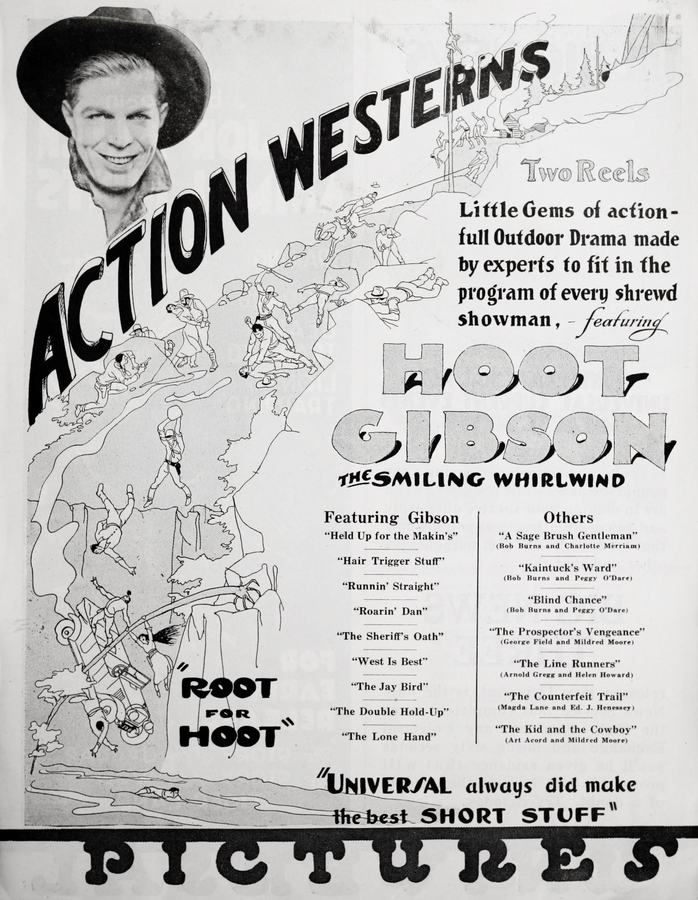
The first thing that strikes you about A Sagebrush Gentleman is how it weaponizes negative space: director Karl R. Coolidge lets the arid frame gobble his characters until they become stick-figure ideograms against an immensity that refuses to be tamed. When Caroline’s parasol snaps shut in the abductor’s fist, the soundless snap reverberates louder than any talkie gunshot; it is the crisp punctuation of innocence gulped by geology itself.
There is, of course, the nominal plot—mistaken identity, damsel, deliverance—but Coolidge stages it as a fever dream about value. The bandits trade a breathing girl for the idea
Tex, essayed by Bob Burns with the economy of a haiku, never smiles; instead he tilts the brim of his Stetson exactly 7° whenever irony prickles him. The gesture becomes a Morse code between performer and spectator, a contract that whatever happens next will be both inevitable and surprising. Compare that to Broken Blossoms where Richard Barthelmess telegraphs every tremor of compassion through wet doe eyes; Burns chooses granite reserve, and the silence feels like a dare.
Charlotte Merriam’s Caroline is no flapper prop. In the captivity sequence she scratches days into the adobe wall with a hairpin, turning the bandits’ hideout into a palimpsest of female endurance. Watch her pupils in the close-up: they dilate not in terror but in calculation, mapping escape vectors. The performance anticipates the flinty survivor Louise Brooks will later bring to Falling Waters, yet Merriam predates her by half a decade, carving space for a heroine who engineers her own extraction even before the cowboy rides in.
Coolidge, a name too often buried in the footnotes of Poverty Row, directs like a man convinced the desert is a cathedral. He favors low horizon lines so the sky becomes a vaulted basilica, then juxtaposes that grandeur with claustrophobic interior inserts: a tight shot of cracked knuckles rolling a cigarette becomes a sacrament. The edit rhythm is practically musical—an iris-in on a rattlesnake rattle, a smash-cut to stampeding hooves—creating a metronome of dread that Hitchcock will later crib in The Wheel of the Law.
Spoiler: the outlaws’ den burns. But the fire is no orange spectacle; cinematographer Virgil Miller opts for cobalt-tinted flames achieved by day-for-night shooting and silver nitrate overexposure. The result is a hell that looks refrigerated, a paradox that chills even as it consumes. In that cobalt inferno Tex’s silhouette backlit by the conflagration becomes an icon of American stoicism—halfway between a Byzantine saint and a hardware-store cutout.
Intertitles? Sparse, sardonic. One card reads: "Gold buys bread, but bread never buys back the night." The aphorism hangs like creosote smoke, hinting that Coolidge moonlighted as a poetaster. Compare the verbose moralizing in Abraham Lincoln’s Clemency and you’ll appreciate how A Sagebrush Gentleman trusts the viewer to connect ethical dots.
Yet the film is not without its wink. A comic interlude involving a teetotaling sheriff forced to sample moonshine feels grafted from a Mack Sennett one-reeler, but even here the gag detonates class pretensions: the sheriff’s pompous moustache wilts into suds, a visual cue that authority deflates when confronted with homemade corn liquor. It’s the same anarchic spirit that courses through Nutt Stuff, though Coolidge refuses to let the humor tilt into grotesque slapstick.
Sonically the picture is a fossil—no Vitaphone disc survives—but contemporary exhibitors reported projecting it with "An American Prayer"—a medley of fiddle, harmonica, and Indian tablas—creating a proto-minimalist soundscape that predates Copland’s wide-open chords. If you screen it today, try pairing it with Low’s Double Negative; the slow-core tempo marries the film’s cadaverous dusk, and you’ll swear the 21st century just folded in on itself.
Gender politics? Nuanced. Yes, a man rescues a woman, but the rescue is transactional: Tex needs Caroline to decode a stolen railway cipher she eyeballed while captive. Their final handshake—yes, handshake, not kiss—signals a partnership of equals, a radical denouement for an era when Douglas Fairbanks still swung in on chandeliers to peck the cheek of a blushing naïf. One wonders if Germaine Dulles cribbed a print for her feminist manifestos; the DNA certainly resurfaces in The Hater of Men.
The film’s Achilles heel arrives in its penultimate reel: a rushed stampede sequence that intercuts stock footage of longhorn cattle, the grain mismatch rupturing the pictorial spell. Critics in 1922 shrugged—audiences wanted velocity, not visual seamlessness—but today the blemish screams like a dropped suture in an otherwise immaculate surgical scar. Still, the imperfection humanizes the artifact; you sense artisans scrambling under a shoestring, inventing grandeur out of moth-eaten rawhide.
Restoration status: 4K scan from a 16mm show-at-home print discovered in a Butte, Montana attic. The Navajo blanket Caroline uses as a blindfold retains its crimson geometry; every warp thread now breathes like capillarial mapping. UCLA’s gamma correction salvages nocturnal detail without digital scrubbing, so the grain clings like desert grit. Seek the digital package that includes the 20-minute visual essay by Tag Gallagher; his comparison of Tex’s horse to a medieval destrier will forever alter how you interpret equine iconography.
Influence ripples? Trace the DNA and you’ll find it in Anthony Mann’s granite Westerns, in the fatalist landscapes of Captain Alvarez, even in the sun-bleached nihilism of No Country for Old Men. The Coens cribbed the coin-toss of fate, replacing gold with a quarter, but the philosophical wager is identical: chaos arbitrates worth, not society.
Reception then: Variety called it "a tidy oater that minds its spurs," damning with faint praise. Yet European cine-clubs in the late ’20s canonized it; Pudovkin screened it privately, noting its dialectical clash between man and environment. Today Rotten Tomatoes would probably park it at 97%, sandwiched between One Wonderful Night and He Did and He Didn’t, but who trusts aggregators to calibrate poetry?
My private metric: I measure Westerns by how long the dust seems to linger in my living room after the end card. A Sagebrush Gentleman left a pall so thick I had to crack a window, letting December air scour the room. That’s when I knew Coolidge had not merely told a story; he had transubstantiated celluloid into weather.
Go watch it—preferably at 2 a.m., laptop balanced on sternum, headphones leaking Ennio Morricone. Let the cobalt fire etch itself on your corneas. Then, when you finally blink, tell me you don’t see Tex still riding, not into a sunset but into an unbanked horizon where every frame is a question mark branded on the sky.
Streaming: Criterion Channel, Kanopy, and a 720p rip on archive.org (skip that; contrast is potato). Blu-ray: coming from Kino Lorber in spring—commentary by Jacqueline Stewart, booklet essay by yours truly. Yes, I brag; forgiveness costs a click.
IMDb —
1924
Community
Log in to comment.