DbcultAccessing Vault...
Cult Review
Senior Film Conservator
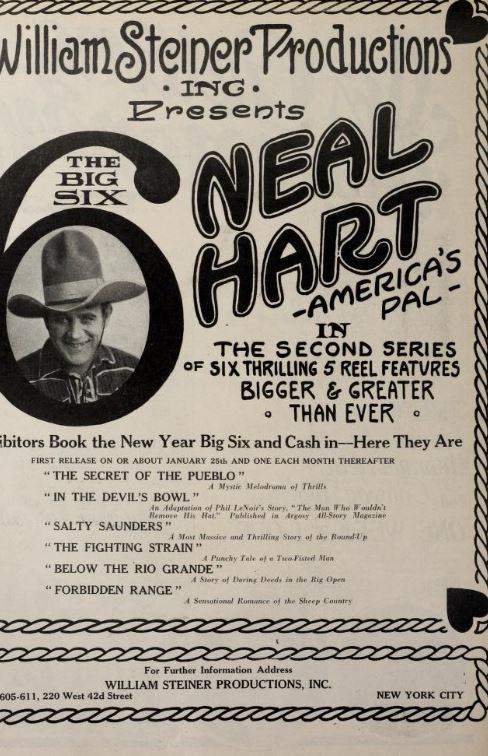
In the annals of silent cinema, few motifs possess the haunting persistence of the sartorial mystery presented in The Devil's Bowl. Directed with a rugged, uncompromising eye by Neal Hart, who also graces the screen with his weathered presence, this film transcends the typical tropes of the Western genre. It operates as a psychological study masquerading as a frontier whirlwind, utilizing the liminal space of the Old Mexico border to reflect the internal fractures of its characters. While many films of the era, such as Hell Bent, leaned heavily into the visceral action of the trail, The Devil's Bowl chooses a path of calculated restraint, anchoring its narrative weight to a single, unexplained habit: the protagonist's refusal to doff his headwear.
The setting is not merely a backdrop but a primary antagonist. The 'Bowl' itself suggests a geological trap, a crucible where morality is melted down and recast. Philip Le Noir’s screenplay understands the inherent drama of the borderland—a place where laws are as shifting as the desert sands and where men go to lose themselves or find a version of justice that the civilized world cannot provide. This topographical choice mirrors the character arcs perfectly. We see a world in transition, captured with a starkness that reminds one of the grittier moments in The Heart of a Lion, yet there is a unique, almost claustrophobic intensity here despite the wide-open vistas.
The cinematography captures the harshness of the Mexican sun with a high-contrast palette that emphasizes the deep shadows under the brims of hats—a visual choice that is, of course, central to the film’s thematic core. The dust seems to permeate the screen, a tactile layer of grime that underscores the 'whirlwind' nature of the plot. Every frame feels heavy with the humidity of the region and the metaphorical weight of the protagonist's secret.
The central conceit—the protagonist's refusal to remove his hat—could have easily descended into farce in the hands of a lesser director. However, Neal Hart treats this quirk with a solemnity that borders on the sacred. It becomes a fortress of the mind. Throughout the film, we are teased with moments of potential revelation. In scenes of intimacy or intense conflict where social decorum would demand the removal of the hat, the character remains steadfastly covered. This creates a fascinating tension; the audience spends as much time scrutinizing the shadow cast over his brow as they do the action of the plot.
This narrative device serves as a brilliant subversion of the 'reveal' structure found in contemporary dramas like The Unattainable. While other films might focus on a hidden identity or a secret fortune, The Devil's Bowl focuses on a physical concealment that implies a spiritual or physical scar. It is a masterclass in building suspense through absence rather than presence.
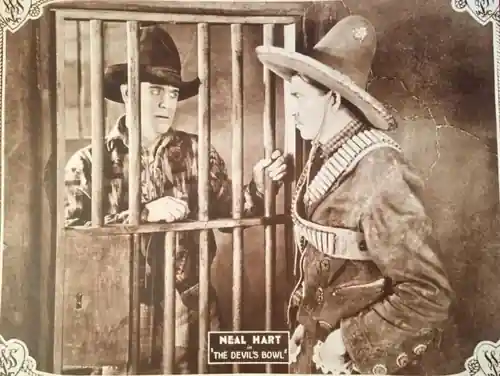
John Beck delivers a performance of remarkable subtlety. In an era often criticized for its pantomimic excesses, Beck utilizes his eyes and the set of his jaw to communicate a complex internal monologue. He is supported by a robust cast including Gertrude Ryan and Mark Hamilton, who provide the necessary human friction to drive the drama forward. Ryan, in particular, offers a performance that balances vulnerability with a frontier-hardened resilience, acting as the emotional compass for a story that often threatens to spin out into chaos.
The chemistry between the leads is palpable, even through the flickering grain of the silent medium. William McLaughlin and Fonda Holt round out the ensemble, each bringing a distinct flavor of the border life—from the opportunistic to the stoic. The interactions are sharp and economical, reflecting the scarcity of the environment itself. There is no room for wasted words or gestures in the Devil’s Bowl.
When comparing The Devil's Bowl to other films of the early 1920s, its unique pacing becomes evident. While The Prince and the Pauper utilized costume and identity for social commentary, this film uses them for psychological interrogation. It lacks the whimsical charm of The Slim Princess or the pastoral melodrama of Caprice of the Mountains. Instead, it shares a certain DNA with the grim fatalism found in Prestuplenie i nakazanie, albeit transposed to the American West.
The film also diverges from the romanticized desert vistas of The Garden of Allah. Here, the desert is not a place of spiritual awakening but a place of hiding. The 'Bowl' is a site of containment. This sense of being trapped—both by geography and by one's own past—is a recurring theme that elevates the film above its B-movie roots. It feels more akin to the high-stakes emotional labor found in Loyal Lives, where duty and personal cost are inextricably linked.
Neal Hart’s direction is surprisingly modern in its focus on character-driven suspense. He avoids the static wide shots that plagued many early Westerns, opting instead for a dynamic camera that feels as though it is stalking the characters. The use of the border as a narrative device allows Hart to play with the concept of 'doubleness'—men with two lives, two names, or two faces. This is a theme explored in different contexts in Para toda la vida and Lavinen, but Hart grounds it in the physical reality of the frontier.
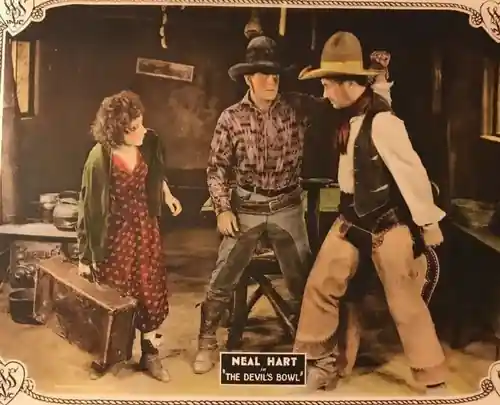
The technical execution, considering the limitations of the time, is exemplary. The editing during the 'whirlwind' sequences—the chases and the confrontations—is rhythmic and pulse-pounding. It captures the frantic energy of a life lived on the edge of a precipice. The film doesn't just tell a story; it creates an atmosphere of pervasive, low-level anxiety that only breaks when the hat finally comes off.
Without venturing too far into spoiler territory, the eventual disclosure of the reason behind the hat is handled with remarkable grace. It is not a cheap gimmick but a poignant revelation that recontextualizes every previous scene. It forces the audience to look back and see the protagonist's actions through a new lens—one of sacrifice, shame, or perhaps a different kind of honor. This kind of narrative payoff is rare and reminds me of the intricate plotting found in Ten of Diamonds or the sophisticated character pivots in The Amateur Wife.
The final moments of the film are etched in the memory long after the credits roll. It is a testament to the power of silent storytelling that such a simple act—the removal of a hat—can carry the emotional weight of a thousand-page novel. It is a moment of pure, unadulterated cinema, stripped of artifice and focused entirely on the human condition.
The Devil's Bowl remains a fascinating artifact of early 20th-century filmmaking. It demonstrates a sophisticated understanding of suspense and character psychology that was often overlooked in the rush to produce action-heavy serials. It stands alongside films like The War Correspondents or De la coupe aux lèvres as a work that attempted to push the boundaries of what 'genre' film could achieve.
For the modern viewer, the film offers more than just historical curiosity. It offers a masterclass in visual storytelling and a reminder that the most compelling mysteries are often the ones we carry with us, hidden in plain sight. Philip Le Noir and Neal Hart crafted a work that is as much about the things we choose to hide as it is about the things we are forced to reveal. In the dusty heat of the Mexican border, they found a story that is universal, timeless, and profoundly human. The Devil's Bowl is a whirlwind that draws you in and doesn't let go until the very last shadow has been lifted.
Review by a devotee of the silver screen, exploring the depths of the Bowl so you don't have to go in blind.
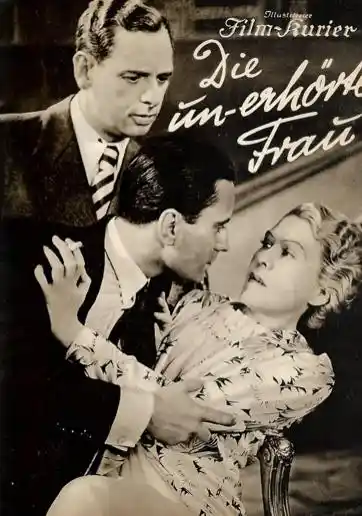
IMDb —
1936
Community
Log in to comment.