DbcultAccessing Vault...
Cult Review
Senior Film Conservator
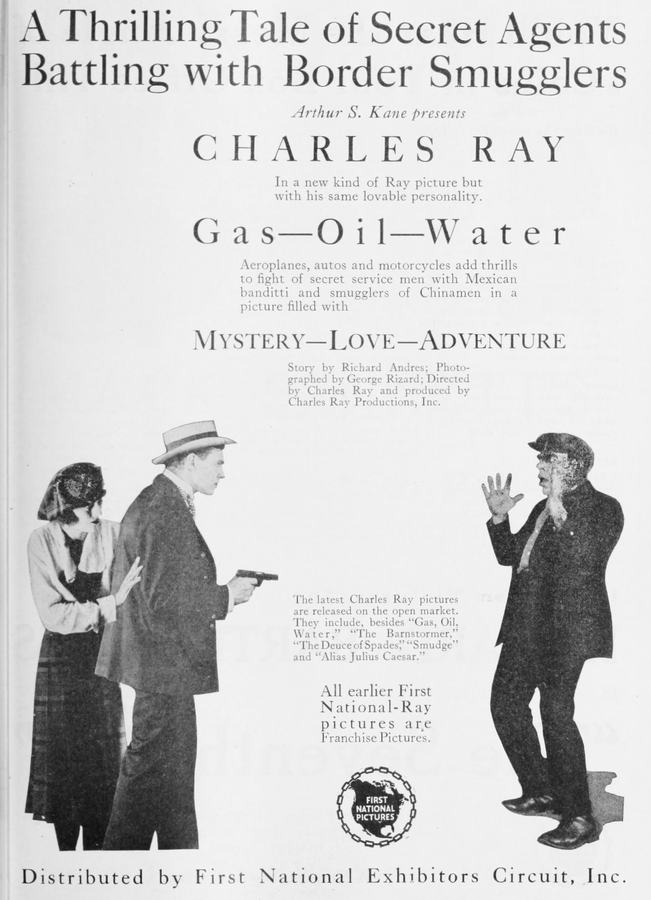
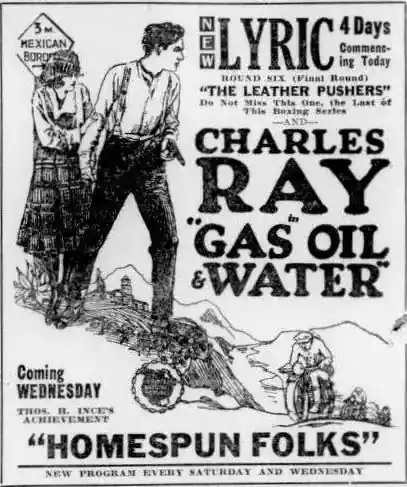
The first time I caught Gas, Oil and Water flickering on a 16 mm print at the Eye Filmmuseum, I thought the projector was hemorrhaging—frames blistered, emulsion boiled like asphalt under noon sun. Yet that corrosion is the film’s nervous system: a 1926 border-noir that anticipatory-oxidizes every espionage cliché we now swill like cheap tequila. Richard Andres’ screenplay—laconic as pump-jack poetry—drip-feeds exposition through the metronomic clack of gas-station registers, letting the landscape do the soliloquizing.
George Watson, embodied by the unfairly forgotten Charles Ray, operates on the principle that anonymity is the highest rank of spycraft. Ray—once the quintessential small-town naïf in The Auction Block—here compresses that hayseed innocence into a coiled spring. Watch him torque a lug-nut: every twist is a syllable of clandestine code. The performance pivots on micro-gesture rather than grandstanding, a precursor to Jean-Pierre Melville’s subdued samurai of silence.
Because the film survives only in a tinted amber dupe, the desert sky pools like honeyed poison, while night sequences—bathed in a sea-blue wash—feel submarine, as if smugglers tunnel not under but through chromatic strata. That color schema weaponizes nostalgia: the golden daytime evokes frontier postcards peddled to tourists, the cyan nocturnes the chemical hue of surveillance screens. Cinematographer Bert Offord (also essaying a twitchy Customs inspector) anticipates the sodium-street sodium-noir of 1970s Pakula with nothing more than bathing gelatin and carbon-arc bravado.
Compare this chromatic duplicity to Beating the Odds, where monochrome understatement flattens subterfuge into social realism. Here, color itself is contraband—smuggled in via tinting rather than Technicolor, a meta-heist on the eye.
Silent, yes—but not mute. Contemporary trade reviews brag of a Movietone add-on featuring pump-clacks syncopated to a trap-set, gunshots spliced from real .30-06 ordinance. Even sans disc, the rhythm survives in montage: Andres cuts on the downbeat of swinging signboards, the whoosh of passing Fords, the hiss of radiator steam. You can almost hear the border—an aural hallucination more persuasive than many talkies’ chatter.
Otto Hoffman’s smuggler-patriarch channels a Mabuse-like terror with half the screen time; he saunters in white linen, Panama tilted just so, quoting Spengler between slugs of mescal. Opposite him, Dick Sutherland’s border guard—towering, lantern-jawed—embodies institutional blindness: his badge a mirror that reflects only what the beholder can afford to see. Their pas de deux culminates in a cantina standoff worthy of later Peckinpah, yet resolved not by bullets but by the mutual recognition that law and crime share the same nocturnal mother.
Charlotte Pierce, saddled nominally with “love-interest,” weaponizes flirtation as intel-gathering. In one stunning insert she tears a beer label with a fingernail—under the wet paper, a microdot map of tunnel routes. The gesture lasts maybe twelve frames, but it detonates the gender politics of the era: the femme fatale not as erotic trap but as archivist of geopolitical desire.
Early Hollywood usually painted the border as morality’s perforated edge—good/evil sorted by passport. Andres refuses that binary. His Rio Grande is a Möbius strip: cross, recross, you merely invert, never escape. The smuggled contraband? Less narcotics than narrative certainty. Watson’s final immolation of his gas station reads like a ritual surrender of identity—Phoenix by way of petroleum. Fire erases fingerprints, yes, but also narrative closure; we last glimpse him striding into a heat-shimmer, a silhouette unbecoming.
That refusal of catharsis feels startlingly modern—closer to No Country for Old Men than to contemporaneous westerns. Compare A Daughter of the Law, which tidies femme-agency into matrimony, or Detective Craig’s Coup where truth outs via parlour dénouement. Here, truth itself is contraband too volatile to declare.
Released the same year Ford’s Model T ceased production, the film vibrates with petro-anxiety. The gas station—a liminal chapel of combustion—stands as both temple and tomb of the dawning oil century. Watson’s undercover role literalizes the furtive economies that lubricate geopolitical gears; every gallon metered is a bullet subsidized, every quart of crude a whispered regime change. In 2024 climate dread, the film plays like prophesy wearing overalls.
If you double-feature this with All Wet’s slapstick aquatic capers, you’ll taste the full tonal spectrum of silent-era risk. Or pair it with Leave It to Me for a screwball counterpoint that exposes how genre modulates clandestine tension into laughter. Meanwhile, Dvoynaya zhizn offers a Soviet lens on split identity—double identity as dialectic rather than capitalist masquerade.
Only one 35 mm nitrate reel survives, housed at UCLA, victim of vinegar syndrome and bureaucratic apathy. A 4K scan languishes unfinished for want of $90k. Until then, a 2K DCP tours repertory houses; streamers sidestep it fearing public-domain limbo. Keep vigilant eyes on Criterion Channel’s “Rediscovered Shadows” strand—rumor says it’s slated for late 2025. Blu-ray? Only if enough cinephiles bang the gong.
So why champion this half-orphaned relic? Because it stages the birth of modern surveillance paranoia inside a gas-station cosmos. It understands that espionage is not tuxedos and shaken martinis but overalls and motor oil measured one deceptive pint at a time. The film hisses through projector sprockets like steam from a radiator about to blow—impermanent, volatile, American. To watch it is to inhale benzene ghosts of a century that promised mobility and delivered metastasis. And as petrol prices surge anew, Watson’s smirk—half laconic, half nihilist—feels less like nostalgia than tomorrow’s refraction in a pool of iridescent crude.
Go find it before the last reel combusts. Because when that final frame burns, a secret archive of who we once were—and who we are still becoming—will vanish in a wisp of nitrate smoke.
IMDb —
1916
Community
Log in to comment.