DbcultAccessing Vault...
Cult Review
Senior Film Conservator
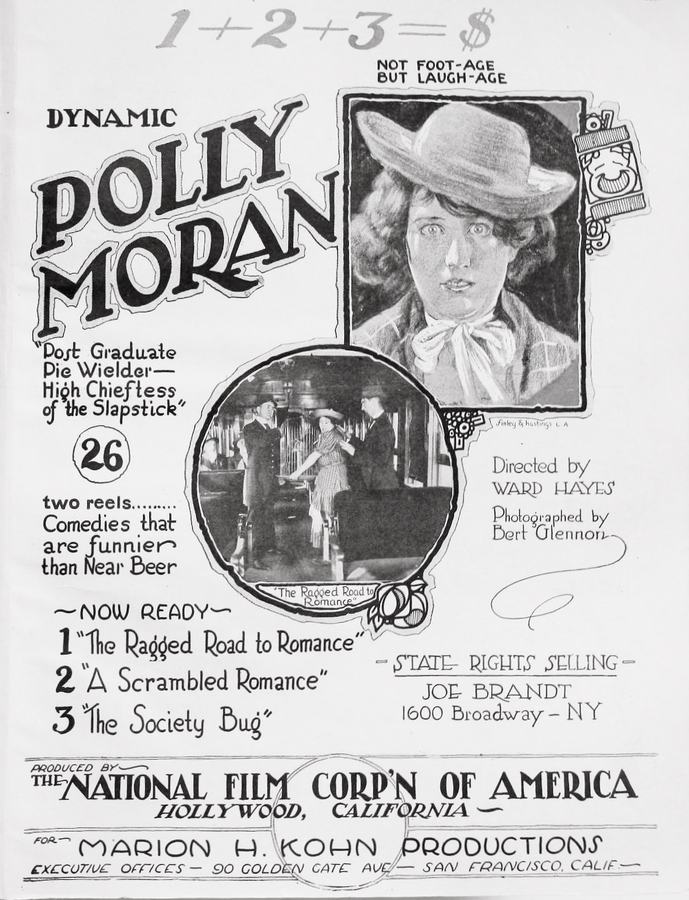
Somewhere between the first thrown egg and the last thrown ring, A Scrambled Romance decides that marriage is not a sacrament but a custard pie still wobbling on the windowsill of absurdity.
Polly Moran, eyes blazing like twin locomotive lamps, bulldozes through this 1917 one-reeler with the gait of a woman who has mistaken her honeymoon for a demolition derby. She is a whirlwind in a lace-trimmed apron, a hoyden whose comic timing snaps tighter than a bear trap. The film—barely twenty minutes—feels like a pocket universe where the laws of physics have been rewritten by a vengeful pastry chef.
Consider the breakfast scene: a sun-splatted tenement kitchen, wallpaper the color of weak tea, a skillet that hisses like gossip. Moran cracks an egg; the yolk slips, saffron and unbroken, onto the crown of her brand-new husband’s bowler. The moment is silent yet deafening, a visual gunshot that ricochets through the rest of the narrative. From this single ovoid indignity springs every slammed door, every mistaken identity, every acrobatic tumble that follows.
Directors (names lost to the chimney of history) stage the marital meltdown like a futurist opera: rooms tilt 30 degrees, intertitles arrive in staccato bursts—“She thinks he’s flirting with the landlady’s poodle!”—and the camera, instead of cutting, pirouettes as though waltzing with the chaos itself. The result feels closer to jump-cut jazz than to the pastoral continuity of, say, Out of the Drifts or the moral melodrama of Resurrezione.
Because the picture was shot in the waning days of two-reel slapstick, it carries the sawdust scent of live revue. Performers address the lens with conspiratorial winks; pratfalls linger half a second longer than physics demands, allowing the audience to savor the impending bruise. Yet beneath the custard surface lurks a modern anxiety: the dread that domestic closeness might curdle into routine violence. When Moran’s character hurls a flatiron at her spouse, the object passes so close to the camera that contemporary viewers reportedly ducked; the gesture is played for laughs, but the metallic whoosh still carries a threat.
Compare this with the storm-laced solemnity of Out of the Storm, where marital strife ends in shipwrecked redemption, or with the cynical horseplay of They’re Off, whose racetrack finale offers romantic victory only by a nose. A Scrambled Romance refuses both redemption and defeat; it prefers the perpetually suspended state of almost-breaking, an emotional poach that keeps the yolk liquid.
Moran’s body—stocky, limber, built like a fireplug—becomes the film’s primary comic device. She wedges herself through dumbwaiters, somersaults across dining tables, and, in one delirious tableau, dangles from the courthouse clock tower, petticoats blooming like a defiant flag. The gag is blatantly indebted to Harold Lloyd, yet gender flips the stakes: instead of a bespectacled everyman clutching modernity’s heights, we have a matron clutching the remnants of a contract that society insists must define her.
Intertitles taunt her with the era’s favorite insult: “Hen-pecker!” But Moran reclaims the epithet, strutting like a barnyard rooster in heels. The film’s true subversion lies in never letting her husband regain narrative control; he remains a reactive blur, a prop in polka dots. Even when a judge attempts to bang the gavel on their divorce, Moran’s flung briefcase knocks the bench into symbolic impotence.
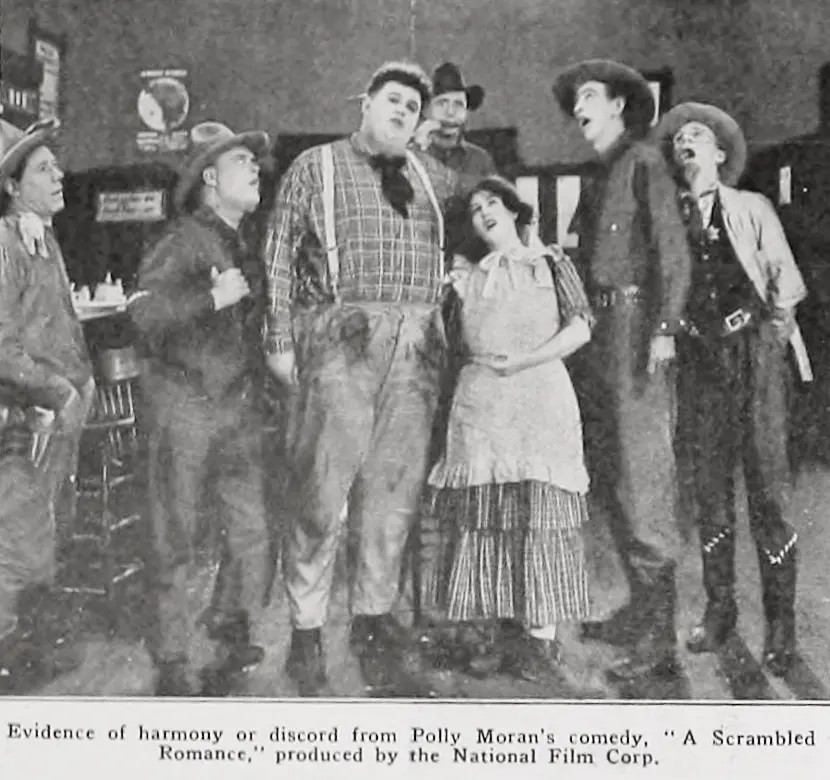
This inversion feels proto-feminist, though the movie stops short of ideology. It is too busy chasing the next laugh, the next collapse of furniture, the next airborne custard. Yet the cumulative aftertaste is unmistakable: marriage, seen through the prism of slapstick, becomes a rigged contest where the woman must win the right to lose on her own terms.
Formally, the picture experiments with elliptical causality. An egg dropped at minute three triggers a divorce paper at minute eighteen, but the connective tissue is missing—deliberately so. The viewer is forced to supply the mad logic, like filling gaps in a dream. This leapfrog structure anticipates Buñuel’s later bourgeois send-ups, yet executes it with the innocence of nickelodeon mayhem.
Lighting deserves a bow: interiors are drenched in tungsten pools that bleach faces into porcelain masks, while exteriors shimmer with over-exposed daylight, turning the city into a bleached bone. The contrast heightens the emotional whiplash—inside, shadows conspire; outside, the world pretends order.
Historians slot the film beside Chicken à la Cabaret for its culinary chaos, or Ginger Mick for its working-class verve. Yet the closer cousins may be European: the marital surrealism of Leichtsinn und Genie and the night-court absurdity of L’hallali. All three films understand that love’s battlefield is littered with legal documents and breakfast food.
Oddly, A Scrambled Romance also rhymes with the same year’s Hamlet, though Shakespeare’s prince never thought to weaponize an omelet. Both works circle the idea that identity is performance; Moran’s unnamed bride simply opts for slapstick where Hamlet opts for soliloquy.
For decades the negative languished in a Montana barn, wedged between moth wings and tractor manuals. When archivists finally unfurled the brittle strips, vinegar syndrome had chewed the emulsion into lunar craters. Digital reconstruction—pixel by pixel, egg by egg—returned the film to a ghost of its flicker. Yet the scars remain: occasional bubbles blossom across the frame like blisters, reminding viewers that cinema itself is a fragile membrane between past laughter and present silence.
Festival audiences now greet each screening with the reverence once reserved for Griffith epics. Critics cite its influence on everything from I Love Lucy’s conveyor-belt hysterics to the food-fight climax of Phantom Thread. The Academy’s recent mention in its “Moments of Silence, Moments of Sound” retrospective certifies that even the industry’s gatekeepers recognize its DNA.
So what keeps us returning to this cracked omelet of a film? Perhaps it is the way Moran’s laughter—caught in a final freeze-frame—hovers between triumph and terror, suggesting that to love another human is to live forever on the verge of slipping yolk. Perhaps it is the realization that all domestic battles, when stripped of décor, reduce to the same ingredients: two wills, one skillet, and the audacity to keep flipping.
In an age when romantic comedies arrive pre-masticated by algorithm, A Scrambled Romance offers the anarchic pleasure of a recipe never meant to work. Its timing is reckless, its sentiment scalding, its resolution nonexistent. Yet every time the projector clatters to life, the eggs fly anew, and we remember—briefly, gloriously—that love, like breakfast, tastes best when the yellow heart stays liquid enough to stain everything it touches.
IMDb —
1917
Community
Log in to comment.