Summary
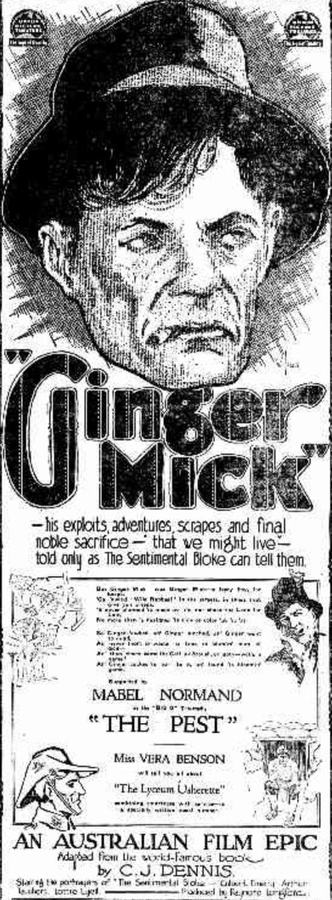
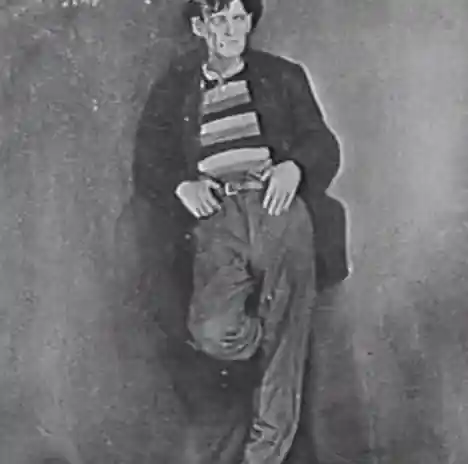
Beneath the flicker of a carbon-arc lamp, a larrikin larva named Ginger Mick—part street poet, part sparring partner to the demon drink—writhes through the cobblestone corridors of pre-war Woolloomooloo, his copper thatch ablaze like a warning beacon. The film, a celluloid aria stitched from C. J. Dennis’s vernacular sonnets, refuses to walk; it dances a slow, defiant tango between slapstick and psalm. When the recruiting posters bloom like poppies on brick, Mick’s bellicose bravado masks a tremor: the dread that his swagger might be nothing more than a penny-stall performance. Queenie Cross’s Rose-Ann—part Madonna, part barmaid—hovers at the edges, her eyes twin wet plates preserving the moment before the khaki tide drags him to a Gallipoli that looks suspiciously like an Australian paddock sprayed with talcum. Lottie Lyell’s co-writing hand steadies the camera, letting silence pool where lesser melodramas would trumpet; thus the farewell at Circular Quay becomes a secular Pietà, tram bells substituting for church bells. The reels mutate: sepia trench tableaux where Gilbert Emery’s padre recites the mass in a voice cracked by sand and guilt; Arthur Tauchert’s bellowing sergeant who has never read Dennis but intuitively speaks it; Jack Tauchert’s blinded stretcher-bearer groping for Mick’s shoulder, mistaking it for a cross. Home again, limping on a leg of timber and myth, Mick confronts the mirror-city that no longer recognises its own reflection—pubs renamed, women enfranchised, mates fossilised into names on stone. The final shot—his silhouette dissolving into a wheat-field that sways like an emerald ocean—renders victory absurd, loss sacramental, and silence the only tongue left unbroken.
Review Excerpt
"
I first saw Ginger Mick in a mildewed church hall at a 1989 film-society fundraiser; the projector clattered like a Maxim gun, yet even through the warp of third-generation vinegar stock the thing pulsed—an ember refusing to die. Ninety-odd years later, courtesy of a 4K NFT scan, that ember roars. The plot, deceptively simple, is a cartography of masculine panic: larrikin makes good, larrikin loses limb, larrikin confronts the abyss of his own voice. But Longford, ever the poet, chisels each f..."