DbcultAccessing Vault...
Cult Review
Senior Film Conservator
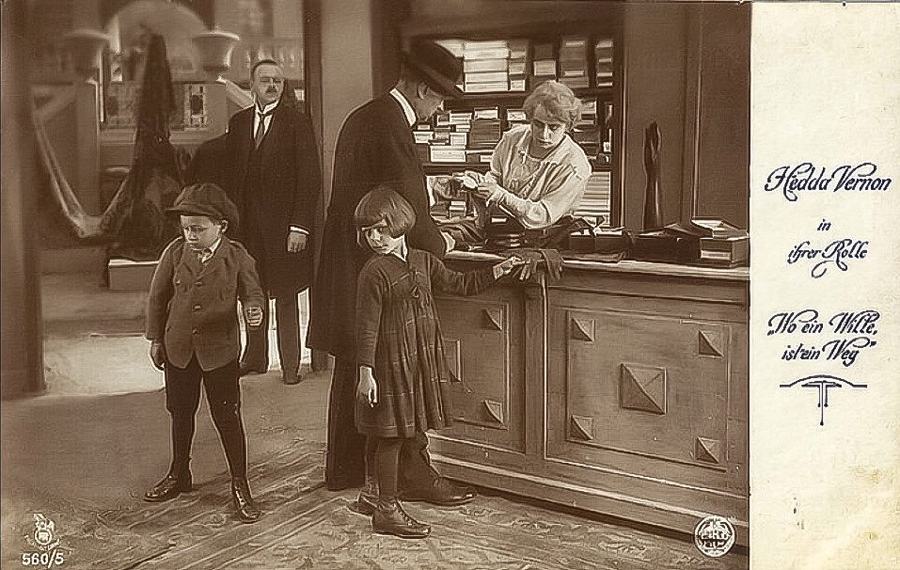
A velvet curtain lifts on the immaculate horror of respectability.
In the flicker of nitrate and candle-power, Wo ein Wille, ist ein Weg stages a bourgeois salon like a mausoleum upholstered in damask: every teacup aligned with the precision of a firing squad, every smile pinned in place by ancestral diamonds. Hedda Vernon glides through the frame as if her spine were corseted by dynastic guilt; her gaze, half lambent, half lethal, anticipates the moment when the gilded walls will echo not with politesse but with the hollow clang of insolvency. That clang arrives via Kurt Walden’s monocled fecklessness—he signs away fortune, honor, and presumably the ghost of his future heirs on a single turn of a pasteboard queen. The camera, suddenly unshackled, ricochets from chandelier to parquet, mirroring the psychic free-fall of a woman who realizes that the safety net of marriage is woven from cobwebs and IOUs.
What distinguishes this 1915 sleeper from the era’s standard moral melodramas is its refusal to administer the opium of redemption. No providential uncle materializes; no beneitable countess trades charity for contrition. Instead, the narrative plunges—literally—into the underbelly of Berlin, where streetlamps flicker like faulty synapses and the Spree river reeks of sulphur and lost passports. Vernon’s descent is shot in vertiginous chiaroscuro: her silhouette swallowed by archways, her face splintered in puddles that reflect not moonlight but the bilious glow of tavern signs. Each dissolve feels surgical, excising another layer of social skin until the woman who once ordered gloves by the dozen must bargain for a crust of bread with a sonnet scavenged from memory.
Olga Engl, cigarette clenched between carnivorous teeth, presides over a nocturnal cabaret that feels like Beauty in Chains reimagined by Toulouse-Lautrec on a laudanum bender. Her madam—equal procuress and prophetess—delivers a manifesto while unlacing a chorus girl: "Survival is the only morality left once the lights go out." The line, hurled like a brick through the fourth wall, reverberates through the film’s moral vacuum. Compare this with The Upper Crust, where class transgressions are tidily punished by marriage; here, transgression is merely the fare for staying aboard a runaway tram.
Marie von Buelow’s tubercular seamstress, all cheekbones and camphor, functions as a cracked mirror to Vernon’s former privilege. Their shared attic scene—two women mending a ball gown with sewing pins and desperation—plays like a pagan communion: the aristocrat learns to darn while the invalid learns to dream. Watch how cinematographer Willy Goldberger frames their hands in macro before pulling back to reveal the constellation of moths circling a solitary candle. The insects, indifferent to pedigree, enact the film’s thesis: yearning burns equally in silk or sackcloth.
Ernst Hofmann’s anarchic caricaturist, sketching cops with porcine snouts and industrialists bloated on children's bones, injects a streak of grotesque satire that anticipates Le pied qui étreint by a full decade. His studio, plastered with blasphemous broadsides, becomes the film’s moral nerve center: a place where art chooses sabotage over solace. When Vernon poses for him—her once-pristine pearls now replaced by a necklace of rusty keys—Goldberger lights her profile like a cathedral gargoyle, sanctifying not virtue but volition.
Richard Wilde’s intertitles, sparse yet venomous, read like Nietzschean fortune cookies: "Woe to the weak of will; they shall be maps for the strong." Each card, letter-pressed on soot-black stock, slams onto the screen with the finality of a guillotine blade. The rhythm—image, darkness, text—induces a hypnotic staccato that makes later German expressionism feel almost chatty by comparison. Viewers who relish the claustrophobic fatalism of The Beast will recognize the same hermetic dread, minus the supernatural alibi; here, the monster is merely the sum of human choices.
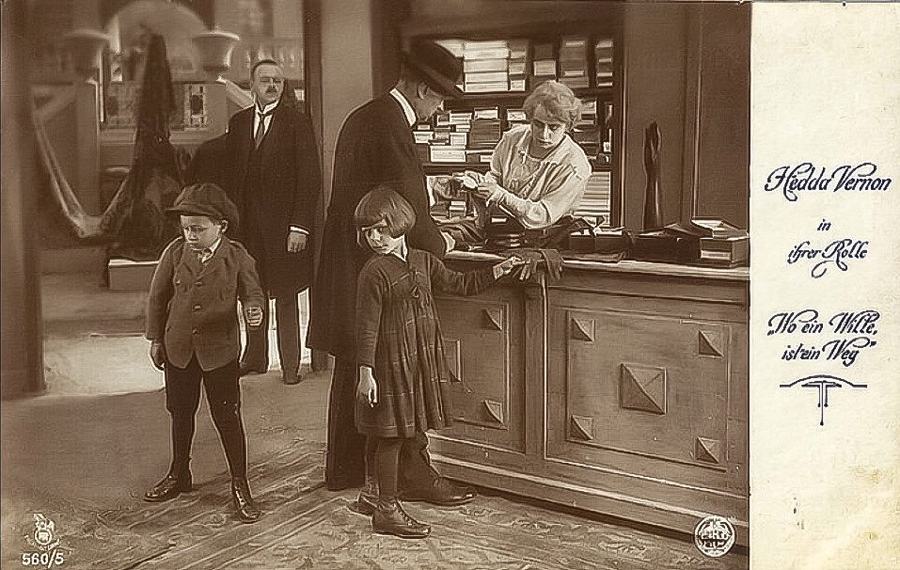
Act three abandons Berlin for a marshy outskirt where dawn never quite commits. Vernon, now in men’s trousers and a stolen greatcoat, boards a freight train whose destination is never named. Moest withholds the customary montage of new beginnings; instead, the camera clings to her face as the locomotive gathers speed. In that protracted close-up—eyes blazing like twin furnaces stoked by every slight she ever swallowed—she wordlessly rewrites the social contract. No husband, no child, no church, no coin; only the irreducible fact of will. The train vanishes into a dissolve that feels less like closure than like a gauntlet hurled forward through time, challenging 1915 audiences—and 2025 viewers—to imagine a world where a woman’s autonomy is not a moral dilemma but a locomotive that barrels on, tickets optional.
Technically, the film is a masterclass in budgetary ingenuity. Goldberger recycles the same cramped set for parlor, tenement, and jail by rotating wall flats and swapping gas jets for kerosene. The result is a Brechtian instability: spaces feel simultaneously hermetic and porous, as though morality itself were a movable prop. Contrast this with the opulent tableaux of A napraforgós hölgy, where décor is destiny; here, décor is a costume to be shed.
Performances oscillate between operatic gesture and proto-Stanislavskian minimalism. Vernon’s hands—trembling like trapped sparrows during the bankruptcy scene—speak louder than any subtitle. In the cabaret, she delivers a chanson in a voice we never hear yet somehow perceive: her throat’s flutter, the micro-twitch of eyebrow muscles, the way she grips the microphone stand as if it were the last branch over an abyss. Film historians who fetishize the flamboyant histrionics of early Hampels Abenteuer will find here a performance that whispers catastrophe rather than trumpeting it.
Gender politics? Revolutionary for 1915, still prickly now. The film refuses to punish female ambition; neither does it sentimentalize sisterhood. When Vernon abandons von Buelow’s consumptive seamstress to her fate, the cut is abrupt, almost callous. Yet this moral shrug feels honest: survival is not a sorority. Compare the saccharine solidarity of For barnets skyld, where maternal martyrdom redeges all sins; here, motherhood is mentioned once, derisively, then dropped like a scalding coal.
Restoration-wise, the surviving 35 mm print is riddled with emulsion ulcers and projector burns. Yet those scars enhance the narrative wounds: every flicker feels like moths nibbling at the edges of respectability. Digital cleanup would cauterize this bruised beauty; thank the archival gods that the Munich Filmmuseum opted for a 2K scan that preserves blemishes like bruises on a peach. The tinting—amber for interiors, viridian for exteriors, rose for the cabaret—follows no scholarly logic, but the emotional grammar is impeccable: we feel the temperature shift before we can intellectualize it.
Score? None survives, so modern screenings invite accompaniment that ranges from doom-jazz trios to single bowed saw. I caught a 2023 Berlinale showing with a collective who looped factory sirens beneath detuned tangos; the dissonance married the visuals so thoroughly that when the train lurched toward its unnamed horizon, the audience exhaled as one organism, as though we too were shedding passports and pearls.
In the current cinematic landscape—where every heroine must be likeable, every arc redemptive—Wo ein Wille, ist ein Weg feels like a cold slap of schnapps. It offers no catharsis, only combustion. You will not cheer; you will lean forward, heart wedged between teeth, wondering if will alone can derail a society rigged against velocity. That the film dares to leave the question hanging, smoke still curling from the engine, is its fiercest triumph. Seek it out in any form—scarred print, digitized twitch, or merely the afterimage seared onto your retinas—and discover why 1915 Germany, teetering on the precipice of trenches and revolutions, already knew that the most radical act is simply to keep moving when the world insists you have already arrived.
IMDb —
1925
Community
Log in to comment.