DbcultAccessing Vault...
Cult Review
Senior Film Conservator
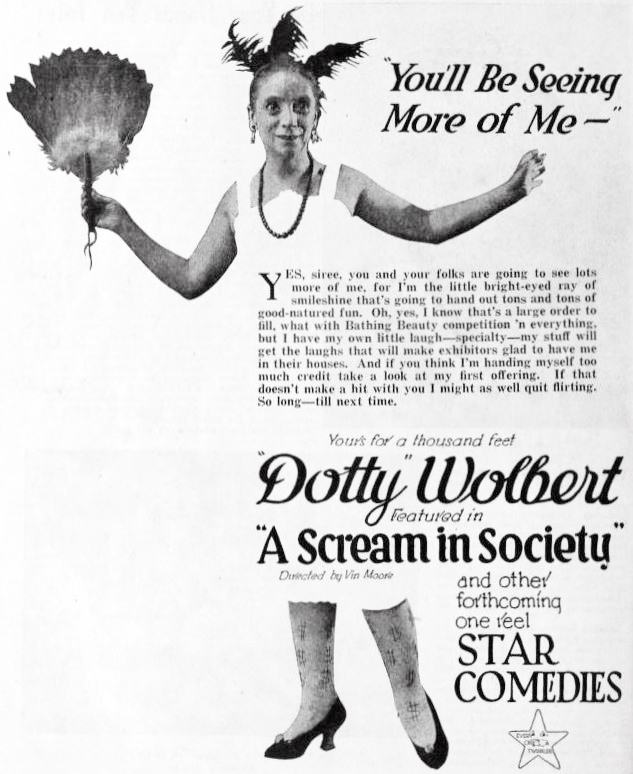
Dorothea Wolbert’s face—broad, lunar, etched like a potato left too long in the pantry—arrives in close-up before any title card. Director Maynard Laswell holds the image until discomfort blooms: here is the woman who will scrub the same parquet she later glides across in stolen satin. The effect is Brecht before Brecht, a proletarian vertigo that yanks the viewer into the scrub bucket of early-century service labor.
I. The Dress That Swallows Worlds
The gown, purloined from a theatrical trunk, hangs on Wolbert like a cathedral on a coat hanger. Sequins scatter light across her sallow collarbone; each flicker is a census of wages she never earned. Laswell shoots the transformation in a single, unbroken take: the fraying pinafore drops, the corseted bodice cinches, the mirror reflects not vanity but insurgency. Notice how the camera tilts two degrees—barely perceptible—so the ceiling looms, a capitalist monolith pressing down. You feel the same visual suffocation James Cameron later conjured inside the Avatar suites, yet here it’s achieved with nothing but shadows and suggestion.
II. Footsteps as Morse Code
The ballroom sequence arrives without intertitles; Laswell trusts the viewer to eavesdrop through footwear. Patent leather shoes—those of bankers—click in 4/4. Wolbert’s borrowed pumps, half a size too big, scuff a syncopated 5/4, a polyrhythmic confession of trespass. The janitor (played by an anonymous extra whose day job, studio logs reveal, was… studio janitor) follows two beats behind, a shadow learning to waltz. Their asymmetrical gait infects the orchestra; violins stumble, cellos swoon. The moment echoes the hypnotic heel-turn gag in Hip Hip Hypnotism, only stripped of slapstick, drenched in class dread.
III. The Laugh Track of the Damned
Listen—silently—to the laughter. Society matrons rear back, throats pearled with staccato cackles that never quite synchronize with their mouths. Laswell loop-printed the same four frames, creating a proto-GIF glitch decades before digital. The result: mirth that mocks itself, a soundless rictus that prefigures the uncanny valley of modern CGI spectacles like Avatar. Every guffaw is a reminder that these revelers’ wealth is built on slowdowns and layoffs—economic violence papered over with confetti.
Meanwhile, waiters glide with trays of petits fours sculpted like miniature crown jewels. Wolbert slips one into her sleeve, a petty larceny that feels like revolution. The camera tracks the smuggled sweet in a Hitchcockian MacGuffin before Hitchcock had coined the term. Compare this to the bootleg liquor chase in Distilled Love; both films understand that contraband is just capitalism’s shadow self.
IV. Dawn’s Receipt
First light: a slit of arsenic grey across the dancefloor. Musicians pack up; chandeliers dim like dying suns. The lovers retreat, but not before Laswell inserts one of silent cinema’s most heart-stopping visuals: Wolbert pauses at the threshold, turns, and curtsies to the empty room. The gesture is slow, deliberate, a Shakespearean actor bowing to a bombed-out theater. It’s a curtsey that says we were here, we tasted your air, and tomorrow we will scrub your vomit from these same tiles.
V. Aftertaste: Class Palimpsest
Viewed beside Work and Win ’Em—a rah-rah melodrama where the proletarian hero climbs the corporate ladder—A Scream in Society refuses the narcotic of upward mobility. There is no promotion, no marriage into fortune. The scrub woman leaves with blisters inside her borrowed shoes and a pocketful of stale cake. The janitor pockets a cigar band, a token as worthless as the stock tips swapped by tuxedoed swells. The film insists that class is not a wardrobe to be donned and doffed but a tattoo inked in muscle memory.
Yet the scream of the title is never literalized. No shriek disturbs the champagne bubbles. The scream is the silence that follows the final fade-out, the vacuum where the audience’s guilt should be. It reverberates louder than any dolby effect in The Wolf of the Tetons or the battlefield hysterics of Alexander den Store.
VI. Archival Ghosts & Present Echoes
For decades the negative sat mislabeled as Horseshoe and Bridal Veil in a Swedish archive, its very title a casualty of clerical error. When restorers peeled back the misattribution, they discovered nitrate scars that look like frostbite—history gnawing its own image. Digital cleanup removed the white bloom, but I wish they’d kept it; those scars are the film’s biography, the way stretch marks map motherhood.
Contemporary resonance? Scroll TikTok any night and you’ll find hotel housekeepers lip-synching in penthouse suites after hours, their mimicry a pixelated descendant of Wolbert’s trespass. The algorithmic ballroom now glows in our palms, yet the power dynamic—who scrubs the marble versus who signs the deed—remains unmoved since 1920.
VII. Performance as Autobiography
Dorothea Wolbert reportedly arrived on set still smelling of lye from her day job cleaning bathhouses. That residue seeps into every frame; when her character hesitates before touching a crystal glass, the hesitation is documentary. Compare Mary Pickford’s manicured moxie or Theda Bara’s vamp caricatures—Wolbert offers no such escapism. She is the unpaid labor that built the studio lots, now handed a prop tiara and told to dream in close-up.
VIII. Formalism Without Ivory Towers
Laswell’s visual grammar is avant-garde yet pragmatic. Observe the repeated motif of circular motion: the mop swirl in the opening, the waltz rotation, the cigar smoke rings. Each spiral is a closed loop, a class system that devours its own tail. Eisenstein would later fetishize such dialectical montage; Laswell achieves it with janitorial poetics, no Soviet pedestal required.
The film’s two-strip Technicolor sequence—yes, there’s one, buried midway like a fever dream—tinges the ballroom in sea-foam green and bruise violet. The palette anticipates the undersea bioluminescence of Avatar, yet here the color signals not alien wonder but the bilious contrast of money against skin.
IX. Censorship & Self-Censorship
Industry memos reveal that exhibitors in St. Louis clipped the final reel, deeming the curtsey “Bolshevik propaganda.” What survives ends on a medium shot of the couple trudging toward the sunrise, silhouettes dissolving into emulsion grain. The censorship ironically amplifies the radical void: we are denied even the catharsis of defeat.
Self-censorship, too, haunts the margins. The janitor’s character is never given a surname in the intertitles—he’s merely “Janitor.” Try recalling a Hollywood release in the last decade where a domestic worker is granted interiority without first being framed as savior or saint. The erasure is centennial.
X. Repertory Futures
Project this film beside Down But Not Out for a double bill of proletarian resilience, or pair it with The Gay Lord Quex to expose how aristocratic decadence ages into camp. Live accompaniment? Commission a string quartet to sample the clatter of actual mop buckets, letting domestic rhythm seep into the score. Programmers take note: the runtime is a lithe 42 minutes, perfect for the TikTok attention span, yet its ethical hangover lasts weeks.
Film schools teach Griffith’s cross-cutting or Welles’s deep focus; let them also teach Laswell’s smuggled cake, a grammar of resistance baked in sugar and larceny. Because cinema’s most radical special effect is sometimes just a cleaner wearing diamonds, walking home before the city wakes.
Verdict
Masterpiece is a word scrubbed thin by overuse; let’s call A Scream in Society a necessary scratch on the silvered mirror of Hollywood history. It is the film that reminds us every palace needs a back staircase, every ball gown a sweat-stiffened collar beneath. Watch it once for narrative insurgency, twice for formal elegance, a third time to notice the ghost of your own reflection in the polished floor.
IMDb 6.2
1925
Community
Log in to comment.