DbcultAccessing Vault...
3.9/10
Senior Film Conservator
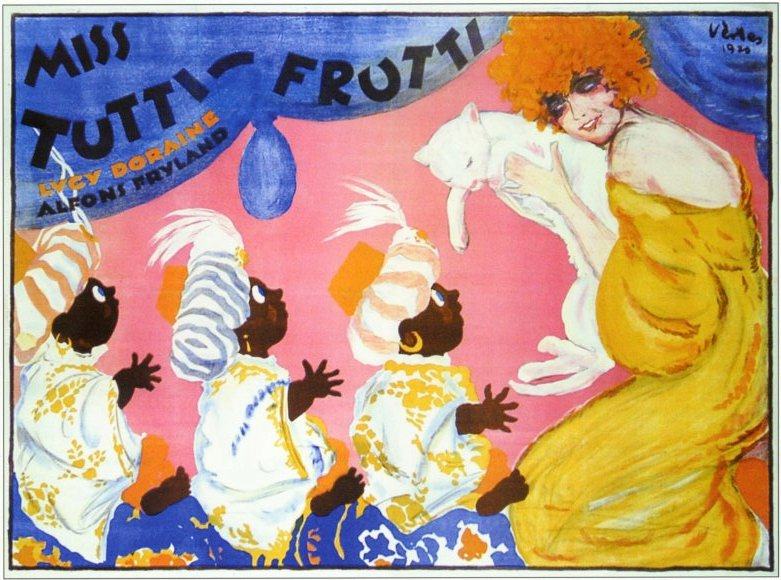
A definitive 3.9/10 rating for a film that redefined the boundaries of cult cinema. Mrs. Tutti Frutti remains a cornerstone of transgressive art.
Mrs. Tutti Frutti, directed with a chiaroscuro precision by Friedrich Porges, is a film that lingers in the mind like a half-remembered dream—a phantasmagoria of ambition and decay. Set in a world where the glitter of pre-war salons conceals the rot of moral compromise, the film dissects the psyche of its titular character, played with riveting vulnerability by Lucy Doraine. Her performance is a masterclass in physicality, each flick of her wrist, each arched eyebrow a cipher to a life lived in layers of artifice.
The plot, though deceptively simple, is a Möbius strip of entanglements. Doraine’s protagonist, a widow of considerable social standing, navigates a web of alliances and betrayals in a town where every smile hides a dagger. Her marriage, a hollow vessel of tradition, becomes a battleground for existential warfare. Alphons Fryland, portraying her estranged husband, brings a simmering resentment to the role, his brooding presence a counterpoint to Doraine’s calculated grace. The film’s true innovation lies in its use of time—present-day intrigues are intercut with spectral flashbacks, each memory a palimpsest of guilt and desire.
Porges’ script, often compared to the biting social critiques of The Shimmy Gym and Miss Hobbs, elevates the melodrama to a form of psychological excavation. The dialogue is sparse, yet every silence is a character in itself. The film’s most striking sequence—a dinner party where each guest’s mask slips in turn—echoes the moral disintegration of The Week-End, but with a sharper edge of existential dread. Here, the tension isn’t just between characters but within them, a battle between the self they project and the abyss they fear.
The cinematography is a character in its own right. Shadows crawl across Doraine’s face during a pivotal monologue, her reflection in a gilded mirror cracking like a conscience splintered by lies. Armin Springer’s cinematography—a blend of Expressionist angles and naturalistic light—creates a visual language that mirrors the narrative’s duality. One scene, where Doraine walks through a moonlit garden, is a study in contrasts: her silhouette, sharp and angular, is framed against a background of soft, amorphous fog, symbolizing the tension between control and chaos that defines her existence.
The supporting cast is a mosaic of eccentricity. Armin Springer, as the enigmatic Count von Lichtenstein, delivers a performance that is both seductive and unsettling, his every line a veiled threat. His dynamic with Doraine is charged with a sexual tension that hovers between affection and annihilation. Oskar Sachs, playing a jaded journalist, adds a layer of sardonic wit, his character a Greek chorus to the tragedy unfolding. The ensemble’s chemistry is electric, each actor’s idiosyncrasies contributing to the film’s aura of precarious instability.
Mrs. Tutti Frutti’s sound design—though silent in the traditional sense—is a symphony of suggestion. The clink of glasses, the rustle of silk, the muffled sob in a hallway—all are amplified to the point of becoming narrative punctuation. This aural economy mirrors the film’s thematic focus: the way small gestures can signify monumental emotional shifts. The absence of dialogue forces the audience to read between the lines, to listen with their eyes, making the viewing experience as much about what is unsaid as what is performed.
Comparisons to other films are inevitable. Like Satanasso, Mrs. Tutti Frutti explores the seductive power of the forbidden, but where the former leans into overt horror, this film sublimates its dread into the mundane. The pacing, however, diverges from the frenetic energy of The Raiders, opting instead for a slow-burn tension that simmers to a climax of quiet devastation. It is in this restraint that the film finds its power—a refusal to sensationalize its themes, allowing them to resonate through implication.
The film’s climax—a confrontation between Doraine and her deepest self—is a masterstroke of visual and emotional economy. Framed in a long take, the scene uses minimal camera movement to maximum effect, the weight of the moment conveyed through the actors’ faces. Doraine’s final breakdown is not a catharsis but a collapse, her mask slipping not in a flourish of drama but in a slow, inevitable unraveling. The audience is left in the uncomfortable position of voyeur, complicit in the destruction of a woman who, in many ways, is a product of the society that surrounds her.
In the broader context of silent cinema, Mrs. Tutti Frutti stands as a testament to the medium’s capacity for nuance. It avoids the pitfalls of over-the-top melodrama that plague films like A Broken Doll, instead offering a more restrained, psychological depth. The film’s exploration of gender roles and power dynamics also echoes the subversive themes of The Invisible Enemy, though with a distinctively feminine lens. Porges’ direction, often described as a “visual haiku,” manages to say volumes in the space of a glance or a gesture.
Perhaps the most enduring quality of Mrs. Tutti Frutti is its ambiguity. It resists easy interpretation, offering no simple moral judgments or clear resolutions. This is a film that demands active engagement, rewarding the viewer who dares to sit with the discomfort of its themes. In an era where cinema often seeks to provide answers, Mrs. Tutti Frutti is a rare work that embraces the beauty of uncertainty—a mirror held up to the viewer, reflecting not just the characters’ dilemmas but our own.
Technically, the film is a marvel. Springer’s camera work, particularly in the use of deep focus and Dutch angles, creates a sense of unease that lingers long after the credits roll. The art direction—decaying chandeliers, peeling wallpaper, and half-empty glasses—serves as a visual metaphor for the characters’ inner states. Even the score, though added in later restorations, complements the film’s mood with its dissonant harmonies and sudden silences.
For modern audiences, Mrs. Tutti Frutti is both a period piece and a timeless cautionary tale. Its themes of identity and power transcend its 1920s setting, resonating with the same urgency in the age of #MeToo and digital personas. The film challenges us to consider what it means to perform authenticity in a world where identity is often a curated illusion. In this light, it is not merely a relic of the past but a vital, urgent work that speaks to the contradictions of our own time.
In conclusion, Mrs. Tutti Frutti is a film that defies categorization, a work that is as much about what it doesn’t say as what it does. It is a triumph of silent cinema, a testament to the power of visual storytelling, and a haunting exploration of the human condition. For those willing to meet it on its own terms, the film offers a rich, rewarding experience that lingers in the mind like the taste of forbidden fruit.

IMDb 8.6
1933
Community
Log in to comment.