DbcultAccessing Vault...
7/10
Senior Film Conservator
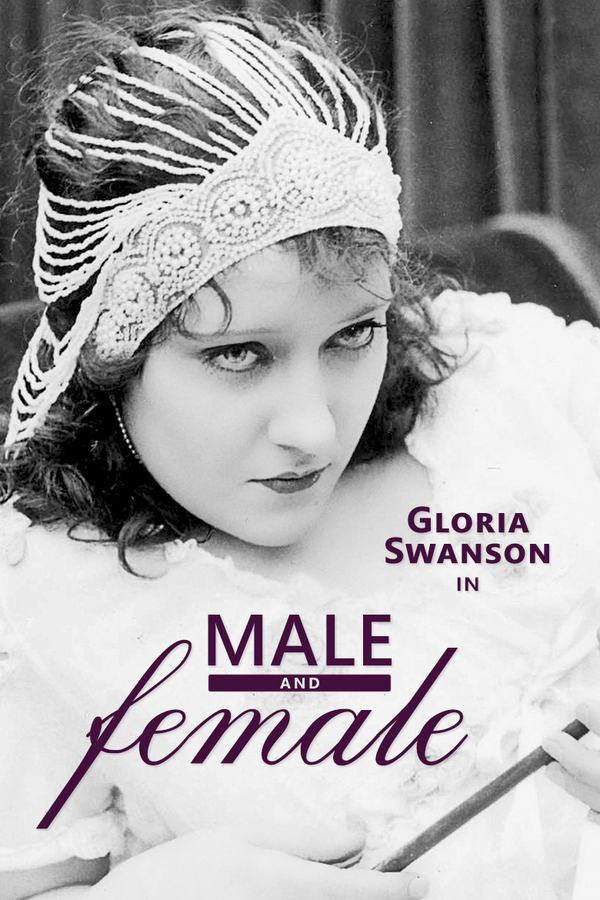
A definitive 7/10 rating for a film that redefined the boundaries of cult cinema. Male and Female remains a cornerstone of transgressive art.
Step into the opulent, yet ultimately fragile, world of Edwardian aristocracy, then watch it shatter against the unforgiving forces of nature. Cecil B. DeMille’s 1919 masterpiece, "Male and Female," is more than just a silent film spectacle; it's a profound social experiment played out on the grandest cinematic stage. Long before reality television marooned contestants on desert islands, DeMille, with his characteristic blend of lavish production and incisive social commentary, took J.M. Barrie's play "The Admirable Crichton" and transformed it into a cinematic crucible. This film is a fascinating artifact, not merely for its historical significance as a silent era blockbuster, but for its enduring relevance in dissecting the arbitrary constructs of class and gender, revealing the raw, unvarnished truth of human character when stripped of societal artifice. It asks, and dramatically answers, the timeless question: what truly defines a person's worth?
DeMille, even in his early career, was a filmmaker of immense ambition and unparalleled vision. He understood the power of visual storytelling, crafting narratives that were simultaneously grand and intimate, often exploring themes of morality, temptation, and redemption within extravagant settings. "Male and Female" stands as a testament to this prowess, presenting a stark dichotomy between the gilded cages of London society and the untamed wilderness of a deserted island. The initial scenes, depicting the pampered existence of Lady Mary Lasenby and her aristocratic circle, are a masterclass in visual irony. We see servants scurrying, anticipating every whim, while the gentry engage in frivolous pursuits, utterly detached from the practicalities of life. This meticulous portrayal of Edwardian excess isn't just for show; it's a deliberate setup, a dramatic prelude to the radical inversion of social order that awaits. DeMille’s ability to juxtapose such contrasting worlds within a single narrative, transitioning seamlessly from drawing-room comedy of manners to a gripping survival drama, underscores his remarkable directorial dexterity.
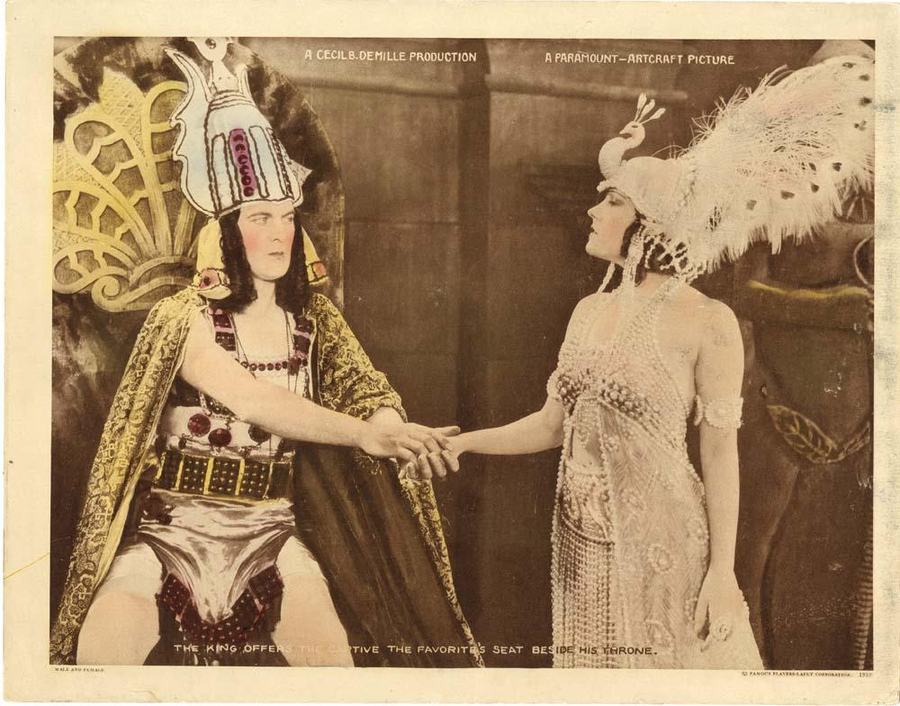
Consider the sheer audacity of the production for its time. The shipwreck sequence, for instance, is a marvel of early cinematic special effects, conveying chaos and terror with an immediacy that still resonates. It’s not just a plot device; it’s a symbolic act, a violent cleansing that strips away the superficial layers of civilization. This cataclysmic event serves as the ultimate equalizer, throwing lords and ladies, butlers and maids, into the same desperate struggle for survival. Much like his earlier work in "The Woman God Forgot" (1917), where dramatic spectacle often served as a backdrop for moral quandaries, DeMille uses the grand scale here to amplify the human drama, making the physical journey as much about internal transformation as external struggle.
At the heart of "Male and Female" pulsates the captivating presence of Gloria Swanson as Lady Mary Lasenby. Swanson, even in her nascent years as a leading lady, possessed an undeniable star quality—a magnetic blend of beauty, vivacity, and a fierce intelligence that shone through the silent screen's limitations. Her portrayal of Lady Mary begins as a triumph of entitled petulance. She is the quintessential spoiled heiress, accustomed to having her every desire met, her whims dictating the rhythm of her household. Swanson masterfully conveys this initial haughtiness, using subtle gestures, imperious glances, and a regal bearing to establish Mary's aristocratic detachment. Her initial interactions with her staff, particularly with the seemingly subservient Crichton, are laced with an unconscious arrogance that defines her pre-shipwreck existence.

However, it is on the desolate island that Swanson truly shines, delivering a performance of remarkable depth and evolution. The transformation of Lady Mary is not sudden but gradual, a poignant shedding of artifice under the harsh glare of necessity. The elaborate gowns are replaced by tattered rags, the pampered hands learn to forage, and the imperious gaze softens with humility and desperation. Swanson conveys the visceral shock of survival, the dawning realization of her own helplessness, and the slow, arduous process of adaptation. We witness her struggle, her fear, and ultimately, her resilience. This arc is crucial to the film's message, and Swanson navigates it with an authenticity that makes Lady Mary's journey utterly compelling. Her emotional range, from initial disdain to eventual admiration and even love, is a testament to her nascent genius as an actress, foreshadowing the iconic performances that would define her career.
The film's most powerful moments often revolve around Lady Mary's interactions with Crichton, where Swanson's expressions convey a complex interplay of burgeoning respect, confusion, and attraction. She learns to value qualities she once dismissed – the practical skills, the leadership, the quiet strength that Crichton embodies. This shift is not just external; it's an internal revolution, beautifully articulated through Swanson's nuanced performance, making Lady Mary one of the most compelling female characters of the early cinematic era. It's a testament to Swanson's power that she could make such a transformation believable and deeply moving without uttering a single spoken word.
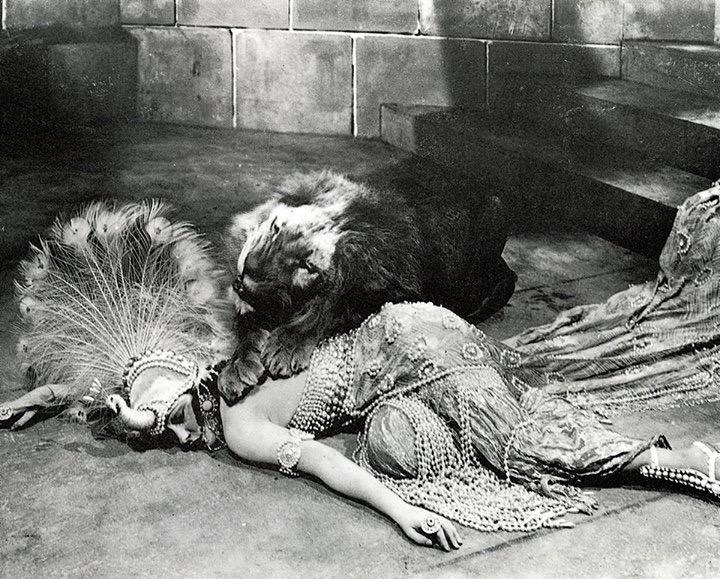
Thomas Meighan, as Crichton, the meticulous butler, provides the perfect foil to Swanson's Lady Mary. Meighan’s performance is a masterclass in understated dignity and quiet competence. In the Lasenby household, he is the epitome of the devoted servant, a man whose life is defined by service, efficiency, and an unwavering adherence to social protocol. His initial portrayal is one of silent observation, a man who sees everything but says little, his professionalism a shield against the casual dismissiveness of his employers. Yet, even in these early scenes, Meighan imbues Crichton with an innate sense of capability, a latent strength that hints at the leader he is destined to become.
Once shipwrecked, the dynamic between Crichton and the aristocracy undergoes a radical reversal. On the island, the rules of polite society are irrelevant. Titles and inherited wealth mean nothing in the face of hunger, danger, and the need for shelter. Here, Crichton's practical skills—his ability to build, hunt, and organize—become invaluable. He effortlessly assumes leadership, not through force or decree, but through his sheer competence and ability to provide for the group's basic needs. Meighan’s portrayal of Crichton’s ascent is subtle yet powerful. There's no gloating, no overt challenge to the former hierarchy; merely a natural assumption of responsibility that highlights the inherent absurdity of the class system they left behind. He becomes "Governor," a title earned through merit and necessity, not birthright. This transformation is not just a personal journey for Crichton but a profound commentary on the nature of authority itself, demonstrating that true leadership is born of ability and character, rather than inherited status.
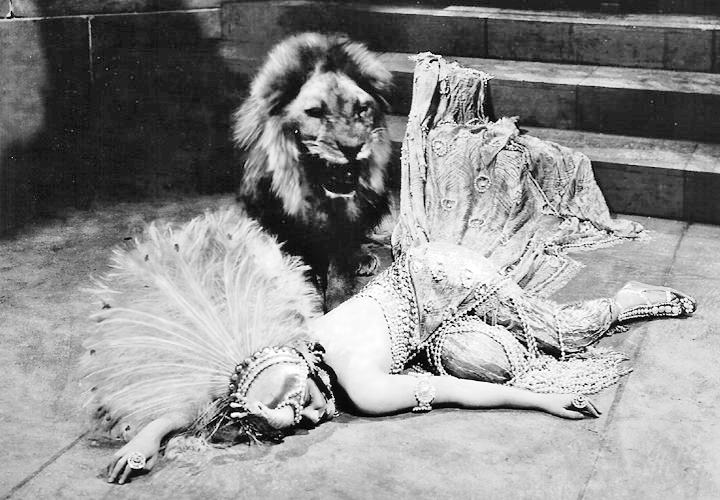
The developing relationship between Crichton and Lady Mary is the emotional core of the film. Meighan and Swanson share a palpable chemistry, conveying a complex dance of shifting power dynamics, growing respect, and forbidden attraction. Crichton’s unwavering loyalty, even as he assumes command, speaks volumes about his character. He never loses his innate sense of decency, even when the tables are turned. This nuanced portrayal elevates the film beyond mere adventure, transforming it into a poignant examination of human connection across societal divides. It’s a testament to both actors' abilities that this evolving bond feels authentic and deeply felt, despite the constraints of silent film acting.
The most striking theme in "Male and Female" is undoubtedly its bold exploration of class inversion. J.M. Barrie's original play, "The Admirable Crichton," was a sharp satire of Edwardian class structures, and DeMille translates this critique to the screen with stunning clarity. The island acts as a social laboratory, stripping away the artificial layers of hierarchy that define civilization. When survival becomes the paramount concern, the inherent uselessness of aristocratic "breeding" and the immense value of practical skills are brutally exposed. Lady Mary and her ilk, once masters of their universe, are rendered helpless, while Crichton, the embodiment of the working class, rises as their natural leader. This reversal is not presented as a simple triumph of the proletariat, but as a natural consequence of a world where merit, not lineage, dictates survival. It's a powerful statement on the arbitrary nature of social standing, suggesting that beneath the veneer of titles and wealth, all humans are fundamentally equal in their vulnerability and capacity for ingenuity. The film provocatively asks: what happens when the "male" of the civilized world, defined by status, is replaced by the "male" of the wild, defined by capability?
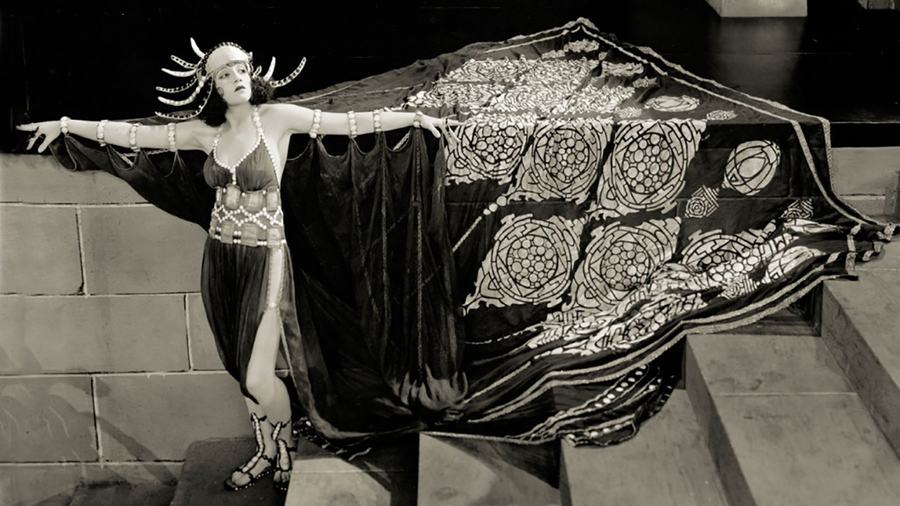
The film's title itself, "Male and Female," invites a deeper look into its commentary on gender roles. While the primary focus is on class, the narrative also subtly explores how traditional gender expectations shift under extreme pressure. On the island, women like Lady Mary are forced to shed their delicate personas and engage in physically demanding tasks, discovering an inner strength they never knew they possessed. The "female" of society, often confined to domestic or ornamental roles, is compelled to embrace a more primal, self-sufficient "female" identity. Similarly, the men, regardless of their former social standing, must revert to basic hunter-gatherer roles. The film suggests that true gender roles are not immutable societal constructs but adaptive responses to environmental demands. It’s a fascinating, if sometimes simplistic, look at how survival can strip away the performative aspects of gender, revealing a more fundamental human capacity for adaptation. This theme resonates with other DeMille films that often depicted strong female characters navigating challenging circumstances, such as in "The Death Dance" (1918) where women often found themselves in perilous situations, revealing their true mettle.
The deserted island functions as a symbolic Eden, a pristine state of nature where humanity is tested and redefined. The film contrasts the suffocating artificiality of Edwardian society with the liberating, albeit dangerous, freedom of the wild. On the island, the characters are forced to confront their primal selves, to rely on instinct rather than etiquette. This return to a state of nature is not romanticized; it is brutal and demanding, yet it also allows for a more authentic form of human connection to emerge. The film subtly critiques the stifling conventions of civilization, suggesting that while it provides comfort and order, it also obscures genuine human potential and creates arbitrary divisions. The island, conversely, strips away these illusions, forcing a confrontation with essential truths about self and others. This push and pull between the comforts of society and the raw honesty of nature is a recurring motif in literature and cinema, and DeMille captures it here with powerful visual metaphors.
While Swanson and Meighan command the screen, the supporting cast contributes significantly to the film's rich tapestry. Lila Lee as Tweeny, the scullery maid, provides a poignant counterpoint to Lady Mary, her practical skills and humble demeanor making her a natural fit for the island's demands. Her journey, though less pronounced than Mary's, still highlights the film’s central themes of class and utility. Raymond Hatton as Lord Loam and Theodore Roberts as the Earl of Loam effectively portray the bewildered and ultimately helpless aristocracy, their comedic helplessness serving to underscore Crichton's competence. Their initial inability to adapt, their clinging to outdated social norms even in the face of imminent danger, is both humorous and tragic, further amplifying the film's social critique.
DeMille also weaves in fantastical elements, notably a dream sequence where Lady Mary imagines herself as a sacrificial victim to a lion in a primal, ancient setting. This sequence, with its striking visuals and symbolic power, serves as a vivid representation of Mary's subconscious fears and her struggle to adapt to a more primitive existence. It's a bold artistic choice that breaks from the realism of the survival narrative, adding a layer of mythic grandeur and psychological depth. This kind of imaginative visual storytelling was a hallmark of the silent era, allowing filmmakers to explore inner worlds without dialogue.
The film's ending, particularly the return to civilization, is another fascinating aspect. The characters, irrevocably changed by their island experience, find themselves struggling to reintegrate into the very society that once defined them. The arbitrary class distinctions, once so natural, now feel absurd and suffocating. This provides a bittersweet conclusion, underscoring the lasting impact of their ordeal and the difficulty of truly escaping the gravitational pull of societal norms. It forces the audience to ponder whether the "lessons learned" on the island can truly endure in the face of ingrained social structures.
"Male and Female" is more than just a historical curiosity; it is a vibrant, engaging, and remarkably prescient film that continues to provoke thought and discussion. Its themes of class disparity, the nature of leadership, and the adaptability of the human spirit are as relevant today as they were over a century ago. DeMille’s audacious vision, combined with the powerful performances of Gloria Swanson and Thomas Meighan, elevates it far beyond a simple adventure story. It’s a testament to the power of silent cinema to convey complex ideas and profound emotions through purely visual means.
The film showcases Cecil B. DeMille at the height of his silent era powers, demonstrating his mastery of spectacle, character development, and social commentary. It's a film that bravely dissects the facade of polite society, revealing the raw, often uncomfortable, truths beneath. For anyone interested in the evolution of cinema, the career of Gloria Swanson, or the enduring power of a well-told story, "Male and Female" is an essential viewing experience. It reminds us that true worth is not measured by the crown one wears, but by the character one reveals when all crowns are stripped away. It’s a compelling argument for the notion that adversity, while painful, can be the ultimate crucible for self-discovery and the forging of genuine human connection. The film’s intricate dance between social satire and dramatic survival makes it a truly unique and memorable piece of cinematic history, inviting viewers to question their own assumptions about hierarchy and humanity. It certainly holds its own against other dramatic silent films of the era, offering a distinct blend of adventure and social critique that few could match. Its influence can be seen in countless survival narratives and class-conscious dramas that followed, proving its foundational role in cinematic storytelling.
IMDb 3.5
1917
Community
Log in to comment.