For anyone curious about early 20th-century romances on screen,
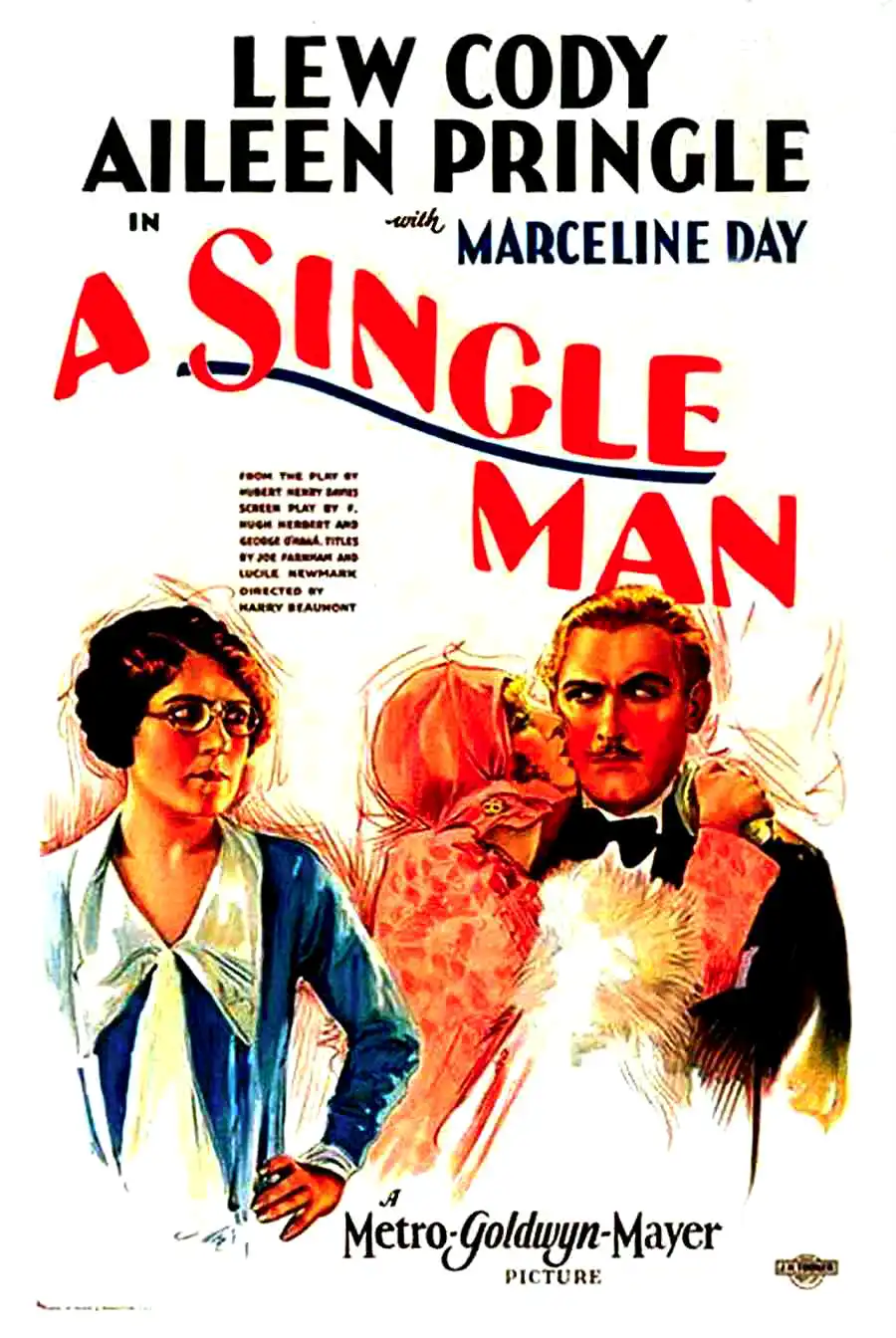
A Single Man from 1923 offers a peculiar glimpse. It’s definitely a watch for silent film enthusiasts or those really into how relationships were portrayed back then. If you’re looking for fast-paced action or super deep psychological drama, you’ll likely find this one a bit slow. 🤔 You might even find yourself checking the clock.
The film centers on Robin Worthington, played by Lew Cody. He’s introduced as this somewhat rigid, middle-aged guy, a real creature of habit. You see him almost physically *resist* the idea of a younger woman’s attention at first, which is actually pretty amusing. His body language during these early scenes, all stiff shoulders and averted gazes, is quite expressive for the era. He’s practically squirming in his own skin.
Then, of course, he falls for her. The shift in Cody’s performance is really noticeable here. He goes from being so rigid to suddenly, almost clumsily, enamored. It’s a good portrayal of someone completely out of their depth, like a fish flopping around on dry land. You can almost feel the movie trying to convince you this sudden, passionate attraction really matters, pulling him right out of his shell.
His whole temperament supposedly changes "profoundly." And, well, it does, in a silent film kind of way. He gestures more dramatically, he looks more *distraught* when things don’t go his way. It’s less about subtle emotional shifts and more about big, clear movements for the camera. Some of those reaction shots linger for quite a bit, and I found myself wondering what he’s truly thinking. Or perhaps just waiting for the next cue. 🤷♀️ There’s one close-up where he just stares off into the middle distance for what feels like an eternity, and I thought maybe the film stock had frozen.
But the real pivot, and honestly, the most interesting visual part of the film, comes with Mary Hazeltine, Robin’s secretary, played by Aileen Pringle. Mary starts out pretty unassuming, almost invisible. She’s just *there* in the background, doing her secretarial duties. Nothing really stands out about her, which I guess is exactly the point they were trying to make.
Then she leaves. And when she comes back? Wow. The transformation is genuinely *striking*. She returns 'strikingly beautiful and wearing the latest new fashions.' And I mean, they really lean into this dramatic makeover. Her outfits are suddenly these elaborate, eye-catching ensembles, full of frills and bold patterns. The hat she wears in that one particular scene? It’s practically a character all its own, demanding your full attention. You can tell they put a lot of effort into making her return feel like a grand, cinematic entrance.
It’s a classic Hollywood trope, this whole "plain Jane becomes a stunner." And it happens here with such a straightforwardness, almost without question. One moment she's blending into the wallpaper, the next she's absolutely commanding attention with every frame. It truly makes you think about how much appearance really dictated a character's journey and potential in these early films. It’s a bit on the nose, but effective for its time.
Lew Cody, as Robin, does a decent job selling his newfound interest in the 'new' Mary. His eyes widen, he straightens up a little, his whole posture shifts. It’s like he’s seeing her for the very first time, even though she’s been right there all along, probably filing his taxes. The scene where he first truly *notices* her after her transformation is probably the most effective romantic beat in the whole picture. It almost feels a little unfair to the 'old' Mary, if you think about it too much.
Some of the larger crowd scenes, though, feel a little sparse. Like, you see a few people walking around, but it doesn't quite convey a bustling city street or a lively party. It's an easy thing to overlook, but once you notice it, it kinda sticks in your mind. Like, where did all the other extras go? Did they run out of budget? 🚶♂️ I did spot one extra though, in the background of the park scene, who seemed to be having a very