DbcultAccessing Vault...
5.2/10
Senior Film Conservator

A definitive 5.2/10 rating for a film that redefined the boundaries of cult cinema. Never Touched Me remains a cornerstone of transgressive art.
The opening tableau of Never Touched Me is a study in visual irony: chandeliers glitter above cracked porcelain, and polished brass fixtures gleam beside a greasy fry‑pan that sputters in the kitchen’s shadow. This juxtaposition immediately signals the film’s central conceit—an environment that promises refinement yet delivers farcical disappointment. Billy Fay’s protagonist, a lanky figure with a perpetually furrowed brow, enters the café clutching a crumpled love letter, his eyes fixed on the radiant Bebe Daniels, whose presence radiates both allure and unattainability.
Noah Young, cast as the protagonist’s confidant, embodies the archetype of the well‑meaning sidekick whose attempts at assistance invariably exacerbate the chaos. His slap‑slap‑slap routine—tripping over a misplaced napkin, colliding with a tray of soup, and inadvertently spilling a fountain of coffee onto a patron’s lap—creates a kinetic rhythm that propels the narrative forward. The physical comedy is not merely ornamental; each tumble and spill serves as a narrative beat, underscoring the protagonist’s escalating desperation.
Lew Harvey’s character, a suave yet duplicitous entrepreneur, arrives with the intention of securing a lucrative contract with the café’s owner. His polished diction and smooth gestures mask a self‑serving agenda, and his rivalry with Fay’s hero becomes a chess match of wits and subterfuge. The tension reaches a fever pitch when Harvey, mistaking a serving spoon for a weapon, launches a comedic assault on the kitchen staff, prompting a cascade of pratfalls that echo the film’s thematic preoccupation with mistaken identity.
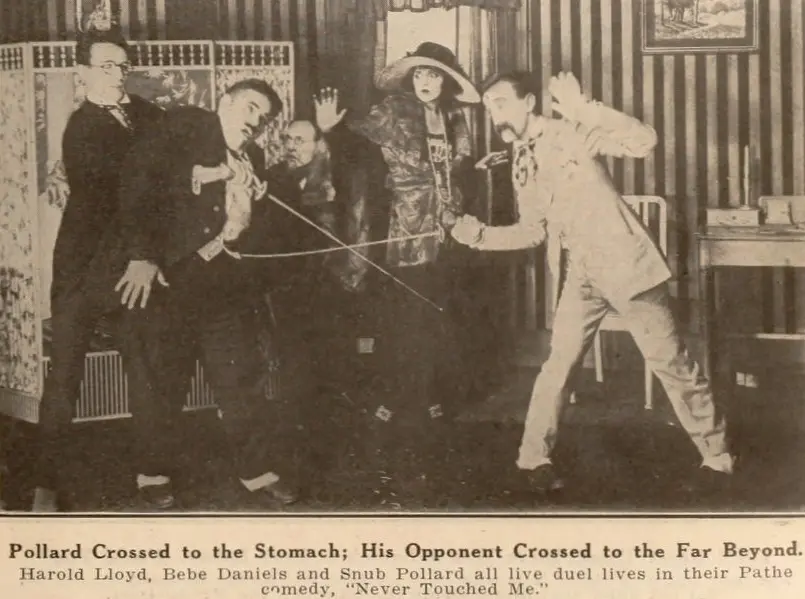
'Snub' Pollard, the film’s resident jester, occupies the role of the chaotic catalyst. His exaggerated facial expressions and rapid‑fire physicality transform ordinary moments into spectacles of absurdity. In one memorable sequence, Pollard attempts to juggle a set of plates while navigating a narrow hallway, only to be thwarted by an errant rolling pin that ricochets across the room, striking a chandelier and sending glittering crystals raining down upon the unsuspecting diners. This scene, choreographed with meticulous timing, exemplifies the director’s mastery of visual comedy.
Harold Lloyd’s cameo, though brief, injects a poignant counterpoint to the surrounding mayhem. As a solitary figure perched on a stool, he gazes wistfully at a photograph of a distant lover, his eyes reflecting a melancholy that transcends the film’s otherwise buoyant tone. This fleeting moment of introspection offers a reminder that beneath the veneer of slapstick lies a universal yearning for connection.
The narrative’s emotional core is anchored in the evolving relationship between Fay’s protagonist and Bebe Daniels. Their interactions oscillate between shy glances across the café’s polished counter and frantic misunderstandings fueled by the surrounding chaos. Daniels’ performance is a study in nuanced expressiveness; her eyes convey longing, frustration, and amusement without uttering a single word, a testament to the silent era’s reliance on visual storytelling.

As the plot thickens, the café’s kitchen becomes a battlefield of culinary catastrophe. A misdelivered order triggers a chain reaction: a pot of boiling broth overflows, soaking a nearby patron; a mis‑spooned garnish lands on a gentleman’s lap, prompting an impromptu dance of flailing limbs; and a stray chicken, liberated from its cage, darts across the floor, pursued by a frantic waiter wielding a broom. These vignettes, while comedic, also serve as allegories for the characters’ internal turbulence—each spill and scramble mirroring their own emotional disarray.
The film’s pacing is relentless, yet never exhausting. The director employs a series of escalating set‑pieces, each more elaborate than the last, to maintain audience engagement. The climactic kitchen showdown—where Fay, Young, and Pollard converge in a synchronized ballet of slapstick—culminates in a spectacular collapse of the café’s façade. The chandelier, previously a symbol of opulence, crashes to the floor in a shower of glass, exposing the stark, unadorned walls beneath. In this moment, the film strips away its own artifice, revealing the raw humanity of its characters.
Comparatively, Never Touched Me shares thematic DNA with contemporaneous works such as Hearts of Love and The Combat, both of which explore love’s turbulence amidst chaotic settings. However, where those films lean heavily on melodrama, Fay’s film embraces a more kinetic, almost anarchic energy, aligning it more closely with the frenetic rhythm of All Wrong and the slapstick brilliance of Cameo Kirby. The intertextual resonance underscores the era’s fascination with the juxtaposition of refined environments and unrefined human behavior.
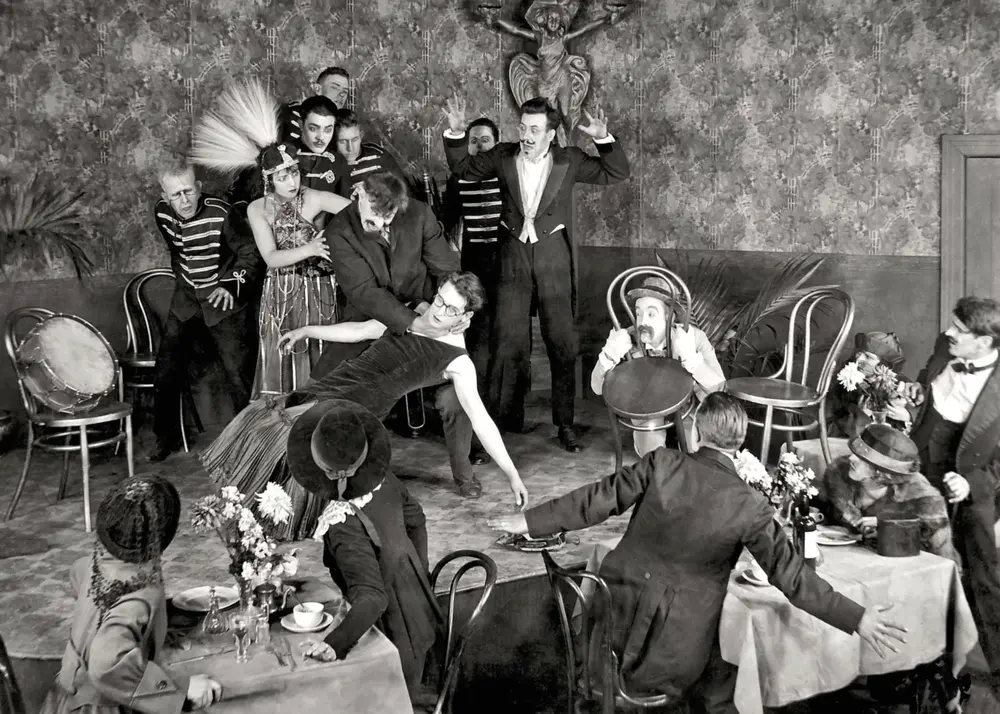
The cinematography, though constrained by the technological limitations of the early 1920s, exhibits a surprising sophistication. Static wide shots capture the bustling café interior, while occasional close‑ups—particularly of Daniels’ expressive eyes—draw the viewer into intimate emotional spaces. The use of chiaroscuro lighting accentuates the contrast between the café’s illuminated elegance and the shadowy corners where mischief brews, reinforcing the film’s visual metaphor of surface versus substance.
From a technical standpoint, the editing is crisp, with rapid cuts during the kitchen mayhem that heighten the sense of urgency. The intertitles, sparingly employed, are witty and succinct, allowing the physical comedy to dominate the narrative flow. The film’s score—reconstructed in modern screenings by contemporary composers—blends jaunty ragtime motifs with plaintive strings during the more tender moments, further amplifying the emotional spectrum.
The ensemble cast delivers performances that oscillate between exaggerated farce and subtle pathos. Lew Harvey’s suave villainy is undercut by moments of inadvertent clumsiness, rendering him both threatening and endearing. Lige Conley and James T. Kelley, in supporting roles, provide additional layers of comic relief, their timing impeccable. Wally Howe’s brief appearance as a disgruntled patron adds a touch of realism, grounding the film’s more fantastical elements.
Beyond its immediate entertainment value, Never Touched Me offers a commentary on the social stratifications of its time. The café, marketed as a first‑class establishment, serves as a microcosm of a society that prizes appearance over substance. The film subtly critiques this façade by exposing the incompetence and desperation lurking beneath polished surfaces, a theme that resonates with modern audiences accustomed to curated digital personas.
The film’s legacy, though eclipsed by the towering fame of contemporaries like Charlie Chaplin and Buster Keaton, remains significant within the silent comedy canon. Its influence can be traced in later works that blend romantic entanglement with slapstick chaos, such as the 1930s screwball comedies of the Marx Brothers. Moreover, the film’s daring use of a single location—a café—to orchestrate an entire narrative arc demonstrates an early mastery of spatial storytelling that would inspire future filmmakers.
In terms of cultural relevance, the film’s exploration of unrequited love, class disparity, and the absurdity of social rituals continues to echo in contemporary cinema. Modern audiences, when presented with restored versions of the film, often remark on its timeless humor and the universality of its characters’ struggles. The film’s ability to elicit both laughter and empathy underscores its enduring artistic merit.
The final tableau—where the shattered chandelier lies amidst a sea of broken glass, and the protagonists, bruised yet smiling, share a quiet moment of mutual understanding—encapsulates the film’s central thesis: that authenticity triumphs over artifice. The café’s physical collapse mirrors the characters’ emotional breakthroughs, suggesting that true connection can only emerge when pretenses are stripped away.
For scholars and enthusiasts seeking a deeper appreciation of early 20th‑century comedy, Never Touched Me offers a rich tapestry of visual gags, character dynamics, and thematic depth. Its interplay of color symbolism—dark orange representing passion, yellow denoting fleeting joy, and sea blue embodying melancholy—provides an additional layer of interpretive possibility, especially when considered alongside the film’s carefully crafted mise‑en‑scene.
In sum, the film stands as a testament to the ingenuity of silent-era storytellers who, constrained by the absence of synchronized sound, relied on kinetic choreography, expressive acting, and inventive set design to convey complex narratives. Never Touched Me not only entertains but also invites reflection on the human condition, making it a valuable artifact for both casual viewers and academic inquiry alike.
IMDb —
1916
Community
Log in to comment.