DbcultAccessing Vault...
Cult Review
Senior Film Conservator
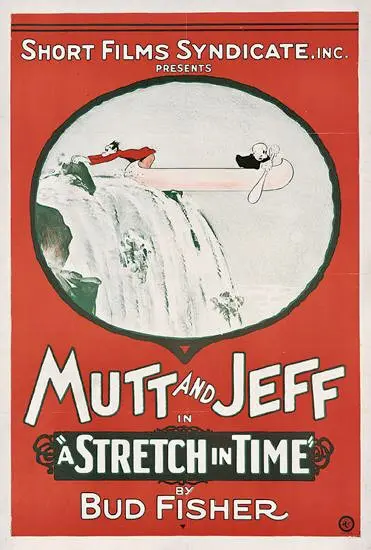
Is 'A Stretch in Time' worth your precious hours in an age saturated with digital spectacles? Short answer: yes, but with significant caveats. This early silent comedy, featuring the inimitable talents of Charles R. Bowers and Bud Fisher, is not for everyone, but for a specific, appreciative audience, it offers a fascinating glimpse into the nascent art of cinematic humor.
It is a film tailor-made for cinephiles, historians of early cinema, and those with a deep appreciation for the foundational mechanics of physical comedy and inventive visual gags. Conversely, if your cinematic palate demands complex narratives, intricate character arcs, or modern pacing, then A Stretch in Time may feel more like a historical curiosity than a compelling viewing experience.
In the bustling landscape of early 20th-century filmmaking, where the medium itself was still finding its voice, A Stretch in Time emerges as a peculiar, yet captivating, artifact. It speaks volumes not through dialogue, but through the universal language of slapstick, absurdity, and mechanical ingenuity. The very title hints at a playful manipulation of time, a concept both literal and metaphorical in a silent short designed to stretch a single gag to its comedic breaking point.
This is a film that demands a certain kind of patience, an openness to the comedic rhythms of a bygone era. It's a testament to the fact that laughter transcends epochs, even if the delivery mechanisms evolve. The collaboration between Charles R. Bowers, a master of stop-motion animation and Rube Goldberg-esque contraptions, and Bud Fisher, the creator of the iconic Mutt and Jeff comic strip, promises a unique blend of visual wit and character-driven humor.
This film works because of its audacious inventive spirit and its pioneering use of visual comedy, pushing the boundaries of what was possible in early cinema. It fails, for some, due to its inherent brevity and a comedic style that can feel dated if viewed without historical context. You should watch it if you appreciate the foundational artistry of silent film, experimental humor, and the sheer audacity of early cinematic visionaries.
The pairing of Charles R. Bowers and Bud Fisher is, in itself, a compelling narrative. Bowers was a technician of laughter, his films often featuring elaborate, logic-defying machines that would accomplish simple tasks in the most complicated ways possible. Think of his work in Now You Tell One!, where absurdity is meticulously constructed. Fisher, on the other hand, brought a more traditional, character-based humor to the table, rooted in the popular appeal of his comic strip creations.
In A Stretch in Time, one can almost envision their styles coalescing: Bowers' intricate devices setting the stage for Fisher's characters to react with exaggerated befuddlement or determined, yet ultimately futile, efforts. The plot, as sparse as it is, serves primarily as a framework for these comedic excursions, rather than a driving force. It’s less about 'what happens next' and more about 'how ridiculously this will unfold.'
My unconventional observation is that the film's true 'plot' is the act of creation itself—the filmmakers' struggle and triumph in stretching a simple idea into a fully realized comedic experience, mirroring the very title. It's meta before meta was a concept, a self-referential wink at the audience about the artifice of filmmaking.
Directing in a silent comedy is a delicate dance between visual clarity and comedic timing. The absence of dialogue means that every gesture, every cut, every camera angle must convey meaning and elicit laughter. The pacing of A Stretch in Time, like many shorts of its era, would have been meticulously crafted to build anticipation for each gag.
Consider a hypothetical sequence: a character, perhaps played by Bowers himself, attempts to speed up a slow process using an outlandish machine. The director would linger on the machine's whirring gears, the slow drip of a liquid, or the agonizingly gradual movement of a lever, building tension. Then, a sudden, unexpected malfunction or an explosive, yet harmless, outcome would provide the payoff. This deliberate, almost musical rhythm is key to silent comedy.
The film's brevity, often cited as a weakness by modern viewers, is actually one of its strengths when it comes to pacing. It forces a tight, economical approach to storytelling, ensuring that no gag outstays its welcome, and every visual beat serves a purpose. This isn't a sprawling epic like The Puppet Crown; it's a finely tuned comedic mechanism.
Charles R. Bowers and Bud Fisher, while primarily known for their creative roles, were also adept performers in the silent era. Silent acting is a distinct art form, relying on exaggerated facial expressions, broad physical comedy, and precise pantomime to convey emotions and intentions. The subtlety of a modern dramatic performance would be entirely lost.
Bowers, often playing a slightly bewildered inventor or an everyman caught in his own contraptions, would use his entire body to articulate frustration, surprise, or mischievous delight. Imagine his eyes widening to saucers as a machine he built goes awry, or his frantic, flailing attempts to fix it, all without a single spoken word. Fisher, if appearing on screen, would likely bring a more grounded, perhaps exasperated, presence, playing off Bowers' eccentricities.
Their performances are not just acting; they are a form of physical storytelling, a direct lineage to vaudeville and commedia dell'arte. The raw, unadulterated energy they bring to the screen is infectious, even through the grainy lens of historical footage. It's a style that demands engagement, a willingness to interpret the unspoken.
The cinematography of A Stretch in Time, while constrained by the technical limitations of its era, would have been ingeniously employed to enhance the comedic effect. Early cameras, often static, forced filmmakers to compose shots carefully, using depth and blocking to create visual interest.
Stop-motion animation, a Bowers specialty, would have been a significant visual element. The precise, jerky movements of inanimate objects coming to life, or the magical transformations achieved through trick photography, would have been revolutionary for contemporary audiences. Consider a scene where a simple object like a clock face 'stretches' or distorts through stop-motion, creating a visual pun on the film's title.
The use of close-ups would draw attention to specific reactions or crucial mechanical details, amplifying the humor. Wide shots would establish the often-absurd scale of Bowers' inventions. This visual language, while rudimentary by today's standards, was incredibly sophisticated for its time, laying groundwork for future generations of filmmakers who would push the boundaries of special effects, much like The Tiger Man used its visual effects to create suspense.
The tone of A Stretch in Time is one of lighthearted absurdity and inventive mischief. It's a film that doesn't take itself seriously, inviting the audience to revel in the sheer silliness of its premise. While some might dismiss its humor as quaint or simplistic, I argue that its fundamental comedic principles—the unexpected outcome, the exaggerated reaction, the triumph of chaos over order—are timeless.
The film resonates because it taps into a universal human experience: the desire to control our environment and the inevitable, often hilarious, failure to do so. It's a precursor to modern slapstick and even elements of surreal humor. Its appeal isn't just historical; it's a foundational text in the grammar of screen comedy, influencing everything from Looney Tunes to contemporary sketch shows.
It works. But it’s flawed. Its brevity and lack of a complex narrative might alienate some, but its inventive spirit and foundational comedic artistry are undeniable. It's a film that asks for an open mind and rewards it with genuine, if anachronistic, chuckles.
Yes, A Stretch in Time is absolutely worth watching today, especially for specific audiences. It provides a crucial historical context for understanding the evolution of cinematic comedy. For those interested in the pioneering work of figures like Charles R. Bowers and Bud Fisher, it's an essential viewing.
It offers a unique blend of stop-motion animation and physical comedy that was groundbreaking for its era. The film serves as a vibrant example of how early filmmakers experimented with the medium. It's a short, engaging piece of cinematic history that showcases raw creativity.
However, be prepared for a different pace and comedic style than modern films. Its humor is visual and often relies on elaborate gags rather than intricate dialogue. If you seek fast-paced narratives or contemporary comedic sensibilities, you might find it challenging. But for a deep dive into the roots of screen humor, it’s invaluable.
A Stretch in Time is more than just a forgotten relic; it’s a vibrant, if brief, testament to the pioneering spirit of early cinematic comedy. It encapsulates the inventive genius of Charles R. Bowers and the foundational comedic charm of Bud Fisher, offering a window into a time when filmmakers were literally inventing the language of the screen. While its plot is undeniably sparse and its humor requires a degree of historical appreciation, its significance cannot be overstated. It's a film that dares to stretch a simple idea into an elaborate, delightful spectacle, proving that laughter, in its purest, most visual form, truly is timeless.
For the discerning viewer eager to explore the roots of screen comedy and witness the birth of ingenious visual gags, A Stretch in Time is an essential, rewarding watch. It reminds us that sometimes, the most profound cinematic experiences come not from grand narratives, but from the audacious simplicity of an idea stretched to its wonderfully absurd limits. It’s a foundational text, a genuine piece of cinematic magic, and for its intended audience, it absolutely earns its place in the canon.
IMDb 5.2
1925
Community
Log in to comment.