DbcultAccessing Vault...
Cult Review
Senior Film Conservator
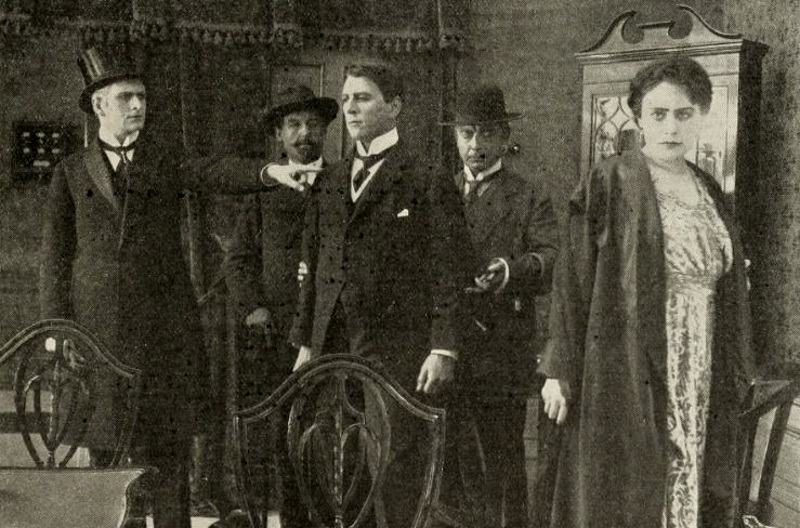
Long before film noir coined its French label, before chiaroscuro became a classroom cliché, Paradise Lost arrived in 1911 like a shard of black ice hurled into Scandinavian cinema’s tender face. Shot under the flickering carbon-arc gaze of early Danish studios, this one-reel marvel distills an entire Tolstoyan universe of marital fatigue, political skulduggery, and erotic vertigo into a runtime shorter than a modern sitcom episode—yet its emotional aftertaste lingers like absinthe on an empty stomach.
Director Sven Lange—a name too often footnoted beneath his more flamboyant contemporaries—composes each tableau as if he were lighting a cigarette in a dynamite factory: delicately, deliberately, fully aware that one false flare will detonate the whole construct. Notice the symmetrical austerity of the Yorke apartment: lace doilies aligned like legal briefs, candelabra burning with the resigned patience of unpaid sentinels. These are not mere set dressings; they are forensic clues to a marriage calcified by procedural obsession.
Betty Nansen’s Muriel embodies a spiritual asphyxiation so total that even her silk gowns seem to exhale dust. Watch the micro-acting in the breakfast scene: she lifts a porcelain cup, fails to sip, returns it—three gestures, nine seconds, a lifetime of hunger. Nansen refuses the era’s default theatricality; instead she gifts us the first cinematic portrait of bourgeois female depression, a full decade before Anna Karenina adaptations dared hint that marriage might be a prison for women.
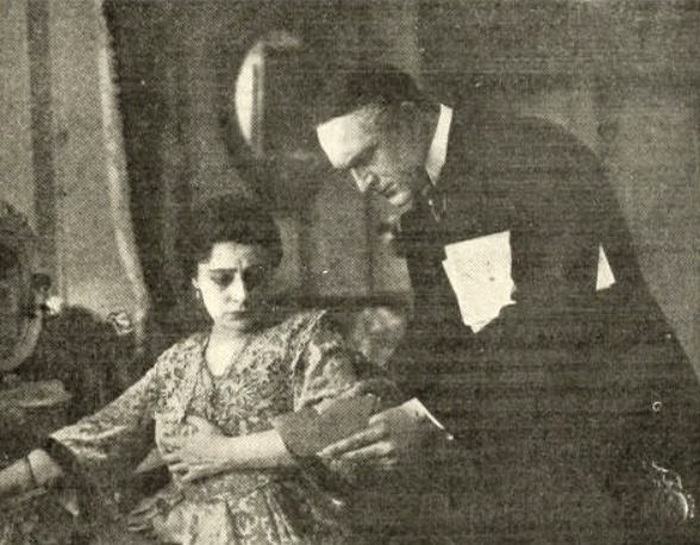
Poul Reumert’s conspirator glides through salons like a rumor made flesh—every monocle glint an insinuation, every smile a detonator. Reumert weaponizes continental charm the way others wield revolvers. When he swears that love has “re-christened” him, the line could collapse into melodrama; instead, his tremor of surprise feels genuine, as if villainy itself were startled to discover a pulse inside its own armor.
Fønss plays Yorke with the rigid economy of a man who files emotions under “Unsolved.” Note how he enters Muriel’s boudoir clutching a candelabrum like a secular priest—light held forward, body restrained, eyes already indexing fingerprints before the conscious mind acknowledges the marital betrayal. The performance is a masterclass in bureaucratic dehumanization; even his final rebuke lands with the chill of a court verdict rather than wounded fury.
Lange’s camera may be nailed to the floor, but his frames breathe with proto-expressionist tension. In the burglary sequence, diagonal shadows slash across wallpaper like saber wounds—an effect achieved by tilting a household ladder in front of a handheld spotlight because proper barndoors were still budget-prohibitive. The resulting geometry anticipates The Student of Prague by half a decade and predicts the angular nightmares of 1920s German studios.
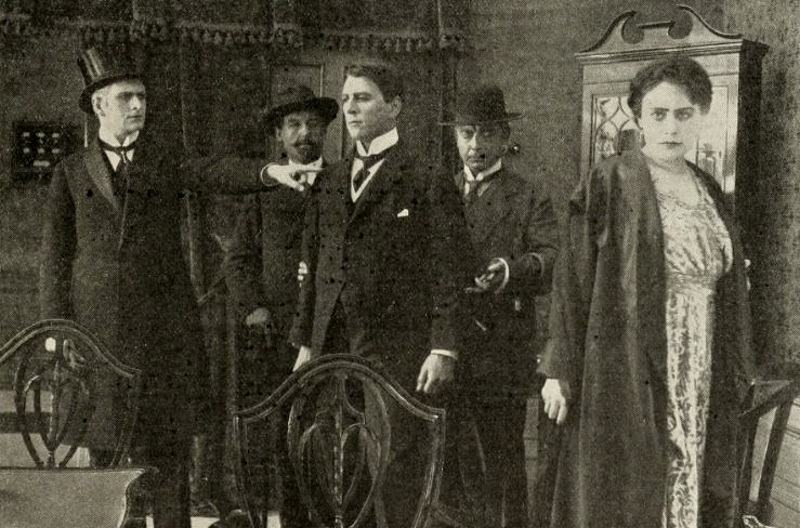
Intertitles here are haiku of dread: “She hesitates between love and duty”—nine words that contain entire novels of feminist torment. The Danish intertitles, when translated back into English for export prints, lose some alliterative venom, yet even in their second tongue they hiss like serpents. Contemporary exhibitors often underscored the climax with a military snare roll, but I urge modern viewers to attempt total silence; in that vacuum Muriel’s silent scream arrives as a palpable concussion.
1911 audiences recoiled at a heroine who commits adultery without sliding into obligatory penitence; modern eyes may flinch because Muriel’s agency is ultimately routed back into masculine adjudication. Yet the film’s refusal to kill her off—no pistol in the bureau drawer, no train-track sacrifice—feels radical for its era. She survives, unforgiven and unrepentant, a scarred Atlas shouldering her own cosmos of guilt. Compare this to Les Amours de la reine Élisabeth where Sarah Bernhardt’s queen must expire for political propriety; Lange grants Muriel a harsher fate—life itself as perpetual indictment.
The only surviving 35 mm nitrate print—discovered in 1993 inside a Christiania church organ—was restored by the Danish Film Institute at 2K resolution. While the tinting is speculative (originals vary reel-to-reel), the cobalt night scenes now glow with the hue of bruised midnight. Streaming platforms peddle a 720p knock-around; cinephiles should petition for the DFI’s 4K scan, which premiered at Il Cinema Ritrovato to rapturous astonishment.
Paradise Lost is not merely a curio for antique-cinema completists; it is a compacted diamond of narrative sophistication, visual daring, and moral disquiet that whispers across a century to haunt our contemporary discourse on marriage, gender, and the price of personal liberty. To watch it is to witness the instant European cinema learned that human darkness could be both subject and spectator; to rewatch it is to realize the illumination has only grown more blinding with time.
IMDb —
1927
Community
Log in to comment.