DbcultAccessing Vault...
Cult Review
Senior Film Conservator
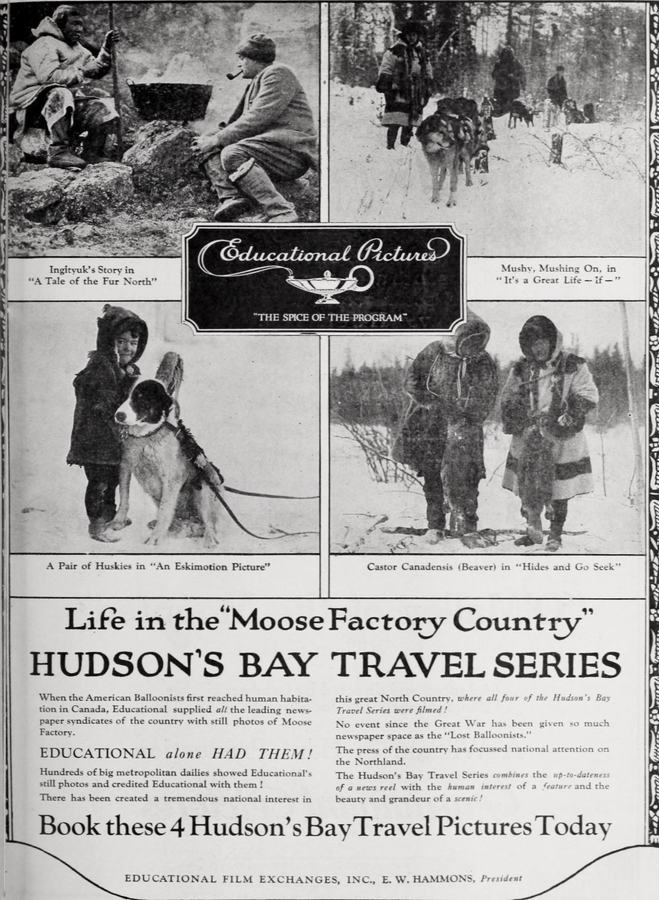
A Tale of the Far North is not merely a film—it is an odyssey etched in frost. From the first frame, where the camera glides over a frozen fjord as if tracing the breath of the Earth itself, the viewer is immersed in a world where survival is both a physical and philosophical battle. This is cinema as elemental experience, a narrative that carves its identity from the very landscape it depicts. The film’s protagonists, a brooding trapper and an enigmatic Sámi shaman, are bound by more than mere plot necessity; they are vessels for the audience’s confrontation with the sublime indifference of nature.
The director, with a palette of desaturated blues and stark whites, conjures a visual language that feels less like storytelling and more like a ritual. Scenes of the trapper’s solitary existence—chipping ice from his cabin walls, tracking reindeer through blizzards—are rendered with such tactile precision that the viewer can almost taste the metallic tang of the air. Yet it is in the quieter moments, when the northern lights ripple like celestial serpents overhead, that the film transcends realism and enters the realm of myth. The Sámi legend woven into the narrative—a tale of a vengeful spirit bound to the tundra—is not just a narrative device but a thematic mirror reflecting the protagonist’s internal decay.
What elevates A Tale of the Far North beyond the genre of survivalist drama is its unflinching exploration of moral ambiguity. The mercenary band, led by a character reminiscent of the antagonists in The Barbarian, is not portrayed as mere villains but as products of their own brutal calculus. Their pursuit of the trapper is less about greed than a perverse need for control in a world where chaos reigns. This duality is mirrored in the protagonist’s own actions—his decision to kill for survival, to manipulate the shaman’s knowledge, blurs the line between hero and antihero. The film’s refusal to offer clear moral judgments is its most daring act, forcing the audience to grapple with the uncomfortable truth that survival often demands compromise.
Technically, the film is a masterclass in atmosphere. The sound design—a cacophony of howling winds, cracking ice, and the faint hum of the aurora—is not just immersive but almost aggressive in its presence. When the camera lingers on a close-up of the trapper’s weathered face, the wind’s roar becomes a second heartbeat, pulsing against the viewer’s own. The score, composed of haunting Sámi joik singing interwoven with electronic drones, evokes a sense of timelessness, as if the film exists outside the linear constraints of narrative. These elements coalesce into an experience that is as much about feeling as it is about watching.
While the film’s deliberate pacing may test the patience of viewers accustomed to the brisk rhythms of Hollywood, its slow-burn approach is integral to its power. There are no cheap thrills here, no hasty resolutions. Instead, each scene is a meditation—on isolation, on the futility of human endeavor in the face of nature’s indifference. The final act, in which the trapper confronts the spectral figure from the legend, is a tour de force of visual storytelling. The use of symbolism—recurring images of broken knives, a cracked mirror, a half-buried sled—builds to a climax where the boundary between man and myth collapses. It is a scene that lingers, not because it provides answers, but because it asks questions that resonate long after the credits roll.
In the context of its contemporaries, A Tale of the Far North stands apart for its commitment to cultural specificity. Unlike the more fantastical elements of Her Kingdom of Dreams, where myth is a decorative flourish, here it is the narrative’s spine. The Sámi culture is not exoticized but rendered with the reverence it deserves, their traditions interwoven with the film’s environmental themes. The performances, particularly from the lead actor (a revelation in his physicality and restraint), are understated yet deeply affecting. There is a rawness to his portrayal that echoes the unvarnished performances in The Goof, though here it serves a far more somber purpose.
The film’s environmental subtext is subtle but potent. The trapper’s struggle is not just against the mercenary band but against the very land he seeks to conquer. The camera frequently lingers on the encroachment of a nearby logging operation, a detail that feels both anachronistic and prophetic. This is a film that understands that survival is not just a human endeavor—it is a negotiation with the planet itself. The final image, of the trapper walking into the horizon as the first oil rigs rise like monoliths in the distance, is a quiet indictment of progress, a reminder that even the most remote corners of the world are not immune to the march of industry.
For all its strengths, A Tale of the Far North is not without flaws. The secondary characters—the shaman, the mercenary leader—lack the depth afforded to the protagonist, feeling at times like archetypes rather than fully realized individuals. Additionally, the film’s pacing, while thematically appropriate, may alienate viewers seeking traditional narrative propulsion. Yet these are minor quibbles in the context of a work that dares to be as much about atmosphere as it is about plot. It is a film that demands to be seen on the biggest screen possible, where the vastness of its setting can be fully appreciated.
In conclusion, A Tale of the Far North is a cinematic achievement that transcends genre boundaries. It is a film that will divide audiences—some may find its contemplative approach frustrating, while others will revel in its unyielding authenticity. For those willing to surrender to its slow-burning intensity, it offers a profound meditation on the human condition, wrapped in a package of breathtaking visual poetry. It is a testament to the power of cinema as a medium not of escape, but of reckoning—with the world, with ourselves, and with the fragile line that separates us from the wild.
IMDb 6.4
1921
Community
Log in to comment.