DbcultAccessing Vault...
Cult Review
Senior Film Conservator
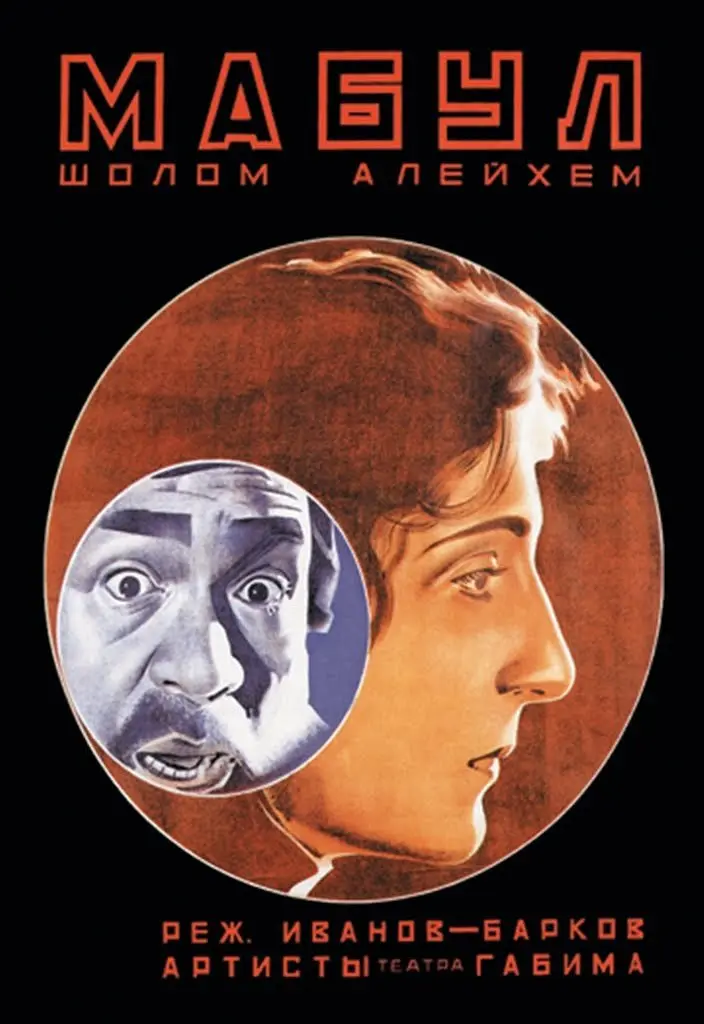
No, for most viewers, "Mabul" is not a film worth watching today. It demands a particular kind of patience and a specific interest in the very early days of cinema, or a deep fascination with the historical context it depicts. It's a challenging watch, stiff and often dramatically inert, but for a niche audience, it offers something unique.
You should consider it if you are a serious film historian, a scholar of Jewish history in the Russian Empire, or someone genuinely curious about how revolutionary narratives were framed in the medium's infancy. Anyone seeking a polished narrative, nuanced performances, or even basic production values will find little to hold their attention. This isn't entertainment in the modern sense; it's an artifact.
"Mabul" arrives burdened by its own historical significance, a rare cinematic document touching on the Jewish role in the 1905 Revolution. The ambition of tackling such a volatile subject in the nascent days of filmmaking is undeniable. Here, we see the story of Esfir Kaufman, a young woman who turns her back on a prescribed future to embrace a dangerous ideology. This premise, a woman's radicalization in the face of familial pressure, should be ripe with conflict. Yet, the film often struggles to translate this inherent drama into anything beyond a series of tableaux.
The performances, particularly from Chechik-Efrati as Esfir, are indicative of the period's stage-bound acting. Gestures are broad, emotions telegraphed with an almost desperate clarity, presumably to compensate for the lack of spoken dialogue and close-ups. Esfir's defiance, while clear in the narrative, rarely feels truly lived-in or internally motivated. It's a declared defiance, rather than one felt through subtle shifts in expression or body language. She joins the revolutionaries, and we understand *that* she does, but the internal struggle or the intoxicating draw of the movement remains mostly abstract.
The pacing is another hurdle. Scenes unfold with a deliberate, sometimes glacial rhythm. There's little of the dynamic cutting or camera movement that would later define even silent cinema. Often, the camera is simply a static observer, capturing events from a distance. This isn't necessarily a flaw for its era, but it certainly makes for a less engaging experience compared to films like The Spy, made only a decade later, which already shows a more sophisticated handle on visual storytelling.
The film's strength lies almost entirely in its subject matter. The 1905 Revolution, the plight of Jews in the Pale of Settlement, and the rise of revolutionary fervor are all compelling themes. "Mabul" provides a visual record, however crude, of how these elements were perceived and presented at the time. You see glimpses of crowded streets, clandestine meetings, and the stark contrast between traditional Jewish life and the radical new world Esfir chooses. These are fleeting but resonant moments for a historian.
However, the film's narrative ambition often outstrips its technical capability. The portrayal of the revolutionary party itself feels more like a symbolic gesture than a fully realized force. The characters surrounding Esfir, including Benno Schneider and A. Dzyubina, function more as archetypes than individuals. Their revolutionary zeal is simply stated, not demonstrated through complex interactions or difficult choices. This makes it hard to invest in their struggle beyond an intellectual appreciation for the historical topic.
One particularly frustrating aspect is the lack of genuine tension. Even when characters are in peril, the primitive staging and flat cinematography often fail to convey a sense of urgency or threat. A scene that should feel dangerous, like a secret meeting, instead plays out with the detachment of a rehearsed skit. The emotional stakes, despite the gravity of the events, never truly land.
The cinematography, as expected for a film of this vintage, is rudimentary. Lighting is often flat, compositions are straightforward, and there's a general lack of depth. This isn't a film designed to be visually dynamic; it's designed to document. Yet, even within these limitations, one might hope for a more inventive use of the frame or a stronger sense of atmosphere. The film's visual language is functional, nothing more.
The film's connection to Sholom Aleichem, credited as a writer, is intriguing. One might expect a certain wit or a deeper exploration of Jewish cultural nuances, hallmarks of Aleichem's literary work. However, this cinematic adaptation, whether due to the constraints of the medium or the adaptation process itself, strips away much of that richness. What remains is a skeletal version of a story, more interested in broad strokes of historical drama than in the specific textures of human experience.
Ultimately, "Mabul" is a document, not a drama. Its value lies in what it represents and the period it comes from, rather than its merits as a piece of engaging cinema. It's a stark reminder of how far the medium has come, and how foundational even flawed attempts were in shaping what would follow. It's a tough watch, but for the right viewer, it offers a peculiar, almost academic, reward.
"Mabul" is a film best approached as an academic curiosity rather than a piece of engaging entertainment. Its historical context and the sheer audacity of its subject matter in the early 20th century are its primary draws. As a film, it is undeniably primitive, often dull, and dramatically inert. It serves as a stark reminder of cinema's nascent state, a raw, unpolished artifact that speaks more to the past's limitations than its artistic triumphs. Only the most dedicated will find genuine reward here; for everyone else, it’s a difficult, if historically significant, viewing experience.
IMDb 5.7
1930
Community
Log in to comment.