DbcultAccessing Vault...
Cult Review
Senior Film Conservator
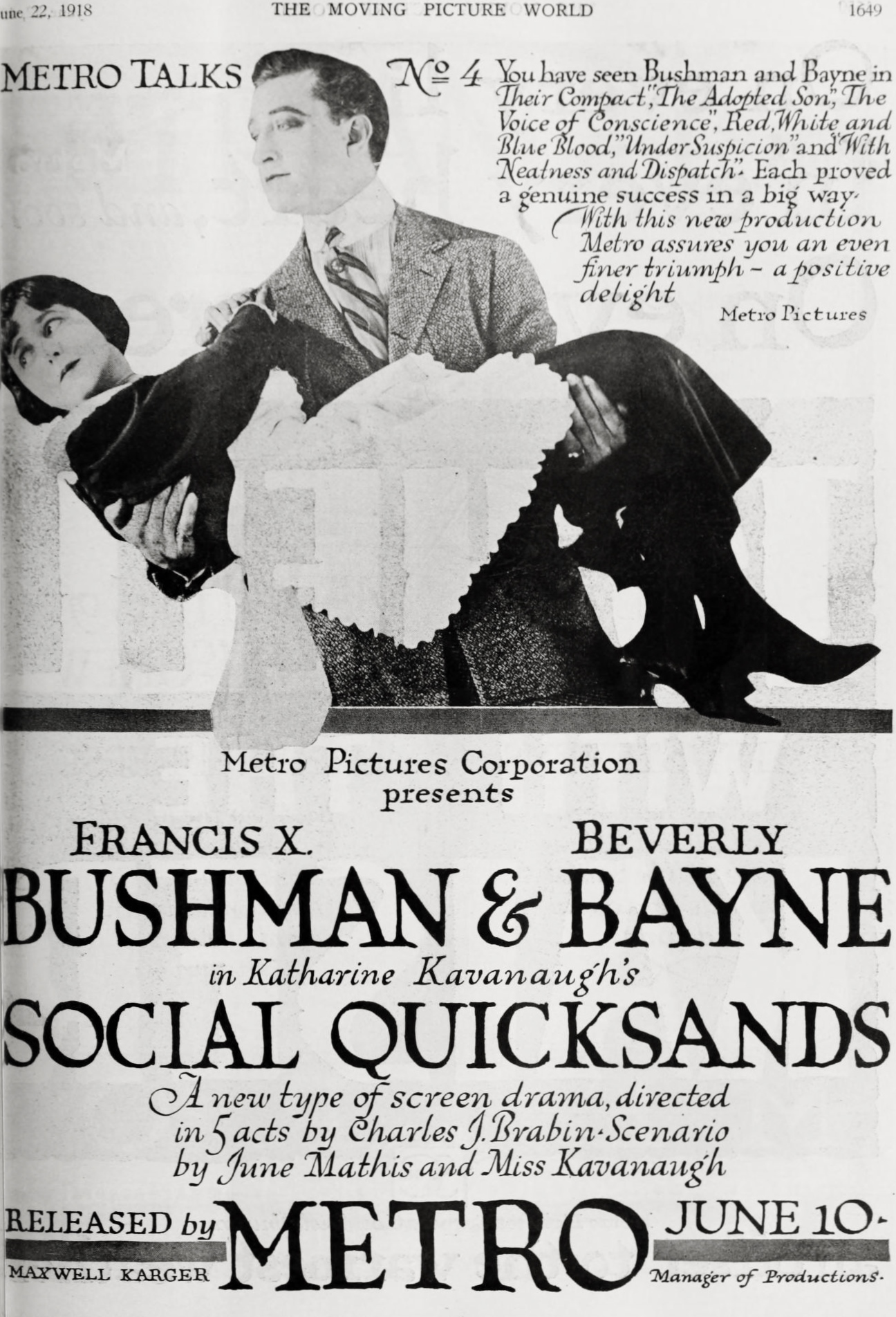
The silent era, a crucible of cinematic experimentation and nascent storytelling, often presented narratives brimming with dramatic irony, societal critique, and the timeless allure of romance. Among these forgotten gems, Social Quicksands (1918) emerges as a fascinating artifact, a film that deftly navigates the treacherous waters of class distinction, mistaken identity, and the surprising pathways to genuine affection. It’s a compelling snapshot of an era grappling with evolving social mores, framed through a narrative that, while ostensibly lighthearted, probes deeper into the nature of perception and the masks we wear.
At its core, the film introduces us to Warren Dexter, portrayed with a captivating blend of aloofness and eventual vulnerability by the iconic Francis X. Bushman. Bushman, a veritable matinee idol of his time, embodies Dexter as a man of means and conviction, yet one burdened by a profound disdain for the superficialities of the social circus. His refusal to attend a high-profile reception, specifically designed for him to meet the debutante Phyllis Lane, sets the entire intricate plot in motion. This initial act of defiance isn't merely a character quirk; it's the very catalyst for the ensuing cascade of deceptions and revelations, a testament to the film's clever construction. Dexter’s initial cynicism serves as a stark counterpoint to the vibrant, almost audacious spirit of Phyllis Lane.
Beverly Bayne, a celebrated screen partner to Bushman, imbues Phyllis Lane with an irresistible blend of charm, cunning, and underlying sincerity. Humiliated by Dexter's public snub, Phyllis doesn't retreat; instead, she doubles down, issuing a brazen wager that she will lead him to the altar within a month. This audacious declaration immediately positions her as more than just a jilted debutante; she is a woman of agency, determined to reclaim her pride and perhaps, inadvertently, find love. Her initial attempt to gain his attention, a feigned faint on his doorstep, is a classic comedic trope, yet its failure paves the way for a far more elaborate and intriguing scheme.
The pivotal moment arrives when Phyllis, peering through a window, witnesses a genuine act of thievery by a woman named Mollie. This serendipitous encounter becomes the crucible for Phyllis’s grand deception. Her quick thinking – forcing Mollie to exchange clothes and identities – is a stroke of narrative genius, transforming a simple romantic comedy premise into a more complex exploration of identity and perception. By assuming the guise of a repentant thief, Phyllis not only infiltrates Dexter’s life but also challenges his preconceived notions about class, morality, and reform. This dramatic irony, where the 'crook' is in fact the high-society lady, is a well-worn but effective device, allowing for both comedic moments and profound character development.
Dexter, captivated by the beautiful 'crook' who claims her family compels her to steal, sees not a criminal but a soul to be redeemed. This trope of the wealthy man falling for and attempting to reform a woman from a lower, or even criminal, class was a pervasive theme in early cinema, reflecting societal anxieties and romantic ideals of the era. Films like What Love Can Do or even the more dramatic The Tiger Woman often played with these dynamics, albeit with varying degrees of moral complexity. In Social Quicksands, Dexter's desire to 'save' Phyllis is presented as a noble impulse, yet it is born of a fundamental misunderstanding of her true identity. This adds a layer of poignant irony to their burgeoning romance.
The film excels in building the romantic tension between Bushman and Bayne. Their on-screen chemistry, a hallmark of their many collaborations, is palpable. As Phyllis, under the guise of a maid, begins to insinuate herself into Dexter's life, the boundaries between master and servant, reformer and reformed, blur. The narrative cleverly uses their proximity to foster genuine affection, proving that love can indeed bloom in the most unconventional of circumstances, even those built on a foundation of elaborate artifice. This evolution from a wager to genuine sentiment is what elevates the film beyond a simple farce.
The plot thickens with the re-emergence of the actual criminal element. This provides Phyllis an opportunity to prove her loyalty and courage, not just as a maid but as a woman deeply invested in Dexter's well-being. Her assistance in foiling the burglars solidifies Dexter’s love, prompting his proposal. It is a moment of triumph, born from a heroic act, yet still shrouded in the veil of her assumed identity. The subsequent revelation of Phyllis’s true aristocratic status is the film's emotional crescendo. Dexter's reaction, one of profound offense, is entirely understandable. His trust has been betrayed, his perception of reality shattered. This moment of fractured trust is crucial, as it tests the true depth of the love that has developed between them.
Phyllis, however, is not one to be easily defeated. Her unwavering conviction in the sincerity of her love, despite the deceptive path she took to reach it, becomes her ultimate strength. She must now, through sheer force of will and genuine affection, convince Dexter that her feelings are real, untainted by the initial trickery. This final act of persuasion, often depicted through poignant intertitles and expressive acting, underscores the film's message: true love can transcend initial deceptions and societal expectations. It's a testament to the power of the human heart to forgive and understand, even when confronted with uncomfortable truths.
Directed by the uncredited, but clearly competent, hand of its era, Social Quicksands showcases the narrative efficiency often found in silent films. The screenplay, attributed to June Mathis and Katharine Kavanaugh, is tightly plotted, moving from one dramatic beat to the next with commendable momentum. The use of intertitles is effective, conveying dialogue and crucial plot points without bogging down the visual storytelling. The film's aesthetic, typical of the period, relies on clear, if sometimes theatrical, staging and expressive acting. The performances, particularly from Bushman and Bayne, are a masterclass in silent film acting – relying on exaggerated gestures, facial expressions, and body language to convey complex emotions.
The supporting cast, including William R. Dunn, William Stone, and Rolinda Bainbridge, contribute effectively to the film's texture. Leslie Stowe, as a character whose presence adds to the comedic or dramatic stakes, further enriches the narrative. Even in minor roles, the actors of the silent era understood the necessity of conveying character and emotion without spoken words, a skill that now feels like a lost art. Their contributions ensure that the world of Social Quicksands feels populated and believable, despite its fantastical premise.
Comparatively, Social Quicksands shares thematic DNA with other films of its time that explored societal constraints and the breaking of them. One might draw parallels to films like The Master Hand or even Should a Woman Divorce? in their exploration of personal agency against the backdrop of rigid social structures. While not as overtly dramatic as Birth or as overtly political as The Black Stork, Social Quicksands carves out its own niche in the silent film landscape as a charming, intricate romantic comedy that uses deception as a springboard for genuine human connection. The lightheartedness of its premise belies a keen observation of human nature and the societal pressures of the early 20th century.
What makes Social Quicksands resonate even today, a century after its release, is its timeless exploration of themes that continue to captivate audiences. The idea of falling in love with an idealized version of someone, only to discover their true identity, is a narrative device that has been reinterpreted countless times throughout cinematic history. The film's ability to blend comedic elements with moments of genuine emotional depth ensures its enduring appeal. It's a reminder that even in the absence of spoken dialogue, the power of visual storytelling, compelling performances, and a well-crafted plot can create a truly memorable cinematic experience.
The film, though a product of its time, offers surprisingly modern insights into relationships. It suggests that true connection often arises from unforeseen circumstances and that judging individuals solely by their social standing or initial appearances can lead to missed opportunities for profound love. Dexter’s journey from a cynical recluse to a man willing to overlook a significant deception for love speaks volumes about the transformative power of affection. Phyllis’s courage to pursue what she wants, even if it means stepping outside conventional boundaries, makes her a remarkably proactive heroine for her era.
In conclusion, Social Quicksands stands as a delightful and surprisingly insightful piece of silent cinema. It’s a testament to the enduring craft of its writers, the magnetic presence of its stars, and the universal appeal of a story where love triumphs over pride, prejudice, and elaborate pretense. For those interested in the rich tapestry of early film, this picture offers both entertainment and a valuable glimpse into the romantic sensibilities and societal anxieties of a bygone era. It reminds us that sometimes, the most solid foundations for love are found not on stable ground, but within the very 'quicksands' of social expectation and mistaken identity.
IMDb —
1926
Community
Log in to comment.