DbcultAccessing Vault...
3.9/10
Senior Film Conservator
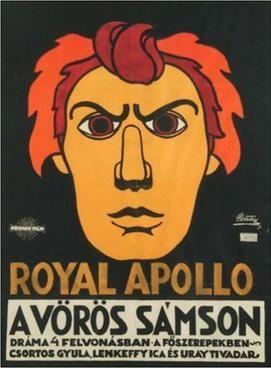
A definitive 3.9/10 rating for a film that redefined the boundaries of cult cinema. A vörös Sámson remains a cornerstone of transgressive art.
Stepping back into the annals of cinematic history often feels less like a casual stroll and more like an archaeological dig. Sometimes, amidst the dust and forgotten reels, one unearths a relic that still pulses with an astonishing vitality. Such is the profound experience of encountering A vörös Sámson (The Red Samson), a Hungarian film from a bygone era that, despite its relative obscurity in contemporary discourse, asserts itself as a monumental achievement. It’s a work that eschews the simplistic narratives often attributed to early cinema, instead diving headfirst into the complex currents of human struggle, love, and the unyielding spirit of defiance.
The film, a powerful collaboration between writers Ladislaus Vajda and Hall Caine, presents a narrative so potent, so emotionally resonant, that it transcends the limitations of its silent medium. It is not merely a story; it is an epic poem writ large on the screen, a canvas upon which the trials of a community and the torment of an individual are painted with stark, unforgettable strokes. The initial impression is one of immediate immersion; the director, with an assured hand, plunges us into a world teetering on the precipice of despair, yet illuminated by flickers of hope and an undercurrent of fierce resistance. This isn't just a historical piece; it feels remarkably contemporary in its exploration of power dynamics and human resilience.
At the pulsating heart of A vörös Sámson lies Tivadar Uray's towering portrayal of István, the titular 'Red Samson.' Uray doesn't just play a character; he embodies a force of nature. His performance is a masterclass in physical presence and nuanced emotional expression, a testament to the power of silent acting when wielded by a true artist. From the moment he appears on screen, his fiery hair and formidable physique immediately command attention, but it is the depth of his gaze, the subtle shifts in his posture, and the raw vulnerability he allows to surface that truly captivate. He is both a symbol of his people's strength and a deeply flawed, passionate man caught in an impossible bind. One might draw parallels to the raw, almost primal energy seen in early cinematic heroes, yet Uray injects a level of psychological complexity that feels utterly modern. His Samson is not merely strong; he is burdened, resolute, and ultimately, tragically human.
The film relies heavily on Uray's ability to convey complex internal states without dialogue, and he rises to the challenge with breathtaking efficacy. When he rages against injustice, his every muscle seems to vibrate with indignation; when he gazes upon Eszter, his eyes speak volumes of devotion and nascent fear. This kind of magnetic performance is what elevates a good film to a great one, transforming the viewing experience into something profoundly visceral. It reminds one of the singular power of actors like Tivadar Uray, who could hold an audience spellbound with nothing but their gaze and gesture. The intensity he brings to István's plight is palpable, making his eventual, devastating act of defiance not just a plot point, but an almost inevitable, tragic release of pent-up suffering and righteous fury. It's a performance that lingers in the mind long after the final frame fades, a powerful echo of a man pushed beyond all limits.
While Uray's István is undeniably the gravitational center, the ensemble cast surrounding him forms a rich, intricate tapestry that further enhances the film's emotional impact. János Bodnár, as István's loyal but cautious friend, provides a grounded counterpoint to the protagonist's fiery idealism. His quiet stoicism and unwavering support are crucial to illustrating the bonds of community that the Baron seeks to fracture. Bodnár's performance is understated, yet deeply effective, conveying a sense of weary wisdom and steadfast loyalty that resonates profoundly. He represents the silent backbone of the village, the ordinary man who, despite his fears, stands by his leader.
On the opposing end of the moral spectrum, Gyula Csortos delivers a chillingly effective portrayal of Baron Károly. Csortos eschews cartoonish villainy, instead crafting a character whose malevolence is rooted in a chilling blend of entitlement, cunning, and an almost detached cruelty. His Baron is not merely evil; he is a product of his station, utterly convinced of his own superiority and the inherent right to exploit those beneath him. His subtle sneers, calculated gestures, and the cold glint in his eyes are more unsettling than any overt act of aggression, making him a truly formidable antagonist. His performance brings to mind the nuanced antagonists found in works like The Invisible Power, where the threat is often more psychological than physical, a pervasive shadow rather than a tangible monster.
Perhaps the most complex and tragic figure outside of István is Ica von Lenkeffy's Eszter. Lenkeffy brings an ethereal grace to the role, imbuing Eszter with a fragile beauty that belies a fierce inner struggle. Her performance masterfully conveys the agonizing dilemma of a woman torn between her love for István and the seductive, yet perilous, promises or threats emanating from the Baron. Her eyes, often filled with a melancholic longing or a desperate fear, become windows into a soul in turmoil. She is not merely a love interest or a plot device; she is a fully realized character whose choices, however compromised, carry immense weight. Her journey echoes the tragic heroines often found in melodramas, yet with a distinct sense of agency that elevates her beyond mere victimhood. The subtle interplay between Lenkeffy and Uray, particularly in scenes of unspoken longing or devastating betrayal, creates a palpable tension that holds the audience captive. It’s a delicate dance of emotions, exquisitely performed.
The contributions of Lajos Réthey, László Csiky, and Irma Lányi, though perhaps in smaller roles, are no less significant. They populate the world of A vörös Sámson with authentic, believable characters – the weary villagers, the opportunistic henchmen, the voices of quiet dissent. Their collective presence establishes a vivid sense of community, making the stakes of the conflict feel all the more real and immediate. Each face tells a story, each gesture adds to the rich tapestry of life under duress, ensuring that the film's emotional landscape is always deeply human and profoundly relatable. This attention to detail in the supporting cast is crucial for any film aiming for epic scope, preventing the narrative from becoming solely focused on its central figures and instead showcasing the broader societal impact of their struggles.
Beyond the stellar performances, the technical artistry of A vörös Sámson is nothing short of extraordinary for its time. The cinematography is a revelation, employing stark contrasts and evocative compositions to create a visual language that speaks volumes. The director, with an uncanny ability, uses light and shadow not merely for illumination, but as narrative tools, sculpting the emotional landscape of each scene. The oppressive gloom of the village, contrasted with the fleeting moments of warmth and solidarity, is rendered with an almost painterly precision. Close-ups are utilized judiciously, highlighting the raw emotion etched on the actors' faces, while wide shots emphasize the isolation of the characters against the vast, unforgiving Hungarian plains. This deliberate visual strategy ensures that every frame contributes to the storytelling, making the silent film experience incredibly immersive.
The pacing is deliberate, allowing moments of quiet reflection to breathe, yet capable of accelerating into sequences of breathtaking action and suspense. The editing, while perhaps not as frenetic as modern cinema, is remarkably sophisticated, building tension and guiding the viewer's eye with a confident hand. There are sequences, particularly those depicting the villagers' struggle against the Baron's men, that possess a kinetic energy and a sense of choreographed chaos that is truly impressive. The use of natural landscapes, with their sweeping vistas and rugged textures, grounds the story in a tangible reality, making the abstract concepts of freedom and oppression feel deeply rooted in the earth itself. The way the camera captures the harsh realities of rural life, the sweat and toil, the grim determination, is incredibly authentic. One might think of the visual storytelling prowess found in films like Alsace, which similarly used its setting to amplify its dramatic themes.
Moreover, the film’s use of symbolism is subtle yet pervasive. The blacksmith's forge, with its roaring flames and the rhythmic clang of hammer on anvil, becomes a potent metaphor for István's inner fire and his role in shaping the destiny of his people. The Baron's opulent manor, in contrast, stands as a cold, imposing fortress of injustice. These visual cues are not merely decorative; they are integral to the film's thematic depth, enriching the narrative without ever feeling heavy-handed. The director trusts the audience to interpret these visual poems, a mark of true artistic confidence. The visual narrative is so compelling that even without spoken words, the story unfolds with crystal clarity and profound emotional resonance, proving that true cinematic language transcends vocal expression.
The thematic landscape of A vörös Sámson is as rich and fertile as the land its characters fight to preserve. At its core, the film is a searing indictment of class oppression and the devastating impact of unchecked power. The plight of the villagers, struggling to survive against a rapacious landlord, resonates with a timeless urgency. It’s a narrative that explores the courage required to stand against tyranny, even when the odds are overwhelmingly stacked against you. This struggle for survival and dignity is portrayed with an unflinching honesty that avoids easy answers or saccharine resolutions. It's a testament to the writers, Ladislaus Vajda and Hall Caine, that they crafted a story with such enduring relevance, touching upon universal human experiences of injustice and the yearning for liberation. The film’s exploration of these themes feels particularly potent, echoing the struggles depicted in other social dramas of the era.
Betrayal, in its myriad forms, is another central pillar of the narrative. Eszter's moral compromises, born of desperation and manipulation, cut deeper than any physical wound, highlighting the insidious ways in which oppressive systems can turn individuals against one another. The Baron's calculated use of deceit and psychological warfare against István and the village illustrates how power corrupts not just the powerful, but also those caught in its web. This exploration of betrayal is not simplistic; it delves into the motivations and consequences with a nuanced hand, showing how difficult choices can lead to tragic outcomes. It offers a sophisticated view of human fallibility, where even good intentions can be twisted into instruments of pain.
Yet, amidst the despair, the film champions the indomitable spirit of resilience. István, despite suffering unimaginable losses and enduring profound personal torment, refuses to break. His 'red Samson' moniker is not just about his appearance; it symbolizes an unyielding, fiery spirit that refuses to be extinguished. His ultimate act, while tragic, is a powerful affirmation of agency and a defiant blow against the forces that sought to crush him. It suggests that true strength lies not just in physical prowess, but in the unwavering commitment to one's convictions, even in the face of overwhelming odds. This theme of resilience, of fighting back against seemingly insurmountable forces, is a perennial favorite in cinema, and A vörös Sámson executes it with profound emotional impact. It brings to mind the tenacity seen in characters from films like The Ring and the Man, where personal integrity is tested against immense external pressures.
The film also subtly touches upon themes of love and sacrifice. István's love for Eszter is a driving force, but it also becomes his greatest vulnerability. The sacrifices made by individuals, both willingly and unwillingly, for the sake of their community and their beliefs, form the emotional backbone of the story. The film doesn't shy away from the harsh realities that often accompany such struggles, presenting a world where heroes are forged in the crucible of suffering, and victory, if it comes at all, is often bittersweet. It asks profound questions about the price of freedom and the nature of true heroism, leaving the audience to ponder the lasting echoes of István's defiant roar.
In an era dominated by CGI and rapid-fire dialogue, it is easy for the cinematic treasures of the past, particularly silent films, to be overlooked or dismissed as mere historical curiosities. However, A vörös Sámson stands as a powerful rebuttal to such dismissals. It is a film that speaks a universal language, its themes as relevant today as they were upon its initial release. The artistry displayed, from the compelling narrative penned by Vajda and Caine to the mesmerizing performances and sophisticated cinematography, demands recognition and appreciation.
The rediscovery of films like A vörös Sámson is not merely an academic exercise; it is an opportunity to connect with the rich, diverse tapestry of global cinematic heritage. It allows us to witness the foundational artistry that paved the way for modern filmmaking, and to appreciate the ingenuity and emotional depth that flourished even without the benefit of sound. This film, with its potent blend of social commentary, personal drama, and epic scope, serves as a potent reminder that storytelling, when executed with passion and vision, transcends technological limitations. It's a film that deserves a place alongside more widely celebrated works of the silent era, perhaps even inviting comparisons to the dramatic intensity found in Sonka zolotaya ruchka or the emotional resonance of The Vicar of Wakefield in its exploration of moral fortitude.
For those willing to engage with its unique rhythm and visual grammar, A vörös Sámson offers a profoundly rewarding experience. It is a film that challenges, moves, and ultimately, inspires. It is a testament to the enduring power of human stories, told with conviction and artistic integrity. Its legacy is not just in its historical significance, but in its ability to still stir the soul and provoke thought, proving that some cinematic voices, though silent, continue to echo across generations with undiminished power. This is not merely a film to be studied; it is a film to be felt, to be experienced, and to be cherished as a vibrant piece of an often-underappreciated cinematic tradition. Its light, though once dimmed by time, now shines brightly for those who seek it out, offering a glimpse into a past that still holds profound lessons for our present.
In conclusion, A vörös Sámson is far more than a historical artifact; it is a vibrant, compelling piece of cinematic art that speaks to universal truths. Its themes, its performances, and its visual storytelling combine to create an unforgettable experience. It reminds us that profound emotional impact and complex narratives are not exclusive to sound cinema, but were expertly crafted by the pioneers of the silent screen. This Hungarian masterpiece is a powerful argument for the continued preservation and celebration of early global cinema, offering rich rewards to any discerning viewer.
IMDb 4.4
1934
Community
Log in to comment.