DbcultAccessing Vault...
Cult Review
Senior Film Conservator
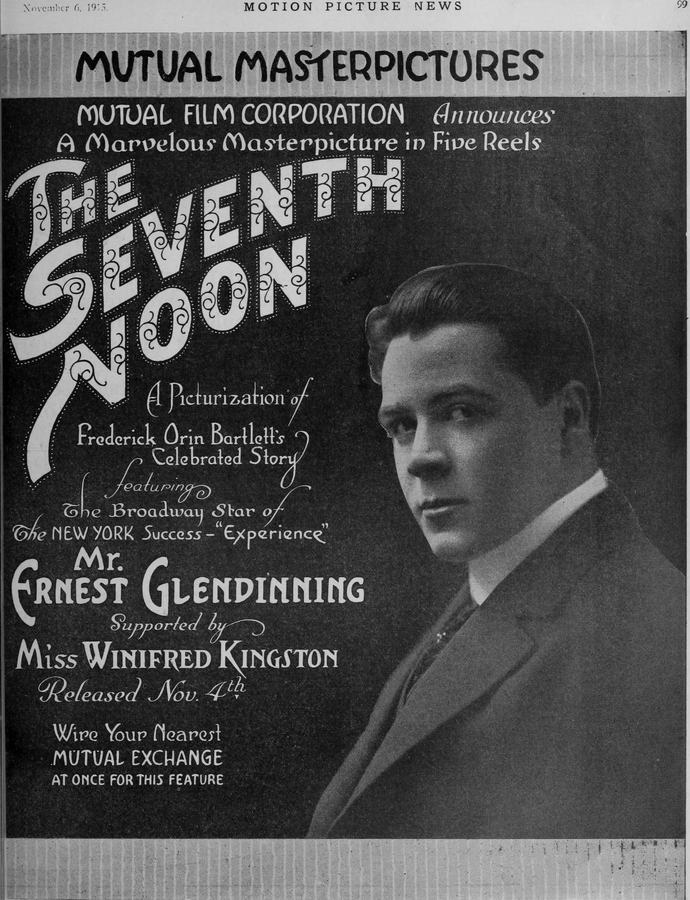
Imagine, if you can, a Manhattan where every cobblestone remembers the footfall of a man who believes his bloodstream carries a countdown; where the Williamsburg Bridge is still half skeleton, half promise; where electric globes sizzle like ideas above a thoroughfare that has not yet learned to distrust its own glamour. Into this gas-lit cradle steps Peter Donaldson—collar too starched, eyes too hungry—carrying the weight of every young idealist who ever mistook the city for a courtroom.
What follows is less a plot than a fever chart: a suicide deferred, a murder that never arrives, a love story scribbled in the margins of toxicology notes. Director Frederick Orin Bartlett weaponizes the calendar itself; the intertitles don’t merely tell us the day, they brand it on the retina. June 1, noon: sip. June 8, noon: curtain. Between those parentheses, the film unspools like a nickelodeon fiat lux, daring the viewer to believe that time can be subpoenaed.
We have seen countless thrillers hinge on bombs beneath tables, but The Seventh Noon places the explosive inside the protagonist’s pulse, invisible to every camera iris except the one pointed inward. Bartlett’s gamble pays off because he refuses to dilute the poison with red-herring antidotes. Each reel tightens the screw by denying us the comfort of conventional stakes: no ransom note, no ticking metronome wired to dynamite—only the merciless orbit of clock hands.
Ernest Glendinning’s performance is a masterclass in negative charisma. His Donaldson is not the swashbuckling advocate of dime-novel fantasy; he is a man already hollowed out by self-contempt, moving through parlors and police stations like a sleepwalker who has memorized the map of his own nightmare. Watch the way his shoulders retreat into his overcoat when Ellen first thanks him—gratitude feels like an indictment.
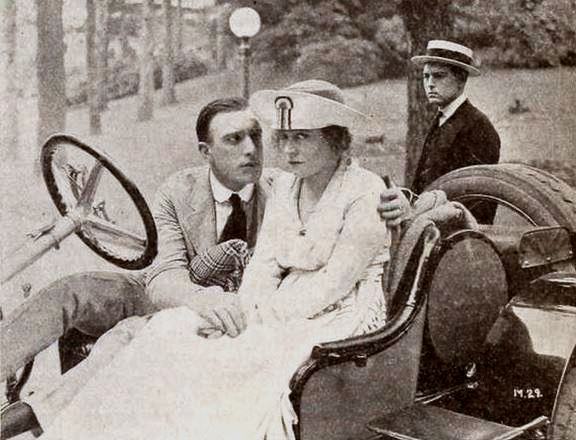
Winifred Kingston’s Ellen could have been the requisite flapper ornament, but her eyes carry generations of ancestral rot. She knows opium the way fishermen know tide charts: not as exotic vice but as household weather. When she clasps Donaldson’s wrist in the chauffeured Daimler, the gesture is half plea, half inoculation—she is trying to vaccinate her family with the only antibody she can afford: a stranger’s decency.
The film’s most subversive gesture is to let their courtship play out in ellipses: shared silences inside a speeding automobile, a half-finished waltz on a terrace whose orchestra has gone home. We are denied swelling violins; instead, the romance ferments in the negative space between intertitles, a chiaroscuro of glances that feel almost indecently intimate.
Enter the dragon: Mott Street rendered not as orientalist postcard but as neural labyrinth, its warrens drenched in kerosene glow. Bartlett’s camera lingers on doorways curtained with beaded entropy; each cut feels like a trespass. Donaldson’s pursuit of Ben Arsdale becomes a Stations-of-the-Cross for the cosmopolitan savior—every alleyway a confessional, every denizen a mirror he refuses to recognize.
Compare this sequence to the opium subplot in Damaged Goods, where addiction serves as moral exclamation point. Here, narcotic haze is not punishment but atmosphere, a fog through which dynastic guilt drifts like ancestral ghosts. The set design deserves archival reverence: paper lanterns that throb like cardiac tissue, calligraphy scrolls whose ink seems to weep.
Let us now praise the uncredited canine—a brindled mongrel who appears for perhaps forty-five seconds yet whose resurrection retroactively re-engineers the entire moral algebra of the narrative. When Donaldson discovers him alive beneath the laboratory settee, the moment lands like a slap delivered by a Zen master: the only thing more lethal than poison is the story you swallow about yourself.
Barstow’s explanation—“the dose failed”—is whispered, almost embarrassed, as if science itself were caught in a lie. In that instant the film pivots from noir into metaphysical farce, reminding us that deus ex machina need not arrive via telegram or long-lost will; sometimes salvation pants and licks your face.
Cinematographer Alan Robinson (unjustly eclipsed in histories that lionize Caligari’s expressionism) sculpts darkness like wet clay. Notice the attic scuffle: the assailant’s silhouette fractures across rafters, multiplying into a jury of faceless judges. Or the courtroom of the hotel suite—morning light sliced by venetian blinds into prison-bar geometries, reminding Donaldson that even luxury can indict.
Color tinting alternates between bile green for interior dread and amber for the fleeting illusion of dawn. The print I viewed (rescued from a defunct Vermont parish archive) bore chemical blemishes—bubbling nitrate that resembled septic eczema—yet these scars only heightened the sense that we are watching a film try to escape its own deterioration.
Placed beside The Ticket of Leave Man, whose redemption hinges on external forgiveness, Seventh Noon locates absolution inside the circulatory system. Where Dolken externalizes guilt through doppelgänger, Bartlett internalizes it as pharmacological roulette. Even Monte Cristo, that ur-text of postponed revenge, pales before a protagonist who sentences himself to death and then must learn defense-attorney tricks on the fly.
And yet the film never devolves into nihilism; it is too fascinated by the machinery of mercy. The final tableau—dog cradled like a verdict, Ellen’s hand on Donaldson’s lapel, Ben’s tremulous grin—offers neither closure nor catharsis, only the fragile consensus to try again tomorrow.
Modern screenings often commission new scores, but the most honest accompaniment is the wheeze of the projector itself—a mechanical death-rattle that syncs perfectly with Donaldson’s pulse. I fantasize a contemporary composer restricting themselves to heartbeat samples at 60 BPM, gradually accelerating into arrhythmia, then collapsing back into the steady lub-dub of second chances.
Absent such score, the viewer becomes hyper-aware of ambient noise: the creak of one’s own chair, the distant siren that might be 1916 or 2023. The film leaks out of its century and colonizes your present, proving that silence can be the most democratic soundtrack of all.
Ellen’s agency flickers in the gaps where patriarchal plot machinery stalls. She engineers the country-house expedition, deciphers Ben’s “Wun’s place” riddle, and ultimately rewrites the ending by refusing to let Donaldson exit stage left as tragic martyr. In a medium where women often function as postage stamps mailed from one male redemption arc to another, Ellen drafts her own letter—to the future, to the audience, to herself.
Marie the housekeeper, meanwhile, embodies the immigrant fear that justice is a zero-sum shell game. Her futile attic flight compresses an entire social history into thirty feet of celluloid: the servant class condemned to inherit the guilt of their employers.
Seen through today’s lens, Donaldson’s wager feels like the ultimate hustle: leverage mortality for seven days of VC-funded living—room-service oysters, bespoke suits, the illusion of consequence-free indulgence. The film anticiphes our gig-economy brinkmanship where burnout entrepreneurs gamble sleep, health, relationships against the IPO of self-actualization. The poison is merely metaphor made alchemical.
Yet the script refuses to valorize this hustle; it exposes the amortization of despair. Every dollar Donaldson spends accrues interest in the currency of regret. By the time he discovers the dog alive, his bankbook is as empty as his death sentence—riches converted into the only asset that appreciates when shared: time.
Current prints derive from a 1958 Library of Congress duplicate, itself struck from a Czech archive negative thought lost in the 1945 Prague floods. The fact that this film survives at all feels like Barstow’s failed poison writ large: a miracle whose explanation is less important than its invitation to keep breathing.
Fans of Bekenntnisse eines Mörders or Reincarnation of Karma will find similar preoccupations with karmic bookkeeping, yet Seventh Noon tempers fatalism with a humanist wink. It is the rare silent that does not yearn for the afterlife but champions the messy, ungovernable present.
I could catalog flaws: the comic-relief beat cop whose Irish brogue thicks the intertitles, the abrupt cutaway during the warehouse fight that suggests missing footage. Yet these scars are integral to the film’s DNA—like the creases on a suicide note that was never mailed. The Seventh Noon does not merely survive; it perseveres, a distinction lost on many classics that age into museum pieces.
Watch it at midnight with the windows open. Let the city’s own nocturne seep in—horns, drunks, the occasional aria of a passing ambulance. You will find yourself counting days, then hours, then breaths, until you realize the only antidote to annihilation is the audacity to keep scheduling breakfast.
Grade: A-
Runtime: 68 min. | Country: USA | Language: Silent with English intertitles | Director: Frederick Orin Bartlett | Screenplay: Bartlett, from his novel | Cinematography: Alan Robinson | Cast: Ernest Glendinning, Winifred Kingston, Julia Blanc, Everett Butterfield, Gilda Leary, Alan Robinson, W.T. Clark, George LeGuere
IMDb —
1919
Community
Log in to comment.