DbcultAccessing Vault...
6.2/10
Senior Film Conservator
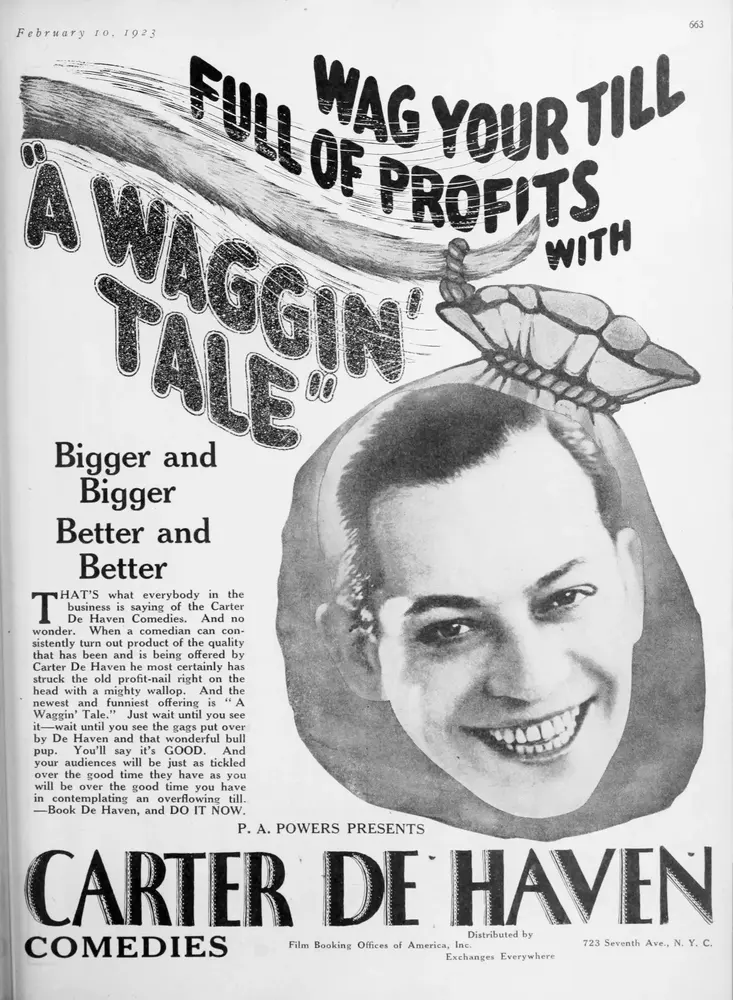
A definitive 6.2/10 rating for a film that redefined the boundaries of cult cinema. A Waggin' Tale remains a cornerstone of transgressive art.
From the moment the title card flickers onto the screen, the audience is invited into a world where marital expectations collide with canine loyalty. Monte Brice’s screenplay, though ostensibly simple, conceals a lattice of social commentary that rewards repeated viewings.
May Wallace commands the screen with a blend of vulnerability and steely resolve, her eyebrows alone narrating the internal conflict of a woman torn between matrimonial duty and an irrational affection for her four‑legged companion. In contrast, Carter DeHaven embodies the titular “Mr. Newlywed” with a physicality that oscillates between slapstick pratfall and plaintive sigh, a duality that mirrors the film’s tonal shifts.
The setting—a drab, almost invisible hamlet—functions as a visual metaphor for the erasure of personal ambition when love is mediated through an animal’s needs. The cinematography, though limited by the era’s technology, employs stark chiaroscuro to emphasize the protagonist’s isolation. Shadows stretch across the unremarkable storefronts, while the bulldog’s glossy coat catches the light, underscoring its symbolic weight.
Wallace’s expressive pantomime is a masterclass in silent-era emoting. When she first introduces the bulldog to Mr. Newlywed, her eyes widen, and a subtle smile tugs at the corners of her mouth—a silent declaration that the animal will dictate the terms of their union. DeHaven, meanwhile, employs exaggerated gestures: a hand placed over his heart, a theatrical stumble, a resigned slump. These movements articulate a man grappling with the absurdity of his own circumstances without a single spoken line.
Supporting actor Charles Force delivers a brief yet memorable cameo as the town’s officious constable, whose rigid adherence to local ordinances becomes a foil for the protagonists’ personal rebellion. Flora Parker DeHaven, playing the neighbor who offers unsolicited advice, uses a delicate hand‑wave to convey both empathy and condescension, enriching the film’s social tapestry.
At its core, "A Waggin' Tale" interrogates the notion of compromise within marriage. The bulldog, a creature traditionally associated with stubbornness, becomes the silent arbiter of the couple’s future. The film asks whether love can truly be unconditional when it is contingent upon an external, non‑human entity.
Comparatively, the film’s exploration of personal sacrifice echoes the emotional undercurrents found in The Downy Girl, though the latter leans more heavily on melodrama than comedy. Both works, however, share a preoccupation with the ways societal expectations compress individual desire.
The director’s use of intertitles is sparing, allowing visual gags to dominate. When Mr. Newlywed attempts to conceal the bulldog during a town meeting, the camera captures a series of rapid cuts—each frame a tableau of escalating chaos. The intertitle that follows reads, "A dog’s love is louder than any oath," a line that encapsulates the film’s witty brevity.
Montage sequences, though brief, are meticulously composed. One such sequence juxtaposes the bulldog’s leisurely stroll with Mr. Newlywed’s frantic attempts to navigate the town’s cobblestones, creating a rhythmic counterpoint that underscores the protagonist’s disorientation.
When placed alongside other silent comedies such as A Ticket in Tatts or They're Off, "A Waggin' Tale" distinguishes itself through its subtle critique of domestic power dynamics. While the former films revel in farcical mishaps, Brice’s script weaves a thread of pathos that elevates the narrative beyond mere slapstick.
In terms of visual style, the film shares a muted palette with The Betrayer, yet it diverges by employing a brighter, more saturated accent—most notably the bulldog’s glossy coat, which is highlighted in a warm amber hue reminiscent of the film’s thematic fire.
Though "A Waggin' Tale" did not achieve the box‑office heights of contemporaneous works like Iris, its influence can be traced through later cinematic portrayals of pet‑centric marital dilemmas. The film’s subtle subversion of gender roles—where the bride’s agency is expressed through her bond with the animal—prefigures later feminist readings of silent cinema.
Modern audiences, accustomed to dialogue‑driven narratives, may initially find the reliance on visual storytelling demanding. Yet, the film rewards those who attend to its nuanced choreography, discovering layers of irony that resonate with today’s discourse on animal companionship and marital negotiation.
Accompanying the visuals is a live piano score that oscillates between jaunty ragtime and somber minor chords, mirroring the protagonist’s emotional pendulum. The pianist’s occasional emphasis on the low register during the bulldog’s moments of dominance underscores the animal’s unspoken authority.
Preserved in the Library of Congress’s silent film collection, "A Waggin' Tale" benefits from recent restoration efforts that have brightened its original nitrate grain, allowing contemporary viewers to appreciate the film’s textural richness. The restoration has also facilitated scholarly reevaluation, positioning the film as a case study in early 20th‑century gender politics.
For those seeking a comparative study, the thematic motifs of compromise and animal agency find echoes in I Don't Want to Be a Man, where gender role reversals are explored through comedic lenses.
"A Waggin' Tale" endures as a testament to the silent era’s capacity for layered storytelling. Its blend of physical comedy, visual metaphor, and subtle social critique invites repeated analysis. Whether one is drawn to its comedic timing, its poignant commentary on marital compromise, or its historical significance, the film offers a rich tapestry that rewards the discerning eye.
In an age where streaming platforms prioritize immediacy, revisiting this 1925 gem reminds us that cinema’s earliest architects possessed a profound understanding of narrative economy—a lesson as valuable today as it was a century ago.
IMDb 4.2
1915
Community
Log in to comment.