DbcultAccessing Vault...
2.7/10
Senior Film Conservator
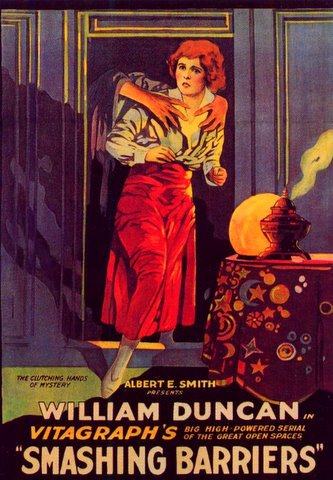
A definitive 2.7/10 rating for a film that redefined the boundaries of cult cinema. Smashing Barriers remains a cornerstone of transgressive art.
The flickering allure of the silent era cinema, often dismissed by casual observers as merely a precursor to sound, held within its depths a vibrant, innovative spirit. "Smashing Barriers," released in 1923, stands as a fascinating testament to this era's ingenuity, particularly in its unique genesis. It wasn't born as a standalone feature but meticulously re-edited from a 1919 serial of the same name. This transformation from episodic adventure to a cohesive, feature-length narrative is itself a compelling story, reflecting the evolving tastes and technical capabilities of the film industry. The ambition to condense hours of weekly cliffhangers into a single, immersive experience speaks volumes about the perceived enduring power of its core narrative and, crucially, the star power of Edith Johnson. In an age where cinematic storytelling was rapidly maturing, such an endeavor was not merely a cost-saving measure but a bold artistic statement, aiming to elevate a popular serial into a more prestigious, lasting work. It invited audiences to revisit a beloved story, now presented with a newfound narrative density and emotional resonance, a cinematic experiment that largely succeeded in its daring aspiration.
At the very heart of "Smashing Barriers" beats the vibrant presence of Edith Johnson, whose portrayal of Grace Sterling is nothing short of captivating. Johnson, a formidable figure in silent cinema, imbues Grace with a potent blend of vulnerability and unwavering resolve, crafting a heroine who is both relatable and aspirational. Her performance transcends mere physical action, though she excels in every daring escapade the plot demands. It's in her nuanced expressions, the subtle shifts in her gaze, and the determined set of her jaw that Grace Sterling truly comes alive. She doesn't just react to the unfolding dangers; she actively confronts them, demonstrating a remarkable intellectual acuity alongside her physical prowess. Johnson's Grace isn't a damsel in distress; she's a strategic thinker, a skilled combatant, and a woman who refuses to be defined or confined by the patriarchal expectations of her time. Her performance is a masterclass in silent acting, relying on expressive body language and potent eye contact to convey a rich inner life without uttering a single word. This depth is particularly vital in a film cobbled together from a serial, as Johnson had to ensure continuity of character across what were originally distinct segments. Her success in this regard is a testament to her talent, anchoring the entire narrative with a consistent, compelling central figure.
The plot of "Smashing Barriers" is a fascinating exercise in narrative restructuring. Originally designed to deliver weekly cliffhangers, its re-editing into a feature film necessitated a careful balance between preserving the episodic excitement and forging a coherent, overarching story arc. The film largely succeeds in this ambitious endeavor, presenting a plot that is both exhilaratingly paced and surprisingly intricate. Grace Sterling's fight against the nefarious Crimson Hand syndicate, led by the impeccably villainous Silas Thorne (William McCall, whose sneering menace is palpable even without dialogue), provides a robust framework. The syndicate's covetous pursuit of Grace's father's eco-friendly energy invention is a timely theme, even a century later, highlighting timeless concerns about corporate greed and environmental exploitation. The writers – C. Graham Baker, Cyrus Townsend Brady, Albert E. Smith, R. Cecil Smith, and Harvey Gates – crafted a world where danger lurks around every corner, and ingenuity is the only path to survival. The transition from serial to feature is often seamless, a credit to the editors who managed to weave together disparate threads into a tapestry that feels surprisingly whole. There are moments, perhaps, where the abrupt shifts in location or the sudden appearance of a new obstacle betray its serial origins, but these are minor quibbles in an otherwise well-constructed narrative. The film maintains a relentless forward momentum, pulling the audience through a dizzying array of chases, disguises, and desperate struggles. It's a testament to the power of a well-conceived story that it can withstand such structural metamorphosis and still emerge as a compelling piece of cinema.
While Edith Johnson undeniably carries the film, the supporting cast plays a crucial role in enhancing the narrative's texture and tension. William McCall, as the primary antagonist Silas Thorne, delivers a performance that is chillingly effective. His villainy is not over-the-top but rather insidious, portraying a man driven by insatiable greed and a ruthless desire for power. His silent portrayal of menace is a masterclass in subtlety, making him a truly formidable adversary for Grace. Slim Cole, as the brute "The Hammer," provides the physical threat, a hulking presence that embodies the raw force of the syndicate. His confrontations with Grace are charged with a visceral energy, showcasing the physical demands placed upon Johnson. Walter Rodgers, as the cunning saboteur Vesper, adds another layer of villainy, representing the more intellectual and deceptive side of the Crimson Hand. His quiet malevolence is a stark contrast to Cole's overt aggression, creating a more multifaceted threat. George Stanley, as the initially skeptical but ultimately loyal reporter Jack Harding, serves as the audience's entry point into Grace's world. His transformation from detached observer to committed ally provides a relatable human element, and his burgeoning romance with Grace adds a touch of warmth to the otherwise action-packed narrative. Joe Ryan, William Duncan, and Fred Darnton, though perhaps with less screen time, contribute to the ensemble's depth, populating the film with believable characters who either aid or hinder Grace's quest. The collective performances ensure that Grace's journey never feels solitary, but rather a struggle within a vibrant, dangerous world. Each actor, through their silent expressions and gestures, contributes significantly to the film's overall dramatic impact, proving that even in the absence of spoken dialogue, a strong ensemble can elevate a story to memorable heights.
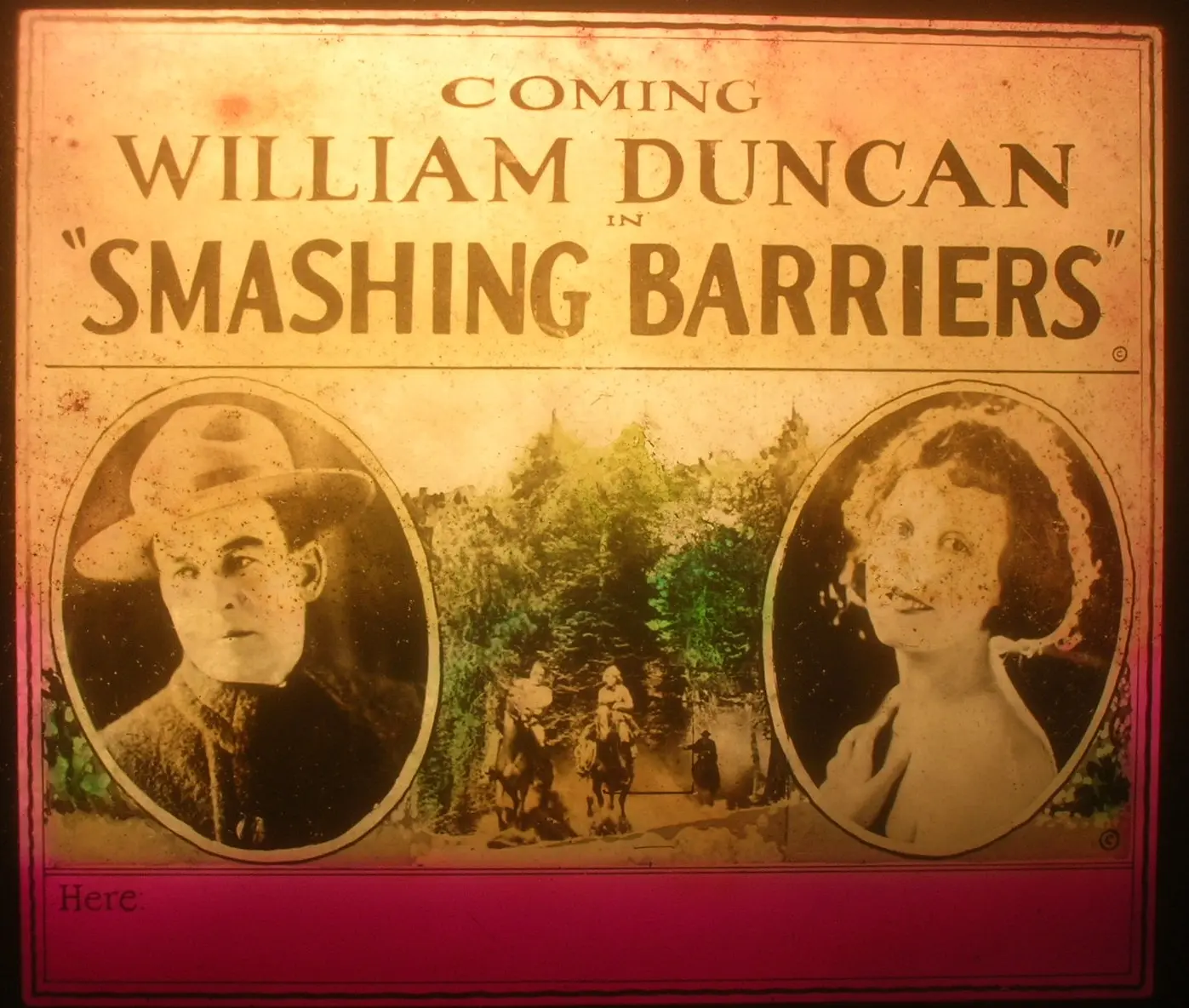
One cannot discuss "Smashing Barriers" without acknowledging its incredible stunt work and the sheer spectacle it delivers. The film, true to its serial origins, is a veritable smorgasbord of thrilling sequences designed to keep audiences on the edge of their seats. From death-defying leaps from speeding trains to elaborate booby traps and desperate struggles, the action is relentless and remarkably well-executed for its time. Edith Johnson herself was known for her athleticism and often performed her own stunts, adding an extra layer of authenticity and daring to Grace Sterling's character. This commitment to physical performance elevates the film beyond mere melodrama, grounding it in a tangible sense of danger. The visual language of these sequences is particularly effective in the silent medium; the exaggerated movements, rapid cuts, and dramatic close-ups heighten the tension and convey the urgency of each moment. The film's production values, while perhaps not reaching the epic scale of a D.W. Griffith production, are nevertheless impressive, with elaborate sets and location shooting adding to the immersive quality of Grace's globe-trotting adventure. The re-editing process, in fact, might have even intensified these sequences, allowing for a more concentrated delivery of thrills without the week-long waits between episodes. The cumulative effect is a rollercoaster ride of action that firmly establishes "Smashing Barriers" as a significant entry in the early action-adventure genre, demonstrating how silent cinema could deliver pulse-pounding entertainment with ingenuity and raw physical daring.
Beyond its undeniable thrills, "Smashing Barriers" resonates with several compelling themes that elevate it beyond a simple adventure story. At its core, it is a narrative about empowerment and resilience. Grace Sterling's journey is not just about recovering an inheritance or saving an invention; it's about proving her own capabilities in a world that likely underestimated her. She smashes not only physical barriers but also societal expectations, embodying a proto-feminist ideal of a woman who takes charge of her own destiny. Her intelligence and mechanical acumen are just as crucial as her physical bravery, highlighting the multifaceted nature of true strength. The film also touches upon themes of corporate greed and environmental responsibility, with the Crimson Hand's desire to weaponize or monopolize a benevolent energy source serving as a stark warning. This prescient commentary gives the film an enduring relevance, demonstrating that the struggles of power and ethics are timeless. The burgeoning romance between Grace and Jack Harding, while secondary to the action, adds a human touch, exploring themes of trust, partnership, and mutual respect. Their relationship is one of equals, with Harding recognizing and admiring Grace's strength rather than seeking to protect or control her. This progressive portrayal of gender dynamics, even in a film from the early 1920s, is noteworthy and adds another layer of thematic richness to the overall experience. The film, therefore, is not merely a relic of its time but a narrative that speaks to universal human experiences and aspirations, demonstrating the enduring power of courage and ingenuity in the face of overwhelming odds.
Placing "Smashing Barriers" within the broader context of 1920s cinema reveals its unique position. While contemporary films like The Eternal City (1923) aimed for grand historical dramas and moral allegories, "Smashing Barriers" embraced the more populist, action-oriented serial format, albeit in a re-edited feature form. This distinction is crucial. "The Eternal City", with its weighty themes and epic scope, represented one facet of the cinematic ambition of the era, striving for artistic legitimacy and prestige. "Smashing Barriers," on the other hand, represented the continued appeal of pure entertainment, high-stakes adventure, and the triumph of individual heroism. It shared a spirit with earlier adventure serials and films that championed strong, active female protagonists. One might draw parallels to the spirited heroines found in films like Dangerous Paths, where characters often navigated perilous situations with remarkable self-reliance. The transition from serial to feature also highlights a commercial trend. As audiences grew more sophisticated, and exhibition practices changed, the demand for longer, more cohesive narratives increased. This meant that successful serials, with their proven appeal, were ripe for re-packaging. The film's emphasis on physical action and a clear-cut battle between good and evil might also remind one of the straightforward morality plays often seen in early cinema, yet with a modern twist of technological intrigue. Even works like Pretty Mrs. Smith, while perhaps more focused on social drama, still explored the complexities of female identity and agency, a theme echoed in Grace Sterling's journey. The film's success in this re-editing venture demonstrated that a well-crafted narrative, regardless of its original format, could find new life and appreciation, bridging the gap between serialized thrills and the more refined feature film experience. It’s a fascinating example of how early filmmakers experimented with form and content to capture the public imagination, proving that a compelling story, coupled with a charismatic lead, could indeed smash through any cinematic barrier.
Watching "Smashing Barriers" today is not just an archaeological dive into cinematic history; it's an opportunity to appreciate the unique artistry of silent storytelling. The absence of spoken dialogue forces a different kind of engagement, demanding a heightened sensitivity to visual cues, musical accompaniment (which, though absent in our modern viewing, was integral to original screenings), and the expressive power of the human face and body. The directors, Albert E. Smith and R. Cecil Smith, along with their team, had to master this silent language, conveying complex emotions, intricate plot points, and thrilling action purely through imagery. Intertitles, while providing crucial exposition, are used judiciously, allowing the visuals to do the heavy lifting. The pacing, often a point of contention for modern viewers accustomed to rapid-fire editing and dialogue, possesses a deliberate rhythm that allows for contemplation and absorption of the visual narrative. This slower tempo can be surprisingly immersive, drawing the viewer into the world of Grace Sterling with a quiet intensity. The exaggerated acting styles, often misunderstood as simplistic, were in fact a sophisticated form of communication, a theatrical language designed to project emotion and intent across large auditoriums without the benefit of sound. Edith Johnson, in particular, excels at this, her every gesture and facial expression conveying a wealth of information. The film serves as a potent reminder of cinema's foundational power as a visual medium, a testament to an era when stories were told not with words, but with light, shadow, movement, and the sheer force of human expression. It encourages us to re-evaluate our notions of what constitutes effective storytelling, demonstrating that a compelling narrative can transcend the limitations of technology and speak directly to the human spirit through purely visual means.
The legacy of "Smashing Barriers" lies not just in its individual merits as an action-adventure film but in its representation of a transitional period in cinematic history. It stands as a bridge between the serialized entertainment of the early 1910s and the more polished feature films that would come to dominate the industry. Its re-editing process itself is a historical artifact, demonstrating the industry's adaptability and its willingness to repurpose successful content for new audiences and formats. For film historians and enthusiasts, it offers invaluable insight into the production practices, narrative conventions, and audience expectations of the era. More broadly, the film's enduring appeal rests on its timeless themes and its charismatic lead. Grace Sterling remains a compelling figure, a testament to the power of a strong female protagonist who defies conventions and triumphs through sheer will and ingenuity. Her story continues to resonate, inspiring audiences with its message of perseverance and courage. The sheer kinetic energy of the film, its relentless pace, and its commitment to delivering thrilling entertainment ensure that it remains an engaging watch, even a century after its initial release. It reminds us that the fundamental elements of compelling storytelling – conflict, character, and resolution – are universal and transcend technological advancements. "Smashing Barriers" is more than just a silent film; it's a vibrant piece of cinematic heritage, a thrilling adventure, and a powerful statement about the resilience of the human spirit, all wrapped in the compelling package of early Hollywood's audacious vision. It exemplifies how silent cinema, far from being primitive, was a sophisticated art form capable of delivering complex narratives and profound emotional impact, proving that barriers, both narrative and societal, were indeed made to be smashed.
IMDb 6.6
1925
Community
Log in to comment.