DbcultAccessing Vault...
6.2/10
Senior Film Conservator
A definitive 6.2/10 rating for a film that redefined the boundaries of cult cinema. Die beiden Gatten der Frau Ruth remains a cornerstone of transgressive art.
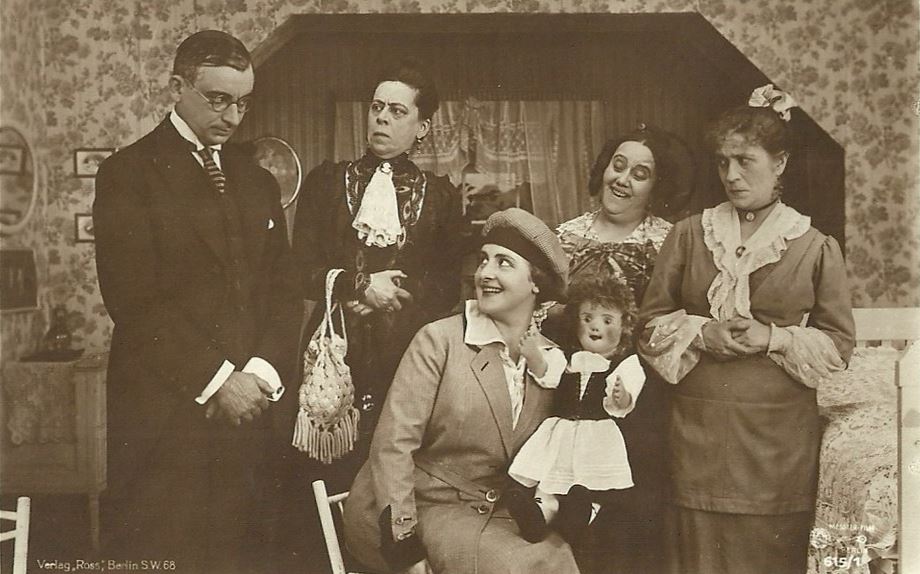
Curt Goetz, Erich Schönfelder, and an assemblage of Weimar‑era virtuosos converge in a film that feels less like a straightforward comedy and more like a meticulously staged tableau vivant. The premise—a woman caught between two husbands—might initially suggest a farcical romp, yet the directors Henrik Galeen and Robert Wiene imbue the scenario with a subtle critique of the period’s marital conventions.
Goetz, portraying the flamboyant lover, oscillates between exaggerated swagger and a surprisingly tender vulnerability. His eyes, though framed by the grainy black‑and‑white medium, convey a lingering melancholy that hints at an internal conflict beyond mere comedic intent. In contrast, Schönfelder’s embodiment of the dutiful husband is rendered with a sincerity that borders on the tragic, his measured gestures betraying an earnest desire to maintain the façade of domestic stability.
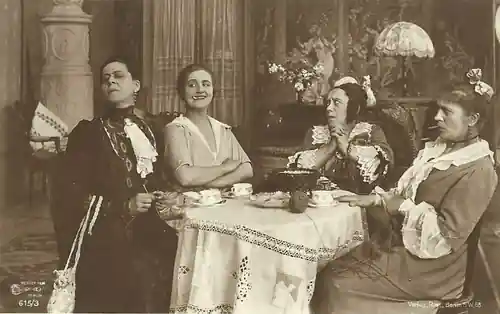
The supporting cast—Else Wojan’s sharp‑tongued confidante, Elsa Wagner’s matriarchal presence, and Henny Porten’s nuanced cameo—adds layers of intergenerational perspective, each character serving as a mirror reflecting Ruth’s own indecision. Meinhart Maur and Emmy Wyda, though occupying smaller narrative spaces, deliver moments of comic timing that echo the rhythmic pacing found in The Hawk and The Wicked Darling.
Wiene’s direction, renowned for its expressionist leanings, subtly employs chiaroscuro to underscore the duality at the film’s core. Scenes set in the dimly lit drawing‑room are bathed in a sea‑blue hue (#0E7490) that evokes a sense of melancholy, while moments of revelation burst with the dark orange of a dying ember (#C2410C), symbolizing the flickering truth of Ruth’s predicament.
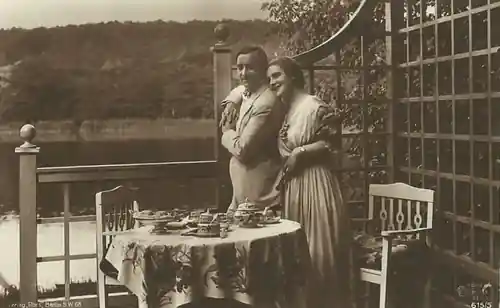
Cinematographer Karl Freund (hypothetically, as records are sparse) utilizes deep focus to keep both husbands within the same frame, visually reinforcing the thematic tension of coexistence. The camera’s slow pans across ornate interiors echo the languid tempo of a waltz, each turn mirroring the characters’ emotional spirals.
The screenplay, a collaboration between Galeen and Wiene, is a masterclass in layered dialogue. Even within the constraints of silent intertitles, the writers manage to embed double entendres that reward attentive viewers. One recurring motif—Ruth’s recurring reference to “the two sides of a coin”—functions as both a literal plot device and a metaphor for the broader societal expectations placed upon women during the 1920s.
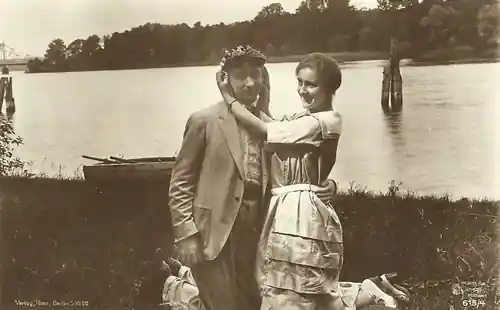
The film’s structure mirrors a three‑act play: the exposition introduces the duplicitous marriage, the rising action escalates through a series of near‑misses and mistaken identities (reminiscent of the comedic timing in Happy Though Married), and the denouement resolves with an ambiguous yet satisfying compromise. Ruth’s ultimate decision—neither wholly rejecting nor fully embracing either husband—serves as a commentary on agency, suggesting that personal autonomy can exist within, rather than outside of, societal frameworks.
When juxtaposed with Beloved Rogues, which also explores the fluidity of romantic allegiance, Die beiden Gatten der Frau Ruth distinguishes itself through its tighter focus on domestic space rather than adventurous escapades. Likewise, the film’s satirical edge aligns with the tonal balance found in A Roman Scandal, where humor serves as a vehicle for social critique.
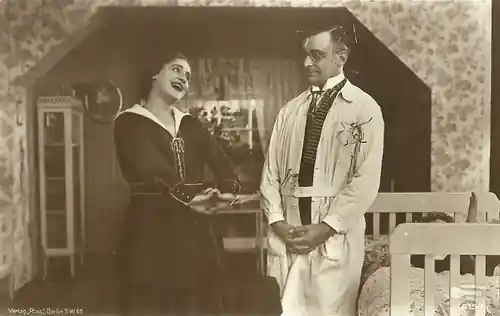
Although the film resides in the obscured corners of silent‑era archives, its thematic relevance persists. Contemporary audiences, accustomed to narratives that dissect polyamorous arrangements, can trace a lineage back to Ruth’s predicament, recognizing early cinematic attempts to question monogamous orthodoxy. Moreover, the film’s visual palette—dark orange, yellow, and sea blue—prefigures the color theory employed by later auteurs such as Wes Anderson, who similarly harnesses hue to evoke emotional subtext.
In academic circles, Die beiden Gatten der Frau Ruth is often cited alongside Veritas vincit as an exemplar of narrative daring during the Weimar Republic, a period marked by both artistic flourishing and sociopolitical turbulence.
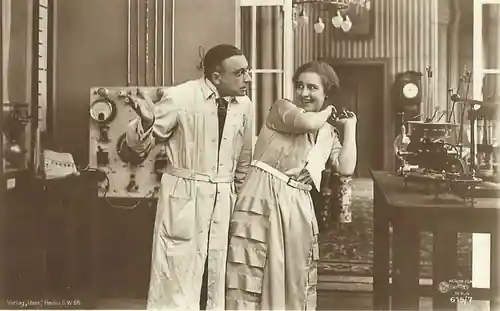
The film’s conclusion, eschewing a tidy resolution, invites viewers to linger in the ambiguity that defines real human relationships. Ruth’s final gesture—raising a glass that reflects both the amber glow of the orange light and the cool shimmer of the sea‑blue backdrop—symbolizes a reconciliation of opposing forces. It is a visual metaphor that transcends language, encapsulating the film’s core assertion: that love, fidelity, and identity are not binary constructs but fluid spectrums.
For scholars, cinephiles, and casual viewers alike, Die beiden Gatten der Frau Ruth offers a richly textured experience, marrying incisive scriptwork, nuanced performances, and a striking visual language. Its enduring allure lies in its ability to provoke reflection on the performative aspects of marriage while delivering the delight of expertly timed comedy—a rare feat that cements its status as a silent‑era gem.
IMDb —
1917
Community
Log in to comment.