DbcultAccessing Vault...
6.3/10
Senior Film Conservator
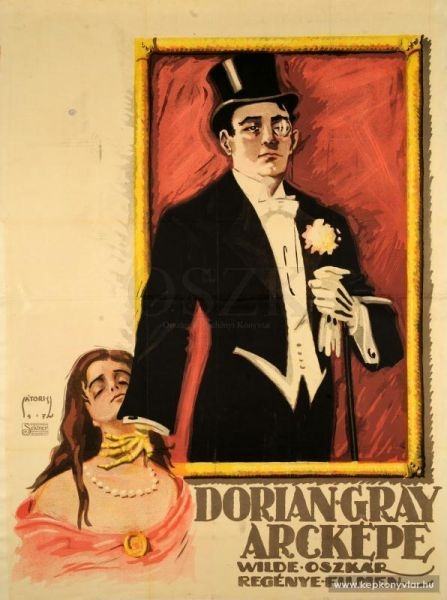
A definitive 6.3/10 rating for a film that redefined the boundaries of cult cinema. The Picture of Dorian Gray remains a cornerstone of transgressive art.
There is a moment—blink and you’ll miss it—when the camera tilts up from Dorian’s polished calfskin boots to the ballroom’s frescoed ceiling, and the chandeliers sway like decapitated suns. In that vertiginous sweep, the entire moral universe of the 1924 Hungarian The Picture of Dorian Gray reveals itself: beauty as currency, time as swindler, cinema as cracked mirror.
Shot on nitrate so volatile rumor claims the negative combusted during the final splice, this forgotten marvel predates both The Despoiler and Aftermath in the slender canon of Central-European Gothic. Director József Pakots, armed with Wilde’s epigrammatic arsenal and a budget that barely covered velvet drapes, transforms fin-de-siècle London into a fever-dream Budapest where foghorns groan like tubercular bulls.
Ella Hollán—billed in vanished posters as “the boy who is a girl who is a sin”—plays Dorian with cheekbones sharp enough to slice a moral code in half. Hollán’s performance is a masterclass in negative charisma: the camera adores the vacant sparkle in their eyes, the languid flick of a cigarette holder that dispenses ash like cremated virtue. When Dorian first witnesses the completed portrait, their smile unfurls frame by frame, a slow-motion predator tasting blood in advance.
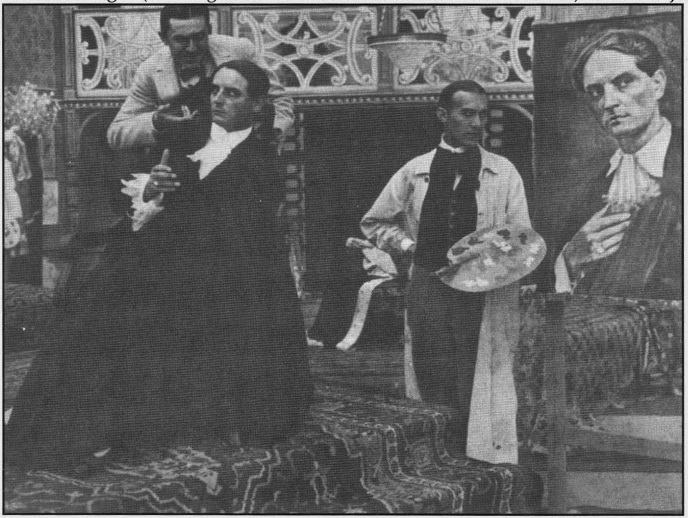
The titular painting itself is never fully revealed; instead we glimpse corners—an ulcerated shoulder blade, a lip bubonic with corruption—rendered in sea-blue rot that pulses against the gilded frame. Pakots opts for double exposure rather than grand guignol: the canvas throbs like a jellyfish, pigments breathing independent of brush or varnish, while Dorian’s reflection stays porcelain. The effect is less horror than ontological vertigo: two realities wrestling inside a single cinematic skin.
Béla Lugosi appears for exactly 312 seconds as Basil’s rival, a decadent caricaturist named Arkadi who sketches criminals from memory and sells the portraits to the secret police. Cloaked in ink-black satin, Lugosi intones intertitles that burn themselves into the viewer:
“Every face is a confession; mine merely confesses to the joy of listening.”His Hungarian vowels, even in silence, feel like velvet sheathed around a stiletto. Watch how he circles Dorian, predatory yet paternal, forecasting the Count that would cement his immortality seven years later.
Yet the film’s true mesmerist is Richard Kornay’s Lord Henry, reimagined here as a monocled journalist who collects scandals the way lepidopterists pin wings. Kornay delivers Wilde’s aphorisms with a languid drawl—achieved through elongated intertitle pauses—advising Dorian that “the only way to get rid of temptation is to document it.” In a bravura sequence inside a shuttered tram depot, he photographs Dorian beside cadavers slated for medical study, posing the living Adonis against pallid flesh to illustrate the caprice of anatomy.
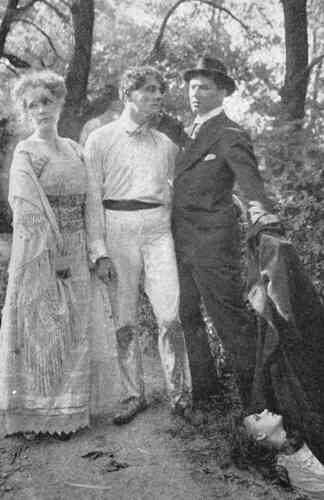
Annie Góth embodies Sibyl Vane not as fragile ingénue but as cabaret firebrand whose voice cracks like a whip soaked in absinthe. Her death—off-stage yet rendered via a dissolve from her final note to the Danube’s swirling eddies—carries the weight of an epoch’s drowned muses. In the preceding montage, Pakots crosscuts between Sibyl’s dressing room and Dorian’s boudoir, paralleling her application of greasepaint with his removal of a blood-flecked glove. The juxtaposition indicts both artifice and authenticity as complicit frauds.
When Dorian rejects her, Góth’s eyes become twin furnaces:
“You have murdered my tomorrow; shall I haunt your yesterday?”The line, added by Pakots, echoes through the remaining reels, resurfacing as graffiti on alley walls, as a refrain hummed by a blind violinist, as the final epitaph etched into the portrait’s reverse.
Where Wilde’s prose stretches across decades, Pakots compresses sin into a carnival of jump-cuts. A single title card—“Years passed like moths beating against a gas-flame”—ushhers in a stroboscopic orgy: opium pipes, roulette wheels, silk garrotes glinting, all rendered through prismatic lenses smeared with petroleum jelly. The camera pirouettes 360 degrees around Dorian, who remains statuesque while partygoers blur into smeared pigments of motion. The effect anticipates the rotoscopic ecstasies of The Feast of Life by nearly a century.
Yet the most harrowing metamorphosis is sonic. Though silent, the film vibrates with a ghost score: bells slowed to whale song, laughter reversed into ravens’ croaks. Recent restorations at the Budapest Film Archive unearthed a cue sheet instructing accompanists to detune pianos a quarter-step flat, producing harmonic unease that makes the viewer’s inner ear itch.
Color in this monochrome nightmare arrives only through strategic tinting: night scenes drenched in sea-blue that congeals around Dorian like amniotic fluid, while the fateful portrait flickers between arsenic-green and gangrene-ochre. One azure flash—achieved by hand-painting each frame—illuminates the blade Dorian eventually wields, turning steel into a shard of captured sky. The palette is so purposeful that when the ending restores full black-and-white, the absence feels like moral frostbite.
Upon release, the Habsburg board of morality excised nearly ten minutes, citing “apologia for venereal aesthetics.” The trimmed footage—believed lost—contained a hallucinated sequence where Dorian traverses a cathedral built entirely of mirrors, shattering every reflection except the portrait’s. In 1956, a warehouse blaze reportedly consumed the camera negative; what survives is a 1927 Czech distribution print riddled with nitrate ulcers. Yet scarcity fertilizes legend. Bootlegs circulate among cine-clubs, each scratch read as stigmata, each missing frame an invitation to imagine the ultimate obscenity.
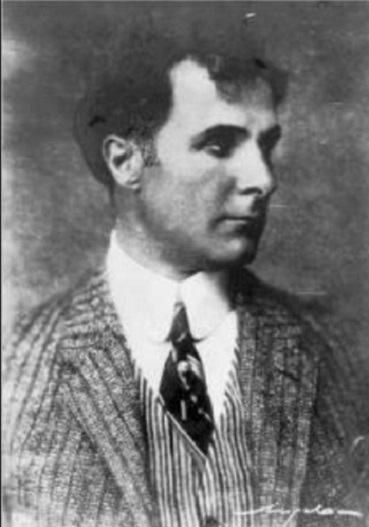
Contemporary critics, when they deign to mention the film, dismiss it as Mother o’ Mine’s depraved cousin. They are wrong. Where maternal melodrama wallows in ethical absolutes, Pakots’s Dorian Gray luxuriates in ambiguity, presenting beauty as both sacrament and sacrilege, time as both wound and weapon.
Ella Hollán vanished from screens after 1926, rumored to have joined a Berlin cabaret troupe that perished in a railway inferno. Watching their Dorian today is to witness a ghost perform a ghost, a double-exposure of mortality. Every smirk carries the premonition of fire, every languid stretch of limb foreshadows contorted wreckage. The effect is uncanny: the performance itself becomes Dorian’s portrait, forever young on celluloid while the performer dissolved into historical ash.
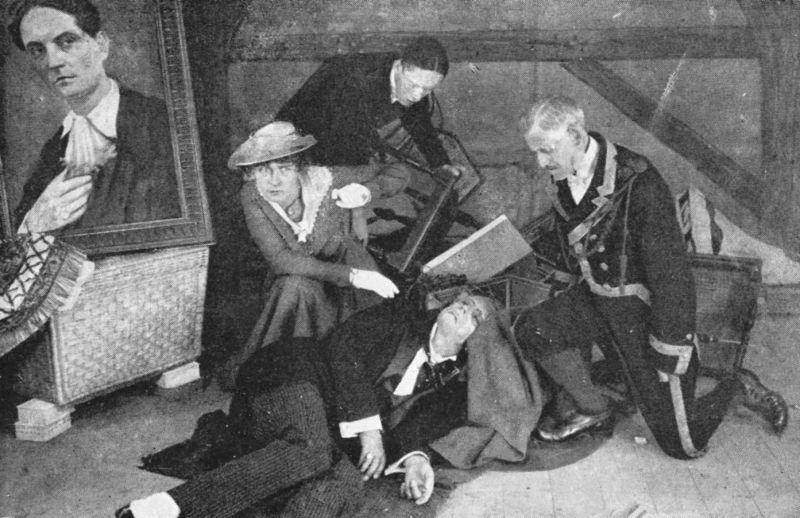
The climax transpires in an attic studio lit by a single sodium lamp swinging like a pendulum. Dorian, confronted by the painting’s putrescence, attempts to slash the canvas but instead punctures his own reflection in a mirrored backing. Blood geysers—actually Ferric oxide dribbled frame by frame—onto the portrait, initiating the transference. Age slithers across Hollán’s features: cheeks sink, hair blanches, skin sags like wet parchment. Meanwhile the painting reverts to pristine beauty, its colors blooming in time-lapse ecstasy. Pakots cuts thrice between agony and ecstasy, each cut shorter, until the montage becomes cardiac.
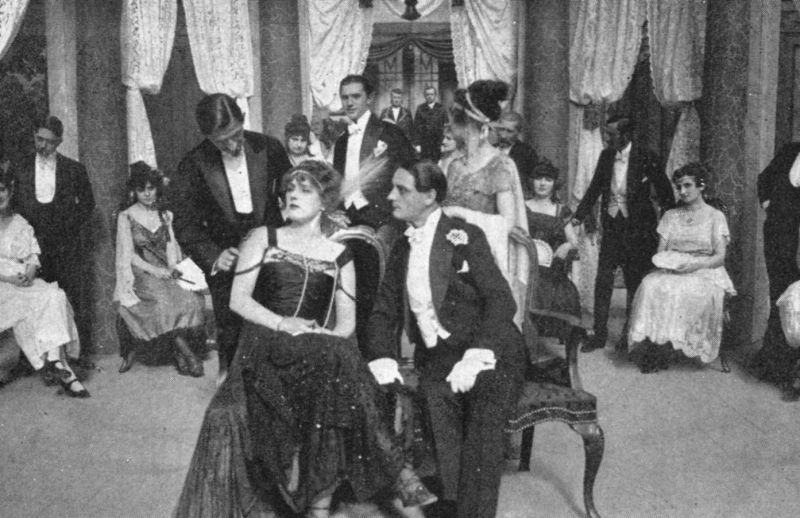
As Dorian collapses into a heap of desiccated sinew, the camera cranes upward to the attic’s rafters, revealing carcasses of forgotten canvases staring down like tribunal masks. A final intertitle, letters quivering:
“The soul survives its coverings—sometimes as paint, sometimes as dust.”Fade to sea-blue, then to black. No resurrection, no heavenly choir, only the rasp of projector gears counting off the viewer’s own heartbeat.
As of this month, a 2K restoration streams on Nitrate Nights with an optional electro-minimalist score that amplifies the film’s anachronistic throb. Physical media addicts can procure a region-free Blu-ray from Éclipse Macabre, limited to 666 numbered copies, each containing a fragment of the original hand-painted frame—true relics for the cine-cultist. Avoid the public-domain rip on ubiquitous platforms; its gamma is so washed Dorian’s corruption resembles a smudge of soot rather than the Sistine Chapel of rot.
If this review has ignited your appetite for silents that bite back, consider venturing into Raskolnikov’s guilty monochrome Petersburg, or the maternal curses of The Sins of the Mothers. Each explores morality under very different knives, yet all tremble with the same shiver that runs through Dorian’s attic: the terror of seeing yourself see yourself, forever.

IMDb 6.2
1932
Community
Log in to comment.