DbcultAccessing Vault...
Cult Review
Senior Film Conservator
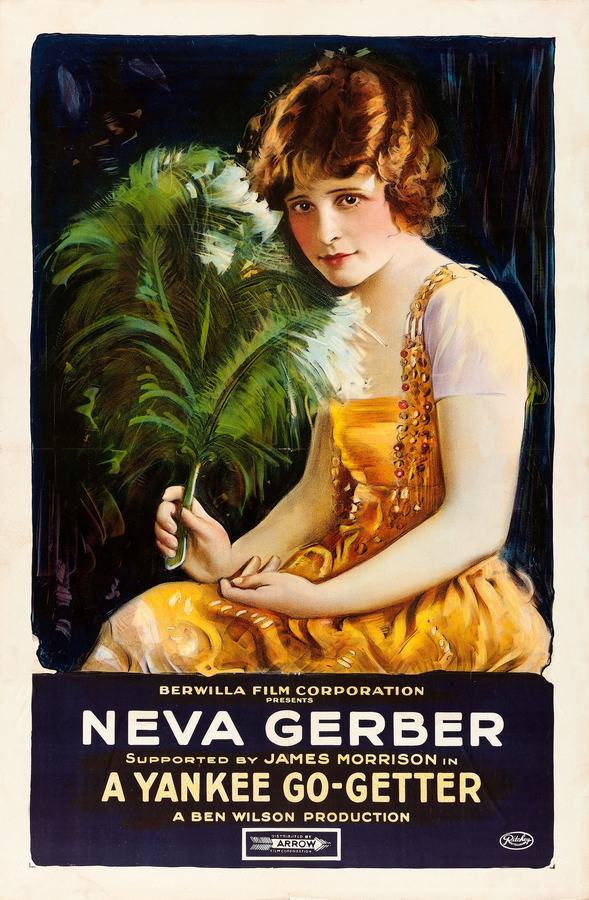
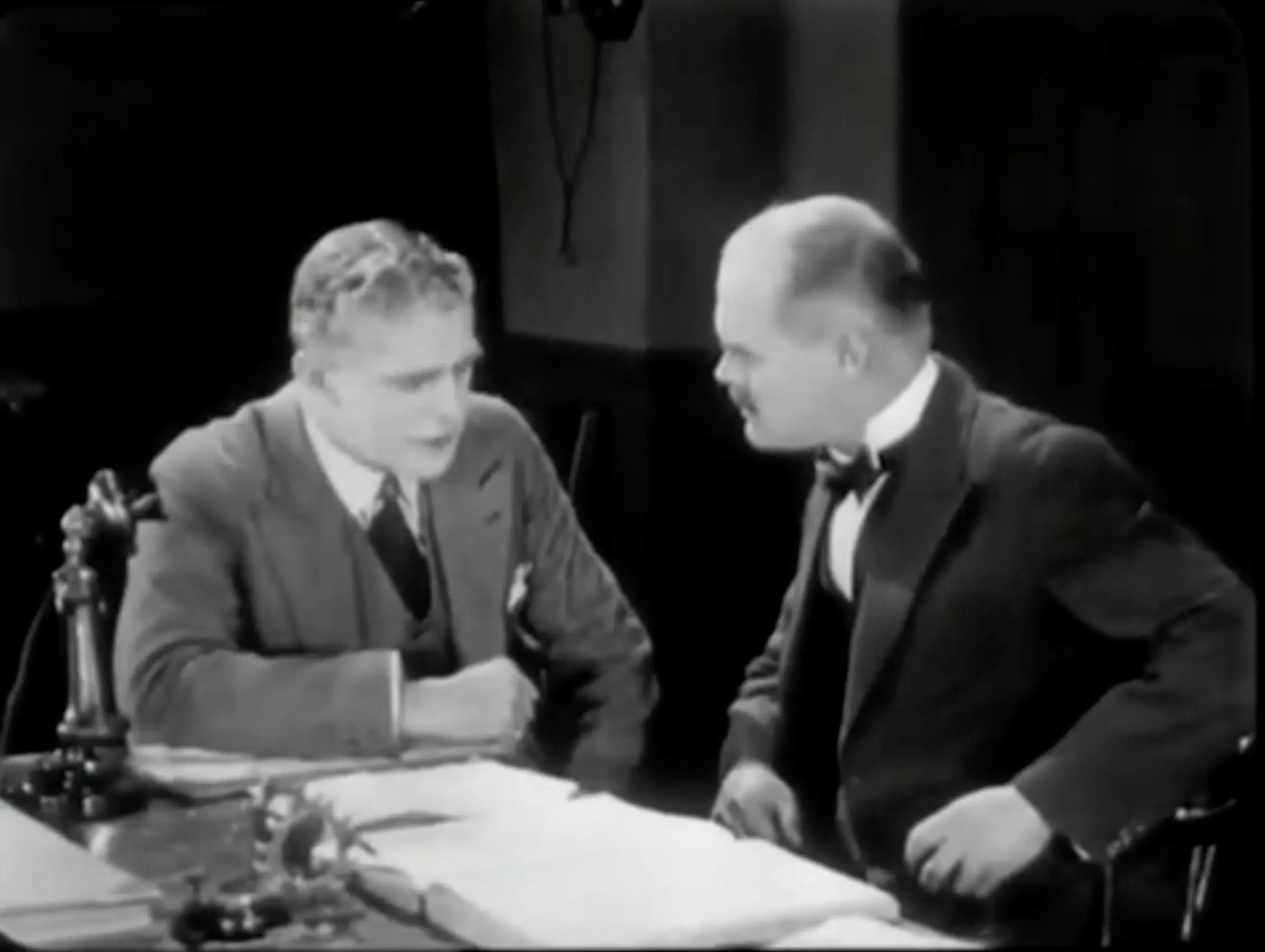
The year 1921 was a threshold in American cinema, a moment where the naive optimism of the early silents began to curdle into the complex, psychologically fraught narratives that would eventually pave the way for film noir. A Yankee Go-Getter, directed with a surprisingly modern sense of pacing, stands as a testament to this transition. We find our protagonist, Barry West (played with a frantic, lean energy by James Morrison), not in a position of strength, but in the throes of a creative and financial collapse. The theft of his typewriter isn't merely a plot device; it is a symbolic castration of the artist, a removal of his voice that forces him into the visceral world of action. Unlike the pastoral struggles found in Melissa of the Hills, West’s battle is decidedly urban, gritty, and permeated by the stench of desperation.
Central to the film’s efficacy is the dual role played by Neva Gerber. The motif of the identical stranger—the doppelgänger—is handled here with a sophistication that rivals the thematic depth of The Yellow Pawn. When West finds a pocketbook, he is met not by one claimant, but by two women who seem to be reflections of one another. This fragmentation of identity sets the stage for the rest of the film’s paranoia. Is he in love with the woman, or the image of the woman? Gerber manages to distinguish Lucia and Vera through subtle shifts in posture and a predatory stillness in her eyes as Vera that contrasts sharply with Lucia’s ethereal vulnerability. It is a performance that reminds one of the haunting presence in The Blue Moon, yet grounded in a much more immediate, political threat.
Joseph W. Girard’s portrayal of Nicholas Lanza provides the film with its gravitational center of villainy. Lanza is not your typical mustache-twirling antagonist; he is a creature of institutional power, leveraging marriage and inheritance as if they were stocks on a trading floor. The 'job' he offers West—marriage to his niece—is a grotesque commodification of romance. This theme of forced social mobility and the corruption of the domestic sphere echoes the darker undertones of Far from the Madding Crowd, though transported to a world of secret passages and political henchmen. The film excels in portraying the Lanza home as a site of confinement, a gilded cage where the architecture itself conspires against the inhabitants.
The screenplay, penned by Burke Jenkins and Clifford Howard, avoids the saccharine pitfalls of many contemporary romances. There is a lean, almost cynical edge to the dialogue (conveyed through sharp, minimalist intertitles) that suggests a world where 'go-getting' is often synonymous with 'soul-selling'. In this regard, the film shares a spiritual DNA with His Own Home Town, where the return to one's roots is met with the harsh reality of systemic corruption. West is a man trying to write his own story, only to find himself a character in a much darker narrative written by Lanza and Vera.
Technically, A Yankee Go-Getter is a marvel of early 1920s interior cinematography. The use of shadow to delineate the secret passages of the Lanza estate creates a proto-noir atmosphere that feels decades ahead of its time. When West discovers the hidden corridors, the film shifts from a social drama into a claustrophobic thriller. These passages represent the subconscious of the film—the dark, hidden truths beneath the polite veneer of the Lanza family’s social standing. This use of space as a psychological metaphor is something we see explored in international works of the era, such as the Polish drama Ludzie bez jutra, which also dealt with the shadows of the past encroaching on the present.
The kidnapping of Lucia and the installation of Vera in her place is a sequence of chilling efficiency. The film doesn't dwell on the logistics; it focuses on the emotional disorientation of West. His marriage to Vera is a sequence of mounting dread. The realization that he has legally bound himself to a stranger—a conspirator—is played for maximum psychological impact. It’s a thematic cousin to the entrapment seen in The Decoy, where the protagonist is lured into a web of deceit by the very people they should trust most.
One must ask if the title is an ironic commentary on the American Dream. The 'Go-Getter' is usually a hero of capitalistic triumph, but Barry West’s 'getting' involves stumbling into a nightmare. The film subverts the trope of the self-made man by making West’s success entirely dependent on his ability to survive a criminal conspiracy. This cynicism is a refreshing departure from the moralistic tone of St. Elmo. Instead of divine intervention or moral purity, West relies on his wits and a literal physical struggle to emerge victorious. The intervention of the law at the climax feels less like a 'deus ex machina' and more like a necessary restoration of order in a world that has gone completely mad.
The pacing of the final act is breathless. The arrest of the gang and the reunion with Lucia provides a catharsis that is hard-earned. Unlike the more whimsical resolutions found in Kitty MacKay, the ending of A Yankee Go-Getter leaves a lingering sense of unease. West has his love, but he has seen the darkness that resides in the heart of the social elite. He is no longer the naive scribe who lost his typewriter; he is a man who has looked into the abyss of human greed and survived.
Comparing this film to the serial-like intensity of Patria reveals a director more interested in the interiority of his characters than in mere spectacle. While Fighting Blood might offer more visceral thrills, A Yankee Go-Getter offers a more profound intellectual engagement. It is a film about the instability of the self and the fragility of truth in a world governed by wealth. Even the secondary characters, like the henchmen, are imbued with a sense of menace that feels grounded and real, lacking the caricature often found in films like Delo Beilisa.
In the broader context of 1921, this film serves as a bridge. It bridges the gap between the adventurous spirit of The Fifth Wheel and the psychological depth of Footfalls. It is a work that demands to be viewed not just as a piece of silent era ephemera, but as a sophisticated narrative that understands the inherent drama of the human condition. The 'Go-Getter' isn't just someone who pursues wealth; he is someone who pursues the truth, even when the truth is hidden behind a secret door and a stolen identity.
Ultimately, A Yankee Go-Getter is a triumph of narrative economy and atmospheric tension. It manages to weave together disparate threads of romance, political intrigue, and gothic mystery into a cohesive and compelling whole. For those looking for a silent film that transcends the limitations of its time, this is a quintessential watch. It captures a moment in history where the world was changing, and the cinema was changing with it, moving away from the simple and toward the complex, much like the transition from the silence of the past to the Silence of the Dead.
Verdict: A hauntingly prescient thriller that uses the tropes of its era to dismantle the myth of the American Go-Getter.
IMDb 6.7
1923
Community
Log in to comment.