DbcultAccessing Vault...
Cult Review
Senior Film Conservator
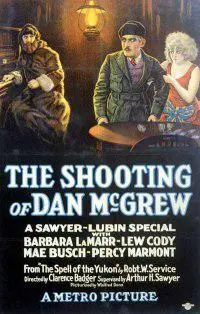
Stepping back into the annals of silent cinema often feels like unearthing a forgotten treasure, and The Shooting of Dan McGrew, a 1924 adaptation of Robert W. Service's evocative poem, is precisely that—a shimmering, albeit somber, artifact from an era long past. Directed by Clarence G. Badger and filmed against the stark, unforgiving backdrop of the Klondike, this picture is a testament to the raw emotional power that could be conveyed without a single spoken word. It’s a narrative steeped in the primal human desires of love, betrayal, redemption, and the brutal consequences of misguided ambition, all played out amidst the glittering promise and harsh realities of the gold rush. The film, penned by Winifred Dunn, Robert W. Service himself, and James J. Tynan, attempts to translate the poem's gritty realism and moral ambiguity into a cinematic language, largely succeeding in capturing its melancholic spirit.
The story commences in a vibrant, almost idyllic South American setting, where Lou, portrayed with a mesmerizing blend of vulnerability and nascent strength by Mae Busch, shines as the leading lady of a popular dance troupe. Her theatrical success, however, is merely a gilded cage. Lou's heart, we quickly discern, yearns for a life beyond the stage lights, a stable haven for her young son and her devoted husband, Jim, brought to life with earnest, if somewhat understated, pathos by Lew Cody. This initial domestic tableau establishes a crucial foundation, hinting at the sacrifices Lou is willing to contemplate for the sake of her family's future. It's a poignant depiction of a woman caught between personal aspiration and maternal devotion, a theme that resonates deeply and prepares the audience for the tumultuous journey ahead.
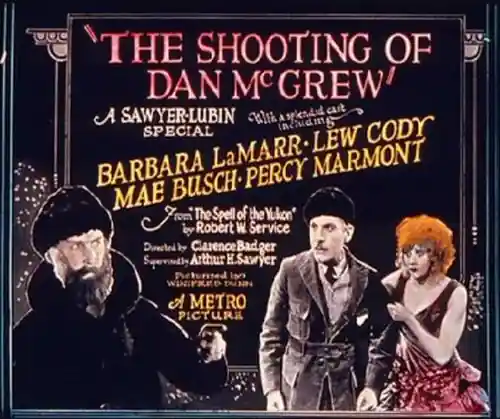
The serpent in this nascent paradise arrives in the form of Dan McGrew, embodied with a menacing charm by Lew Cody (who also plays Jim, a common practice in silent films to highlight thematic dualities or simply for actor versatility). McGrew, a man of dubious character and even more questionable intentions, offers Lou a tantalizing escape: a grand stage in New York, a promise of stardom far grander than her current South American engagements. This proposition, however, is nothing more than a thinly veiled trap. Jim, sensing the danger, confronts McGrew, only to be physically bested in a brutal display of strength. This pivotal moment not only underscores McGrew's ruthless nature but also leaves Lou feeling abandoned and disillusioned, making her susceptible to his manipulative allure. The ensuing decision to flee with McGrew to Alaska marks a tragic turning point, a descent into a world far removed from her earlier dreams of domestic tranquility.
Alaska, as depicted in the film, is not the land of opportunity McGrew promised, but a desolate, unforgiving crucible. Lou quickly discovers the cruel truth: she is not a star, but a pawn, a "decoy" in McGrew's squalid Malamute saloon, her beauty and talent exploited to draw in the desperate, gold-crazed men of the Klondike. This segment of the film is particularly harrowing, showcasing Lou's profound isolation and the crushing weight of her regret. Mae Busch's performance here is nothing short of captivating, conveying a spectrum of emotions—shame, despair, and a flicker of defiant resilience—through her expressive eyes and nuanced body language. The stark contrast between her glamorous past and her present degradation is powerfully rendered, making her plight deeply affecting.
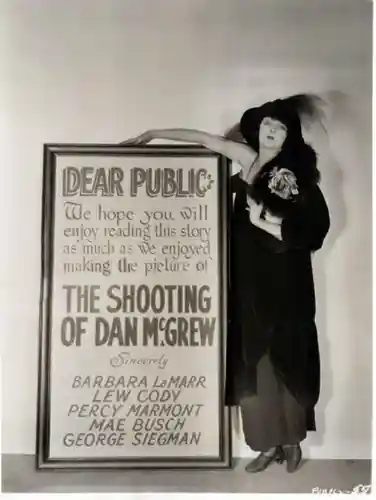
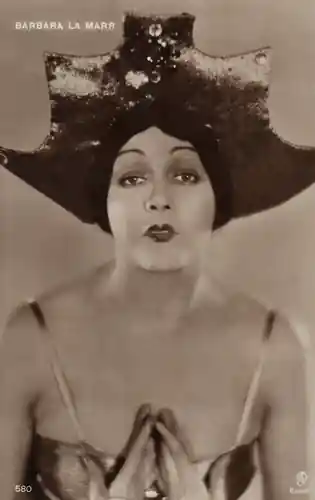
Meanwhile, Jim, refusing to accept Lou's disappearance, embarks on a relentless quest. His journey to the Klondike is fueled by a potent mix of love, vengeance, and an unshakeable belief in Lou's inherent goodness. This arduous pursuit forms the narrative's backbone, illustrating the profound bonds of family and the lengths to which a man will go to reclaim what he has lost. Nelson McDowell, Percy Marmont, Ina Anson, and the rest of the supporting cast, including the inimitable Barbara La Marr, provide a rich tapestry of frontier characters, each adding a layer of authenticity to the rough-and-tumble world of the gold rush. Their presence, though often fleeting, helps to build a credible environment, a world where morality is often fluid and survival is paramount.
The climax is, as the title suggests, inevitable. Jim finally tracks Lou and McGrew to the Malamute saloon, setting the stage for a confrontation charged with years of pain and betrayal. The titular shooting of Dan McGrew is portrayed with a visceral intensity, a moment of raw, unbridled justice that feels earned after the preceding emotional torment. It's a scene that, while violent, carries a profound sense of catharsis, liberating Lou from her tormentor and allowing Jim to reclaim his honor. This dramatic resolution, however, doesn't gloss over the scars left by their ordeal. The reunion of husband, wife, and child, while a moment of profound joy, is tinged with the lingering shadows of their past, suggesting that some wounds, though healed, never truly disappear.
The film's exploration of redemption, particularly for Lou, is handled with a delicate touch. Her journey is one of profound suffering and eventual liberation, not just from McGrew, but from the consequences of her own choices. It echoes themes seen in other silent dramas of the era, where moral failings were often met with harsh consequences before a path to forgiveness could be found. For instance, one might draw parallels to the moral quandaries explored in Life's Blind Alley, where characters grapple with difficult decisions and their far-reaching repercussions. Similarly, the unwavering loyalty Jim displays, despite Lou's perceived transgression, resonates with the steadfast devotion often depicted in films like The Faithful Heart, emphasizing enduring love even through adversity.
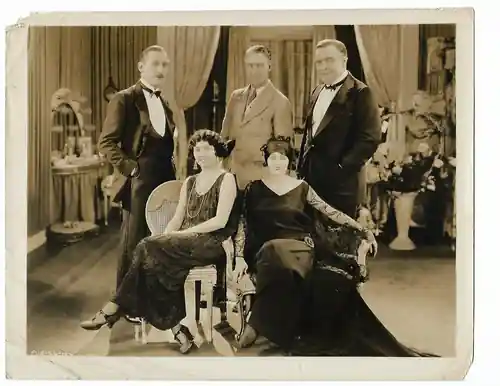
The performances are, without question, the film's beating heart. Mae Busch delivers a tour-de-force, her expressive face and graceful movements communicating volumes without a single intertitle. She navigates Lou's emotional landscape with remarkable depth, from the hopeful dancer to the despairing saloon decoy, and finally, to the relieved but scarred wife. Her portrayal is a masterclass in silent acting, showcasing the power of physical and facial expression to convey complex internal states. Lew Cody, in his dual roles as Jim and Dan McGrew, offers a fascinating contrast. As Jim, he embodies stoicism and resolute love; as McGrew, he exudes a chilling magnetism, making his villainy all the more compelling. This duality, while potentially confusing for modern audiences, was a common trope and allowed actors to showcase their range, often symbolizing the internal struggle or contrasting forces within the narrative.
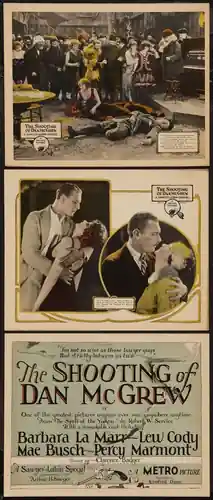
The pacing of The Shooting of Dan McGrew is characteristic of its era, allowing moments to breathe and emotions to unfold gradually. There's a deliberate rhythm that builds tension steadily, punctuated by bursts of dramatic action. The cinematography, while perhaps not groundbreaking for its time, effectively utilizes the Alaskan landscape to mirror the characters' internal struggles. The vast, empty expanses emphasize Lou's isolation, while the cramped, smoky interiors of the Malamute saloon perfectly encapsulate her degradation. The use of shadow and light, crucial in silent films, is employed with skill, enhancing the mood and highlighting key emotional beats. This careful visual storytelling ensures that the narrative, despite its lack of spoken dialogue, remains consistently engaging and easy to follow.
Beyond its dramatic plot, The Shooting of Dan McGrew delves into several enduring themes. The allure of quick riches and the moral compromises made in their pursuit are central, reflecting the societal fascination with the Klondike Gold Rush, a phenomenon that lured countless individuals to their potential ruin or fortune. This ambition, often leading to desperation, is a recurring motif in cinema, much like the relentless pursuit of goals seen in films such as The Spirit of the Conqueror. The film also explores the precarious position of women in a patriarchal society, particularly in frontier towns where they were often objectified or forced into difficult circumstances. Lou's journey is a powerful, albeit tragic, commentary on the limited choices available to women and the devastating consequences of trusting the wrong man.
The adaptation from Robert W. Service's poem is handled with respect, though the cinematic medium naturally necessitates certain expansions and interpretations. Service's original work is known for its raw, often cynical portrayal of frontier life and its characters, and the film manages to retain much of this gritty authenticity. The writers, Winifred Dunn, Service himself, and James J. Tynan, clearly understood the essence of the source material, translating its poetic intensity into visual drama. The film's enduring appeal lies in its ability to tap into universal emotions: love, loss, vengeance, and the yearning for belonging. Even a century later, the narrative's core themes remain relevant, speaking to the timeless struggles of the human condition.
The technical aspects of the film are a testament to the craftsmanship of the silent era. The sets, while not extravagant, effectively convey the contrasting environments, from the vibrant South American dance halls to the stark, rustic interiors of the Alaskan saloon. The costumes, particularly Lou's progression from dazzling dancer to downtrodden decoy, are meticulously designed to reflect her changing circumstances and emotional state. The use of intertitles, the primary means of conveying dialogue and narrative exposition, is judicious, allowing the visual storytelling to take precedence while providing necessary context. One can appreciate the art of conveying complex plot points and character motivations through concise text, a skill that often feels lost in today's dialogue-heavy cinema.
The supporting cast, featuring talents like Nelson McDowell, Percy Marmont, Ina Anson, Harry Lorraine, Fred Warren, Max Asher, Eagle Eye, Bert Sprotte, Milla Davenport, George Siegmann, Philippe De Lacy, and William Eugene, all contribute to the film's rich texture. While their roles might be smaller, each actor adds a distinct flavor to the Klondike milieu, populating the saloon with a believable array of prospectors, gamblers, and weary souls. Barbara La Marr, in particular, often brought a compelling gravitas to her roles, and while her specific part here might be minor, her presence invariably elevates the scene. These ensemble performances are critical in creating an immersive world, a common strength in many silent films, where every face tells a story. One could compare this depth of characterization among the supporting cast to the detailed social tapestries woven in films like Dombey and Son, where a multitude of figures contribute to the overall narrative impact.
The Shooting of Dan McGrew stands as a poignant reminder of the enduring power of silent cinema. It’s a film that demands attention, rewarding viewers with a powerful narrative, compelling performances, and a stark, yet beautiful, portrayal of human resilience. While modern audiences might find the pacing or certain narrative conventions different from contemporary films, its emotional core remains potent. It's a testament to the skill of its creators that a story told without spoken words can still evoke such deep feeling and leave a lasting impression. This film is more than just a historical curiosity; it's a vibrant, living piece of cinematic art that continues to resonate with themes of love, loss, and the eternal quest for redemption amidst life's most challenging circumstances. For those willing to immerse themselves in its silent depths, it offers a rich and rewarding experience, a true classic from the golden age of film.
The legacy of such films is crucial for understanding the evolution of storytelling on screen. They laid the groundwork for the narrative techniques and emotional depth we often take for granted today. Watching The Shooting of Dan McGrew is not merely an act of historical appreciation; it is an engagement with a fundamental form of cinematic expression that, despite its age, still possesses the capacity to move and enthrall. It reminds us that sometimes, the most profound stories are told not with booming dialogue, but with the eloquent silence of a glance, a gesture, or a tear.
IMDb 7.7
1935
Community
Log in to comment.