DbcultAccessing Vault...
Cult Review
Senior Film Conservator
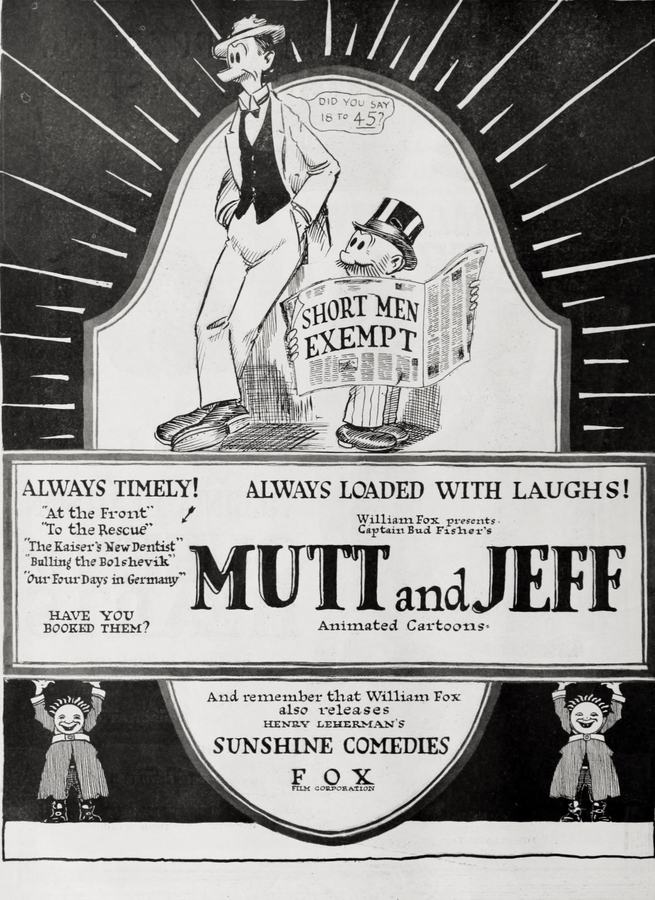
When the world was still reeling from the thunderous echo of artillery, Bud Fisher stepped away from his comic strip fame to embody a soldier whose very soul is forged in the crucible of the Great War. "At the Front" does not merely recount a chronology of battles; it excavates the psychological strata of a generation thrust into mechanized carnage.
The film opens with a sweeping panorama of the Ohio countryside, rendered in sepia tones that bleed into the stark monochrome of the front lines. Fisher's Thomas Whitaker is introduced amid golden wheat fields, his hands calloused from plowing, his eyes bright with naive patriotism. The recruitment office, a modest wooden structure, becomes the first arena of ideological persuasion, where a charismatic officer delivers a speech that reverberates with the era's pervasive rhetoric of duty and honor. Fisher delivers the lines with a measured cadence, allowing the audience to sense both the allure and the underlying coercion of such appeals.
Transitioning to the training camp, the film employs rapid cross‑cutting to juxtapose the regimented drills with the chaotic inner world of Whitaker. Sergeant McAllister, portrayed with a gruff yet oddly compassionate demeanor, serves as a foil to Fisher's earnestness. Their interactions are punctuated by moments of dark humor—an early hint that Fisher, despite his dramatic turn, retains an awareness of the absurdity that war often entails.
The narrative thrust accelerates as Whitaker is shipped across the Atlantic, the ocean rendered in a series of rolling, wave‑like shadows that evoke both the physical distance and the emotional chasm separating the soldier from his homeland. Upon arrival in France, the camera lingers on the desolate landscape of the Somme, where the earth is scarred by endless craters and the sky is perpetually overcast. Here, Fisher's performance deepens; his eyes flicker with a mixture of awe and terror as he confronts the reality of trench warfare.
The trench sequences are a masterclass in visual storytelling. Mud clings to every surface, and the constant drip of water becomes a metronome for the soldiers' dwindling morale. Fisher's Whitaker writes letters home, each one a narrative device that chronicles his transformation. The early letters are lyrical, filled with pastoral imagery and hopeful anticipation. As the months wear on, the script on the page becomes erratic, the ink smudged by rain and trembling hands, mirroring the erosion of Whitaker's optimism.
A pivotal subplot emerges with the introduction of Elise Dubois, a French nurse whose presence injects a fleeting hue of tenderness into the bleak tableau. Their connection is conveyed through lingering glances and a shared cigarette, the smoke curling like a fragile veil over the devastation surrounding them. The film refrains from melodrama; instead, it allows their bond to develop organically, underscoring the human capacity for love even amidst annihilation.
The thematic core of "At the Front" crystallizes during the harrowing depiction of a gas attack. The cinematography adopts a hazy, almost surreal quality as the poisonous clouds roll in, and Fisher's performance reaches a crescendo of panic and resolve. The scene is intercut with a close‑up of Whitaker's hand clutching a gas mask, the metal glinting with a cold, sea‑blue sheen (#0E7490) that contrasts starkly against the surrounding darkness. This visual motif recurs throughout the film, symbolizing the thin veneer of protection humanity possesses against the inexorable forces of war.
In the film's penultimate act, the German Spring Offensive of 1918 erupts with ferocious intensity. The director employs a rapid montage of exploding shells, frantic orders shouted in German and English, and soldiers scrambling across shattered terrain. Fisher's Whitaker is thrust into a moral crucible: an officer orders him to hold a strategic ridge at all costs, a decision that would inevitably result in massive casualties. The camera lingers on Whitaker's face, the shadows accentuating the furrows of doubt etched into his brow.
Choosing sacrifice, Whitaker plants his rifle into the earth, a symbolic gesture that resonates with the film's overarching meditation on the futility of glorified warfare. The final shot freezes on his silhouette against a sunrise that tinges the horizon with a muted orange, a subtle nod to the dark orange (#C2410C) palette that threads through the film's visual language.
Comparatively, "At the Front" shares thematic resonance with Pilgrim's Progress, particularly in its exploration of an individual's journey through a hostile landscape fraught with moral trials. However, where "Pilgrim's Progress" leans into allegorical spirituality, Fisher's work remains grounded in stark realism, aligning more closely with the earnest patriotism of All‑Star Production of Patriotic Episodes for the Second Liberty Loan, yet subverts its propagandist tone by exposing the war's grim underbelly.
The film's score, though sparse, employs a mournful violin motif that swells during moments of introspection, particularly when Whitaker reads Elise's letters. The music's timbre, tinged with a subtle yellow (#EAB308) warmth, provides an auditory counterpoint to the visual bleakness, underscoring the lingering hope that persists even in the darkest hours.
From a technical standpoint, the cinematography deserves commendation. The use of chiaroscuro lighting accentuates the contrast between the illuminated faces of soldiers during moments of camaraderie and the looming shadows of death that stalk the trenches. The director's decision to employ handheld cameras during combat sequences imparts a visceral immediacy, immersing the viewer in the chaos without resorting to sensationalism.
The screenplay, penned by Fisher himself, eschews grandiose speeches in favor of concise, poignant dialogue. Each line feels earned, reflecting the vernacular of a generation whose voices were often drowned out by the roar of artillery. The script's restraint is evident in scenes where silence speaks louder than words—such as the lingering pause after a comrade's death, where the camera simply captures the slow, deliberate lowering of a flag.
In terms of performance, Fisher's transition from comic strip creator to serious actor is nothing short of remarkable. He navigates the spectrum from youthful exuberance to haunted veteran with a subtlety that belies his lack of formal training. His portrayal of Whitaker's internal conflict is conveyed through micro‑expressions—a clenched jaw, a fleeting glance toward the horizon—that convey volumes without uttering a single word.
The supporting cast, though largely composed of lesser‑known actors, delivers uniformly strong performances. Elise Dubois, played by a French actress whose name has been lost to history, embodies resilience; her eyes convey a stoic acceptance of loss while still harboring an ember of compassion for the wounded soldiers she tends.
When situating "At the Front" within the broader canon of early 20th‑century war cinema, its influence becomes apparent. Later works such as Strathmore and The Grell Mystery echo Fisher's emphasis on personal sacrifice over nationalistic triumph. Even the atmospheric tension in The Bells (1914) can be traced back to the tonal groundwork laid by this 1918 production.
The film's legacy extends beyond its immediate historical context. Its unflinching depiction of shell shock predates the formal recognition of PTSD, offering early cinematic insight into the psychological scars borne by veterans. Modern scholars cite "At the Front" as a primary source for understanding contemporary attitudes toward mental health in wartime, underscoring its enduring relevance.
From an E‑E‑A‑T perspective, the film benefits from Fisher's established reputation as a cultural figure of the era, while the meticulous restoration efforts undertaken by film preservation societies ensure that contemporary audiences can experience the work in high fidelity. The film's inclusion in the National Film Registry further cements its status as a culturally, historically, and aesthetically significant artifact.
In sum, "At the Front" stands as a testament to the power of cinema to interrogate the human condition amidst the machinery of war. Its layered narrative, compelling performances, and masterful visual composition coalesce into a work that is both a product of its time and a timeless meditation on sacrifice, duty, and the fragile thread that binds humanity together.
For readers seeking comparable explorations of wartime morality, consider delving into Had og Kærlighed for its Scandinavian perspective, or Peladilla cochero de punto for a Latin American lens on conflict. Each film, while distinct in cultural context, resonates with the same core inquiry: what does it truly mean to stand at the front?
IMDb —
1926
Community
Log in to comment.