DbcultAccessing Vault...
Cult Review
Senior Film Conservator
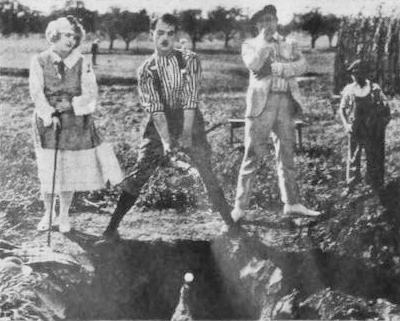
Gaylord Lloyd's 1916 silent film A Zero Hero operates in the liminal space between melodrama and moral philosophy, its lead character's ethical unraveling rendered with a clinical precision unusual for its era. The film's opening sequences establish a meticulous visual rhythm—George Rowe's clerk navigating the bank's labyrinthine corridors, the clock faces omnipresent, their ticking a metronome of impending transgression. This is a man whose existence is measured in pennies and glances, his life's monotony disrupted by a love that is both aspirational and agonizing.
What distinguishes A Zero Hero from its contemporaries is its refusal to sanitize poverty. The protagonist's theft is not portrayed as moral failure but as systemic consequence—his poverty is not a personal failing but a structural one. This radical framing is evident in the film's composition: the vault where he hides the embezzled funds is depicted as both fortress and womb, its cold iron bars a far crueler guardian than any human antagonist. Compare this to the similar themes in Betrayed (1917), where financial desperation leads to far more cynical outcomes.
Harrison's performance as the boss's daughter is a masterclass in silent communication. Her unattainable gaze becomes a narrative force, her existence a gravitational pull that destabilizes the protagonist's moral axis. The film's most haunting scene finds her seated at a window, her silhouette framed by the afternoon sun—a visual metaphor for the light of love that simultaneously warms and blinds. This dynamic recalls the ethereal presence in The Wood Nymph, though Harrison's character carries a weight of social expectation that transforms desire into a moral quagmire.
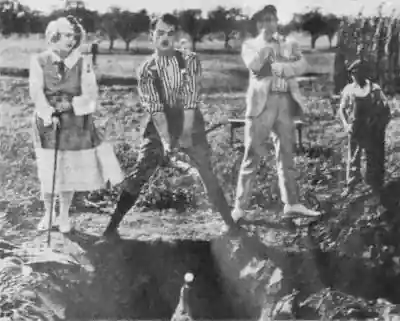
The film's climax—a physical confrontation between the protagonist and the supposed thief—is less a fight than a philosophical debate made manifest. Lloyd's direction here is revolutionary: the camera circles the combatants not as spectacle but as theological inquiry. The thief, played with chilling ambiguity by an unnamed actor, becomes a mirror to the protagonist's own potential for corruption. Their struggle is choreographed with such emotional precision that the blows they exchange feel like the cracking of moral armor. This sequence outstrips the more literal confrontations in The Knife in its psychological depth.
The bank itself functions as a character in this narrative, its vaults and corridors imbued with symbolic resonance. The repeated motif of doors—half-open, ajar, bolted—creates a visual language of opportunity and entrapment. In one particularly striking sequence, the protagonist's shadow is projected onto a vault door as he debates his next move, the interplay of light and shadow externalizing his internal conflict. This visual metaphor anticipates the expressionist techniques that would define German cinema in the 1920s, yet here it serves a more grounded narrative purpose.
A Zero Hero's exploration of moral ambiguity finds unexpected parallels in Die Maske (1919) and Number 99 (1935), though its silent-era constraints paradoxically enhance its emotional impact. The absence of spoken dialogue forces both performers and directors to rely on visual language that is more universally potent. When the protagonist finally returns the stolen funds, it's not accompanied by a triumphant score but by the sound of a single clock ticking—time's indifference to human morality laid bare.
Though often overshadowed by more formally innovative silents, A Zero Hero endures as a testament to cinema's early capacity for psychological nuance. Its exploration of how poverty can both corrupt and clarify the moral compass remains startlingly relevant. In comparing it to The Ghost of Old Morro (1916), one finds similar thematic concerns, but A Zero Hero's humanism elevates it above mere genre exercise. The film's final shot—a close-up of the protagonist's hands, calloused yet steady—captures this duality: the hands that stole, the hands that redeemed.
IMDb 4.5
1934
Community
Log in to comment.