DbcultAccessing Vault...
Cult Review
Senior Film Conservator
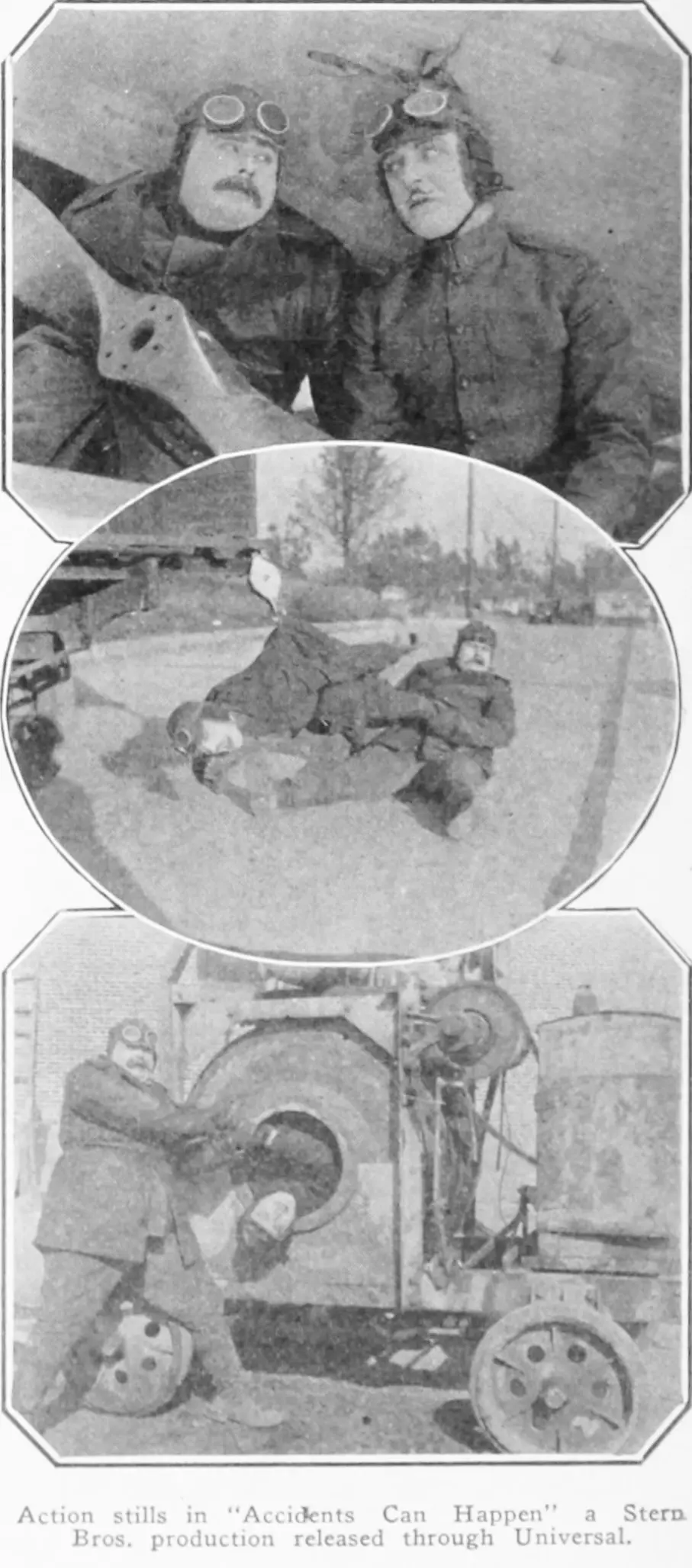
Can a film titled Accidents Can Happen truly live up to its chaotic promise? Short answer: yes, absolutely, but with significant caveats. This early cinematic curiosity is a whirlwind of physical comedy and narrative whimsy, a fascinating glimpse into a bygone era of filmmaking that prioritizes sheer, unadulterated absurdity over coherence. It’s a film that demands a certain kind of viewer, one willing to embrace its primitive charms and forgive its considerable narrative eccentricities.
This film is unequivocally for fans of silent-era slapstick, film historians, and those with a deep appreciation for the foundational elements of screen comedy. Conversely, it is decidedly not for audiences seeking modern pacing, sophisticated storytelling, or high production values. If you're looking for a neatly packaged plot with character arcs and thematic depth, you will find yourself utterly bewildered.
To truly appreciate Accidents Can Happen, one must approach it not as a fully-formed narrative but as a series of comedic vignettes strung together by the loosest of threads. It's a relic, a time capsule, offering a window into the nascent stages of cinematic grammar and the raw, often dangerous, stunt work that defined the era. For this reason alone, it holds a certain historical gravitas that transcends its narrative shortcomings.
The film works because of its relentless energy and the sheer commitment of its performers, Al Alt and Hilliard Karr, to physical comedy. They throw themselves into every pratfall and impossible scenario with an infectious, if occasionally baffling, zeal. The early sequence where the two aviators, concussed, believe themselves to be 'Birdies' fluttering about is a testament to the era's imaginative spirit, however nonsensical.
However, this film fails because its plot, even by the standards of its time, is a meandering mess. The transitions are jarring, the motivations are paper-thin, and the ending feels less like a resolution and more like the filmmakers simply ran out of ideas or film stock. There’s a distinct lack of cohesive vision beyond 'let's make these guys fall over a lot.'
You should watch it if you are a student of film history, a devotee of early cinema's unpolished charm, or simply someone who enjoys the pure, unadulterated silliness of physical comedy without needing a grander purpose. It’s an exercise in appreciating the craft that came before the polish.
The plot of Accidents Can Happen, penned by Charles Lamont, feels less like a structured story and more like a brainstorming session where every wild idea was kept. We begin with a literal crash landing, a fantastic setup for a slapstick comedy. The subsequent 'Birdies' sequence, while bizarre, establishes a tone of surrealist humor that is surprisingly bold for its time. It’s an early instance of cinematic dream logic, even if it’s induced by head trauma.
The introduction of the insurance agent, who revives our heroes with a bucket of water and then uses a near-scrambled egg as a visual aid for risk assessment, is a moment of pure, unadulterated genius. It's a wonderfully absurd, almost meta-commentary on the film's own premise – that indeed, accidents can happen, and perhaps one should be insured against them. This scene, more than any other, provides a fleeting moment of cleverness amidst the chaos.
However, the narrative quickly devolves into a series of increasingly improbable and disconnected events. Percy Small getting hooked by a motor truck, dragged through mud, losing his trousers, and then tumbling downhill to knock Johnny Stout off his feet, feels like a checklist of comedic tropes rather than a flowing sequence. The pacing is frantic, almost breathless, with little time for the audience to process one gag before being thrust into the next. It’s a relentless assault of physical comedy, often to its detriment.
The climax, involving Mabel's scream and the 'ghost-like critters,' feels entirely untethered from the preceding events. It’s an abrupt tonal shift, from slapstick to a sort of haunted house farce, only to be undercut by the revelation of Mabel’s father’s 'initiation trick.' This ending is both bewildering and strangely charming in its sheer lack of concern for narrative cohesion. It’s a bold choice, or perhaps simply a lazy one, to conclude a film with such an arbitrary twist.
Al Alt and Hilliard Karr, as Percy Small and Johnny Stout, are the undeniable engines of this film. Their performances are less about nuanced characterization and more about sheer physical endurance and comedic timing. They are the quintessential silent film comedians, relying on exaggerated facial expressions, broad gestures, and an impressive willingness to endure bodily harm for a laugh. Their chemistry, while not deeply explored, is evident in their synchronized falls and chases.
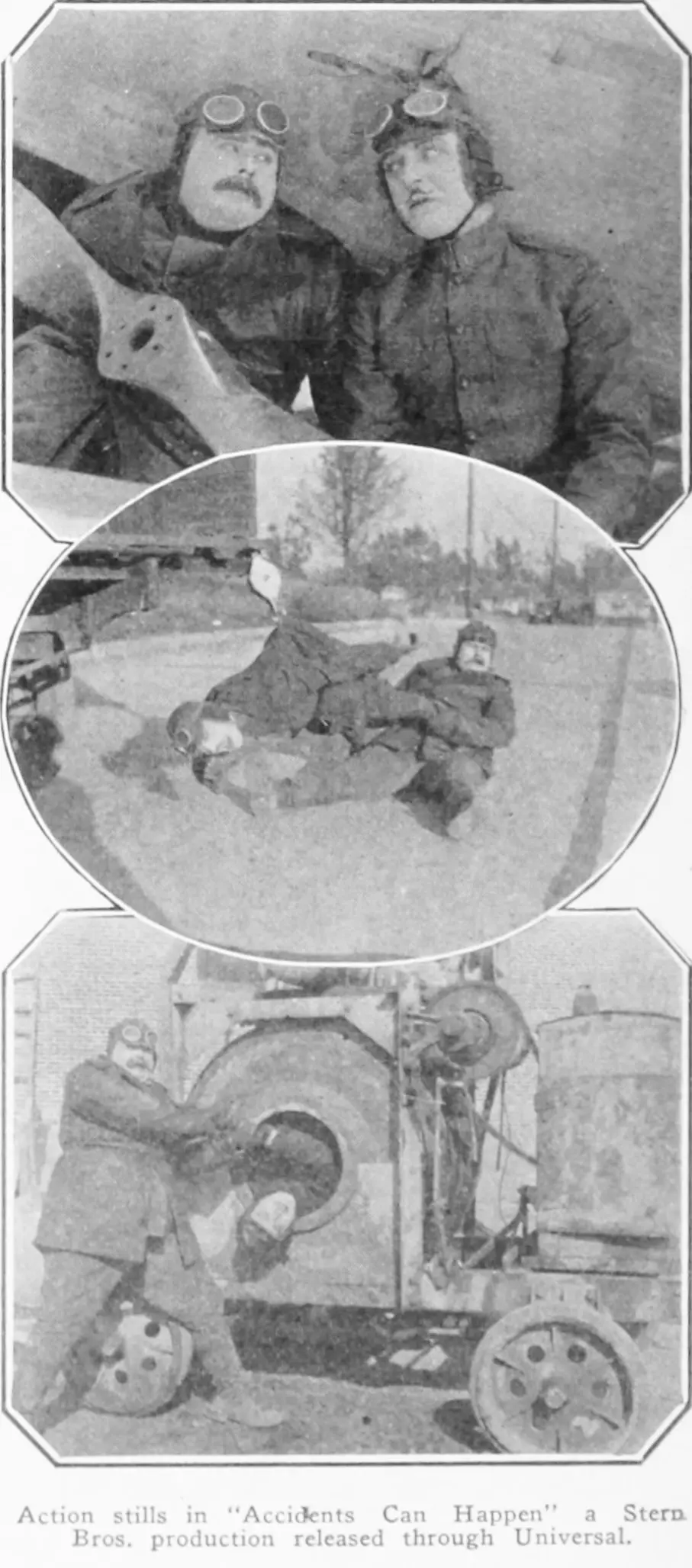
Consider the sequence where Percy is dragged by the truck. Alt’s commitment to being pulled through mud and over obstacles, culminating in the loss of his trousers, is remarkable. It’s a testament to the raw, unpolished nature of early stunt work, where safety was often an afterthought. Karr’s persistent pursuit, navigating the same treacherous elements, showcases a similar dedication. They are a duo built for mayhem.
Charles Lamont, as the writer, lays the groundwork for this escalating lunacy, but the directorial hand, likely uncredited or collaborative in these early days, is what brings it to life. The camera work is functional, mostly static, serving to capture the action rather than enhance it with dynamic angles or sophisticated cuts. The focus is squarely on the performers and their antics. There's a raw, almost documentary feel to some of the outdoor sequences, particularly the chase through the 'disastrous elements.'
This film isn't trying to be art; it's trying to make you laugh, and often, it succeeds through sheer force of will and a healthy dose of chaos.
The tone is consistently light and farcical, even when characters are in genuinely perilous situations. There's an underlying assumption that no real harm will come to our heroes, no matter how many times they fall, get dragged, or find themselves in a concrete mixer. This lightheartedness is key to its appeal and allows the audience to simply enjoy the spectacle without dwelling on the logistics.
As an early silent film, Accidents Can Happen naturally features rudimentary cinematography. The shots are mostly wide, capturing the full scope of the physical comedy without intricate close-ups or complex camera movements. This approach serves the slapstick well, allowing the audience to see the full arc of a fall or the entire trajectory of a chase. The black and white photography, while standard for the era, lends a timeless quality to the visual gags, emphasizing the stark contrasts of light and shadow in the outdoor settings.
The production design, if one can call it that, is largely reliant on practical locations and everyday objects repurposed for comedic effect. The roof where the aviators crash, the sidewalk they mistake for a pool, the motor truck, the concrete mixer, and the railway water tower are all mundane elements transformed into instruments of comedic chaos. There’s a charming DIY aesthetic to the entire production, which I find surprisingly engaging. It grounds the absurdity in a recognizable reality, making the subsequent chaos even funnier.
The 'ghost-like critters' sequence, while visually simple, relies on costuming and lighting effects to create its spooky atmosphere. It’s a straightforward, effective use of limited resources to achieve a specific comedic fright. It works. But it’s flawed. The lack of sophisticated editing or special effects forces a reliance on the performers and the immediate environment, which, in a strange way, enhances the raw appeal of the film. It feels authentic to its time, a true product of early cinema's ingenuity.
While Accidents Can Happen isn't as polished or narratively ambitious as some of its more famous contemporaries, it shares the spirit of physical comedy that defined the era. One might draw parallels to the early works of Keystone Kops or even some of Buster Keaton's more chaotic short films, though without Keaton’s architectural precision or profound melancholy. The frantic energy and the emphasis on escalating absurdities are hallmarks of the period.
It lacks the intricate plotting of a film like The Argyle Case, which showcased a burgeoning interest in detective narratives, or the dramatic weight found in a social commentary piece like The Easiest Way. Instead, Accidents Can Happen leans fully into the realm of pure, unadulterated farce. Its charm lies in its unpretentiousness, its willingness to be nothing more than a series of escalating gags.
This film feels like a precursor to the more refined slapstick that would follow, a foundational text for understanding how early filmmakers experimented with movement, timing, and the very limits of physical comedy. It’s a testament to the fact that sometimes, a simple premise and a lot of falling over are all you need to entertain. It’s less about character development and more about the spectacle of human resilience, or perhaps, human clumsiness.
Accidents Can Happen is not a film for everyone, nor is it a forgotten masterpiece. It’s a fascinating, often bewildering, piece of early cinematic history that showcases the raw energy and experimental spirit of its time. It’s a film that demands patience and a willingness to simply revel in its chaotic, unpolished charm. While its narrative is a shambolic mess, its historical value and the sheer physical commitment of its performers make it a worthwhile watch for specific audiences.
It stands as a testament to the foundational elements of screen comedy, a reminder that before sophisticated plots and intricate character studies, there was simply the joy of watching people fall over and get into ridiculous predicaments. It’s a loud, messy, and often baffling experience, but one that offers a unique glimpse into the anarchic heart of early cinema. Don't expect a masterpiece; expect a glorious, unhinged accident, and you might just find yourself entertained.
IMDb 6.5
1927
Community
Log in to comment.