DbcultAccessing Vault...
Cult Review
Senior Film Conservator
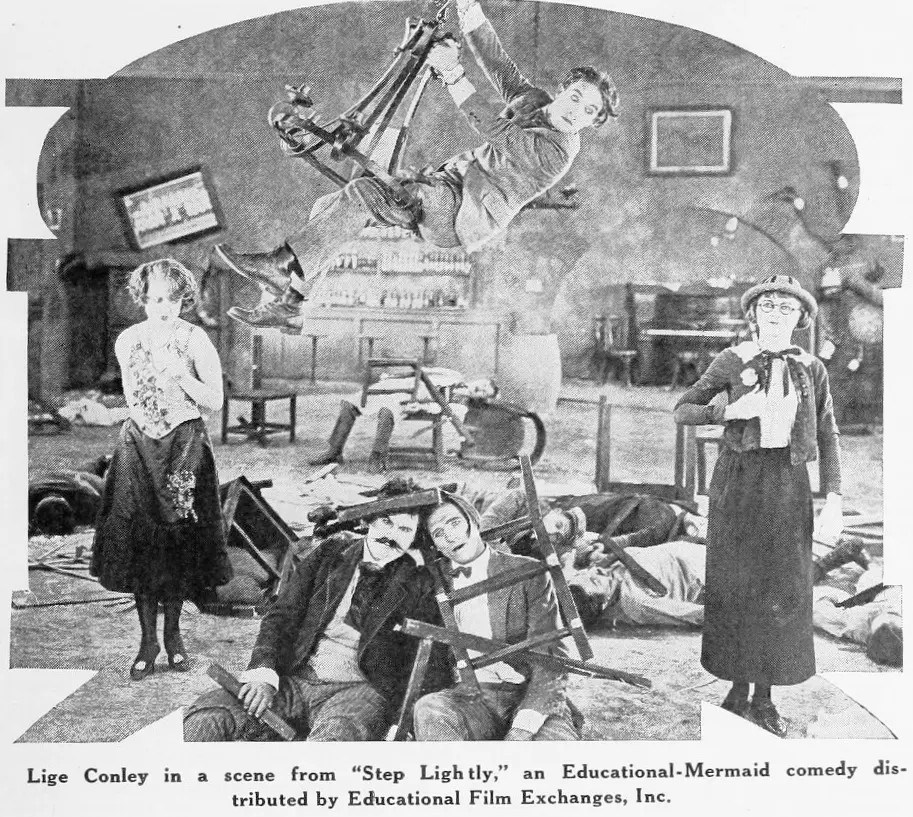
Short answer: Only if you are a dedicated historian of silent-era slapstick. While it offers a glimpse into the early 20th-century obsession with 'correspondence schools,' it lacks the refined choreography of the era's giants.
This film is for silent comedy completionists and fans of Lige Conley’s rubber-faced antics. It is absolutely not for viewers who require narrative logic or high-definition tension to stay engaged.
This film works because it leans into the absurdity of its premise, specifically the 'correspondence detective' trope which was a relatable cultural touchstone at the time.
This film fails because the shift from a dark kidnapping plot to lighthearted slapstick feels jarring and unearned by today's storytelling standards.
You should watch it if you enjoyed the physical energy of The Yankee Consul or want to see a rare example of Peggy O'Neil's early screen presence.
To answer the burning question: Is 'Step Lightly' worth a slot in your modern watchlist? In a vacuum, no. It is a clunky piece of machinery. However, as a specimen of the transitional period in silent comedy, it is fascinating.
The film relies on the audience's familiarity with the 'country rube' archetype. If you find the sight of a man consulting a 'How to be a Detective' manual while a villain twirls his mustache funny, you will find value here. If not, the sixty-minute runtime will feel like an eternity.
The most compelling element of 'Step Lightly' is Jack Lloyd’s portrayal of the amateur sleuth. The film satirizes the early 1920s fad of mail-order education. In one specific scene, the hero stops mid-pursuit to consult a pamphlet on 'How to Apprehend a Criminal,' nearly getting flattened by a passing vehicle in the process.
This gag is the film's high point. It captures a specific American anxiety about self-improvement and the gap between academic learning and physical competence. It’s a bit like someone today trying to perform surgery by watching a TikTok tutorial. It works. But it’s flawed in its execution.
Compared to more dramatic offerings like The Darkening Trail, this film refuses to take its own stakes seriously. The kidnapping of the girl (Peggy O'Neil) is treated with the same weight as a lost hat. This tonal inconsistency is the film's greatest hurdle for a modern audience.
Lige Conley was a staple of the Jack White comedy factory, and his energy here is manic. He moves with a frantic, jittery pace that stands in stark contrast to the more grounded presence of Otto Fries. Fries, playing the villainous café owner, is a mountain of a man whose looming shadow provides the only real sense of threat.
The café scenes are where the cinematography actually shines. The use of low-key lighting to simulate a seedy cabaret is surprisingly sophisticated for a low-budget short. You can almost smell the stale tobacco and cheap gin. It’s a far cry from the outdoor expanses seen in Rob Roy.
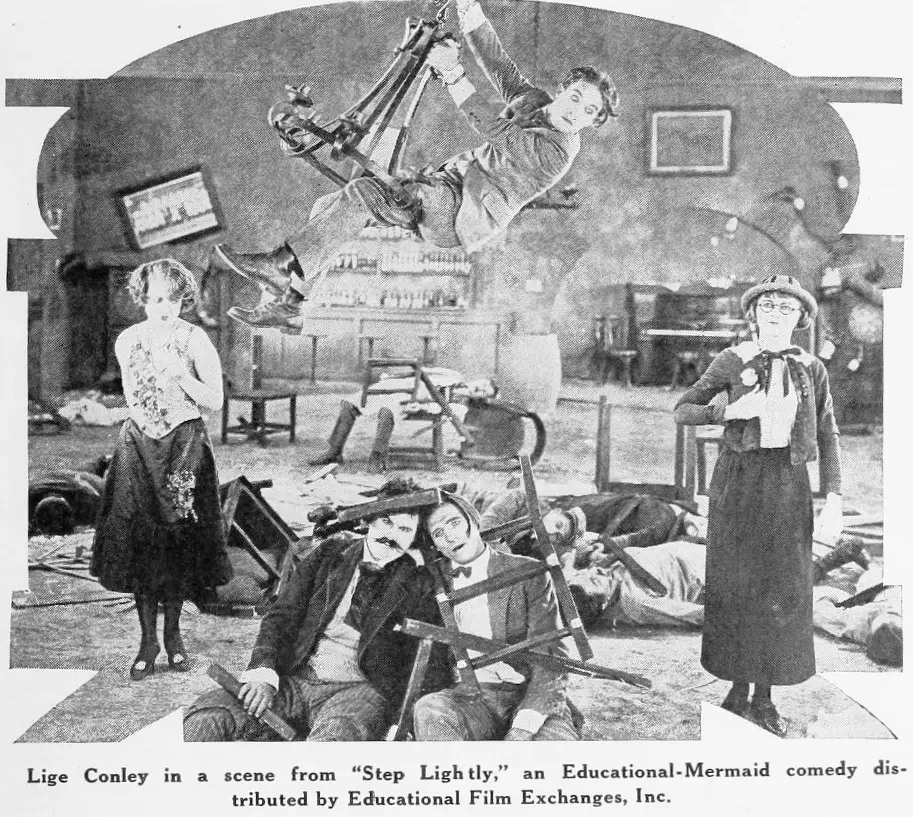
One standout moment involves a chase through the backrooms of the café. The staging uses multiple doors and levels to create a sense of frantic movement. While it doesn't reach the heights of a Keaton set-piece, the timing is sharp enough to elicit a few genuine smiles.
'Step Lightly' leans heavily on the 'City vs. Country' dichotomy. The girl represents purity, while the café owner represents the corrupting influence of the urban environment. This was a common theme in films like The Lure of New York.
What makes this version different is the forced dancing. It’s a bizarrely specific form of exploitation that allows the filmmakers to showcase O'Neil's dancing talents while maintaining a veneer of melodrama. It’s transparent, but effective for the era’s demands.
The resolution is predictable. The detective's 'book learning' fails, but his sheer luck and rural grit win the day. It’s a populist ending that would have played well to rural audiences in 1921, reinforcing the idea that common sense beats city schooling every time.
Pros:
- Strong physical performances from Lige Conley and Otto Fries.
- Interesting historical look at 1920s urban nightlife.
- Short, punchy runtime that doesn't overstay its welcome.
- A few clever gags that subvert the 'hero' trope.
Cons:
- The plot is paper-thin and highly derivative.
- The female lead is given very little agency throughout the film.
- The humor is often dated and relies on repetitive pratfalls.
The direction is functional but uninspired. There are no sweeping camera movements or innovative angles. It’s 'point and shoot' filmmaking at its most basic. However, the pacing is relentless. Once the girl is taken, the film moves at a breakneck speed that masks many of its narrative holes.
Compare this to the more deliberate pacing of Honor Among Men or Stolen Honor. While those films attempt to build tension through character, 'Step Lightly' builds it through sheer velocity. It’s an exhausting experience, but not an entirely unpleasant one.
The intertitles are surprisingly witty. They add a layer of snarky commentary that the visual action sometimes lacks. One title card describes the café as 'A place where the coffee is weak but the intentions are strong,' which is a better line than the film probably deserves.
'Step Lightly' is a cinematic curiosity. It isn't a lost masterpiece, nor is it a total failure. It is a workhorse film from a time when the industry was churning out content for a hungry public. It’s clunky. It’s dated. But it has a manic charm that is hard to completely dismiss.
If you’ve already seen the major works of the 1920s and are looking for something off the beaten path—perhaps after watching The Woman He Married or The Spite Bride—then give this a look. Just don't expect it to change your life. It’s a modest comedy that knows its place in the world.
Ultimately, Step Lightly is a reminder that even in the silent era, the 'amateur hero' was a beloved trope that allowed audiences to laugh at their own inadequacies.
IMDb 6.1
1936
Community
Log in to comment.