DbcultAccessing Vault...
Cult Review
Senior Film Conservator
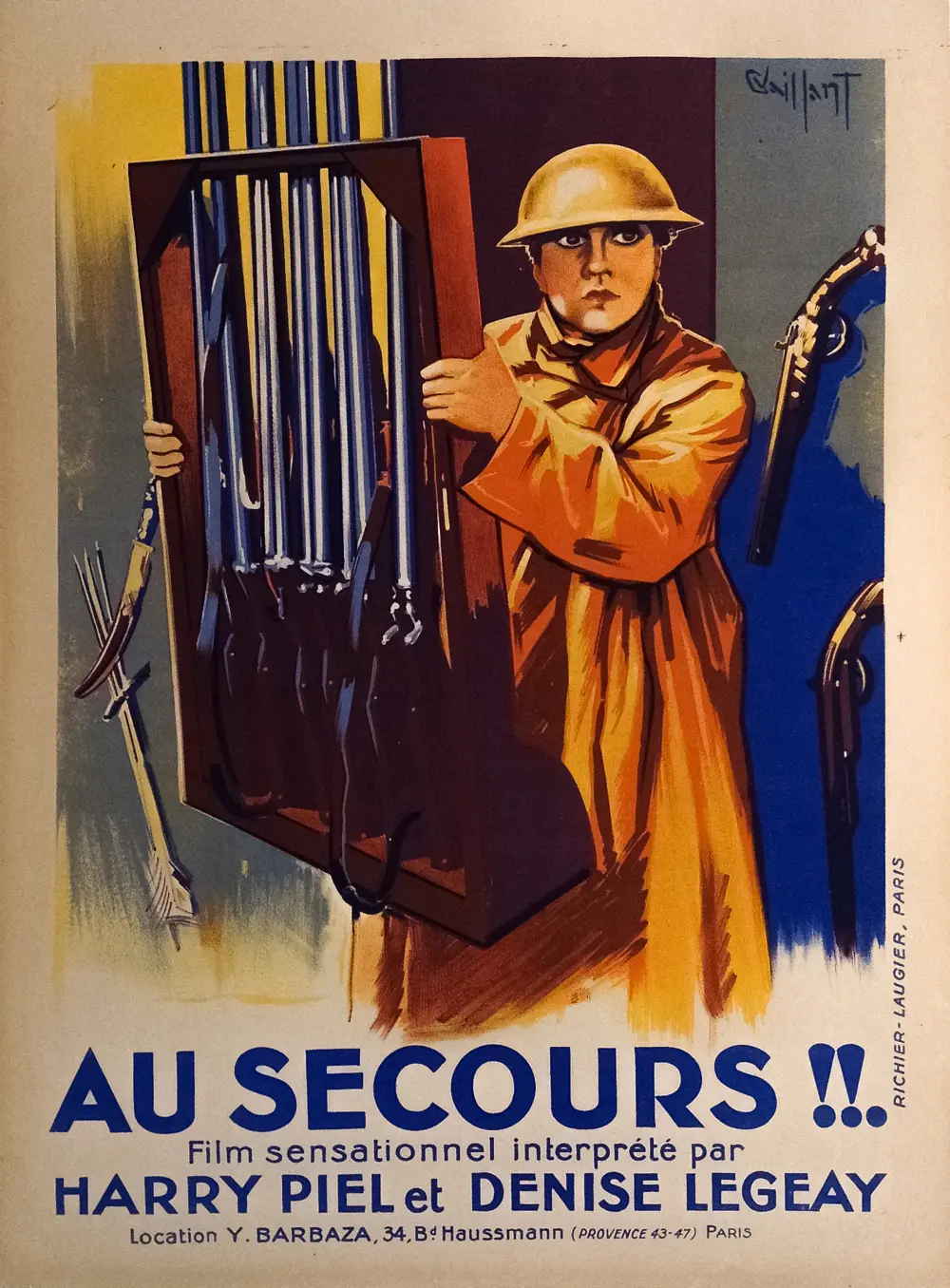
Should you spend your evening watching Achtung Harry! Augen auf!? Short answer: No, unless you are a dedicated scholar of silent-era stunt choreography or Weimar cultural history. This film is a museum piece for specialists, not a hidden gem for the casual viewer seeking modern thrills.
This film is specifically for those who want to see the architectural bones of the modern action hero. It is absolutely not for anyone who requires a coherent, emotionally resonant plot or high-definition visual clarity.
Harry Piel was not just an actor; he was a brand. In Achtung Harry! Augen auf!, he functions as a proto-superhero. He doesn't inhabit a character so much as he performs a series of feats. There is a specific moment early in the film where Harry leaps across a narrow alleyway between two industrial buildings. The camera stays wide, proving the lack of safety nets. It is a punchy, visceral moment that reminds us that before CGI, cinema was a dangerous profession.
However, this focus on 'sensation' often leaves the supporting cast in the dust. Denise Legeay and Karl Falkenberg are relegated to the background, acting as mere scenery for Piel’s acrobatics. While Georg John brings a certain gravitas—his face is a map of silent-era menace—he is underutilized. The film treats its human elements like props. It works. But it’s flawed.
Comparing this to other films of the era like The Master Key, one can see a clear divide between films that tried to tell a cohesive story and films that were essentially stunt reels. Piel was firmly in the latter camp. He wasn't interested in the psychological depth seen in Together; he wanted to jump off moving trains.
The most surprising aspect of this film is the involvement of Henrik Galeen. The man who gave us the haunting shadows of Nosferatu seems out of place in a film titled 'Watch Out Harry! Eyes Open!'. Galeen’s script tries to inject a sense of mystery, but Piel’s directing style (he often directed himself) tends to steamroll over any subtlety. There is a scene in a dimly lit office where the lighting suggests a noir-ish tension, yet it is immediately interrupted by a comedic scuffle.
This tonal whiplash is the film's greatest weakness. You can feel the script reaching for something more substantial, perhaps a critique of the German class system, but then Harry Piel decides he needs to climb a drainpipe. It’s a frustrating experience for anyone who appreciates Galeen’s more atmospheric work. It makes the film feel like a compromise between art and commerce.
Technically, the film is a product of its time, but with flashes of brilliance. The pacing is surprisingly modern. While many films from The Virgin of Stamboul era feel slow by today's standards, Piel’s editing is rapid. He understands that an audience for an action film doesn't want to linger on a close-up for forty seconds. He cuts on the action, a technique that was still being refined in the mid-20s.
The cinematography by Gotthardt Wolf captures Berlin not as a city of dreams, but as a playground of steel and stone. The use of natural light in the outdoor sequences gives the film a grounded reality that contrasts sharply with the theatricality of the acting. It’s a gritty look that predates the noir movement by nearly two decades. One specific shot of a car speeding through a rain-slicked street is particularly memorable for its composition.
If you are looking for a casual Friday night movie, the answer is a firm no. Achtung Harry! Augen auf! requires a significant amount of historical context to appreciate. The plot is thin, and the silent-era acting tropes can be jarring for those unaccustomed to them. However, if you are a cinephile interested in the origins of the action genre, it is a fascinating case study. It shows a cinema that was beginning to understand its own power to thrill through movement alone.
Pros:
- Incredible practical stunts that put modern green screens to shame.
- High-energy pacing that keeps the film from feeling stagnant.
- A rare look at the populist side of Weimar cinema.
Cons:
- The story is almost non-existent.
- Secondary characters are treated as disposable.
- The tonal shifts between comedy and action are poorly handled.
To understand this film, you have to understand that Harry Piel was essentially the Tom Cruise of his day. He did his own stunts, he directed his own films, and he was the primary draw. In Achtung Harry! Augen auf!, you see the peak of this ego-driven filmmaking. It is a fascinating document of a time when the star was bigger than the story. While it lacks the artistic merit of Lang or Murnau, it represents a vital part of film history that is often overlooked: the birth of the blockbuster.
"Piel doesn't act; he survives. The film is less a narrative and more a test of physical endurance captured on celluloid."
There is a certain honesty in that. The film doesn't pretend to be high art. It wants to entertain. It wants to make you gasp. In 1926, it likely succeeded. Today, it serves as a reminder of how much—and how little—the action genre has changed. We still want to see people do impossible things. We just want them to have a better reason for doing them than Harry does here.
Achtung Harry! Augen auf! is a loud, clattering, and ultimately empty spectacle. It is historically significant but practically tedious. If you want to see where the action hero began, give it a look. If you want to be moved or challenged, look elsewhere. It is a relic of a time when the camera was a new toy and Harry Piel was its favorite plaything. Watch it for the history, not the story.
IMDb 6.2
1927
Community
Log in to comment.