DbcultAccessing Vault...
Cult Review
Senior Film Conservator
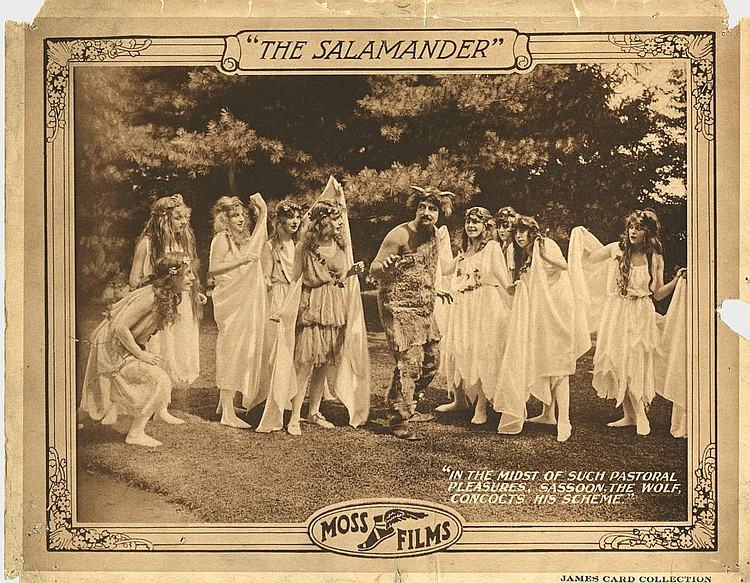
A nitrate ember rescued from oblivion, The Salamander crackles with contradictions: Arcadia versus metropolis, nubile trust against calcified avarice, the prelapsarian hush of pine needles drowned by the syncopated clatter of Model-T cobblestones.
Owen Johnson’s scenario—adapted from his own Saturday Evening Post novella—owes less to the moral binaries of Griffith than to the ambivalent erotic circuitry of Stroheim’s later Gilded Age dissections. Director/actor J. Frank Glendon stages tableaux that feel like oil-on-canvas moonlight: each iris-in functions as a dilating pupil, tasting danger before intellect can name it.
Forget linear exposition; the narrative unfurls like a fern frond in stop-motion. Iva Shepard’s Dore, first glimpsed wading through a cataract of back-projected stream, embodies a mythic Americana nymph—think Edna Purviance’s poise grafted onto Pearl White’s athleticism. When the grandmother’s heart gives out, the missing deed is less a MacGuffin than a civic rupture: land, the last commons, transmuted into paper, then vapor.
Sassoon—played with walrus-moustached menace by Edgar L. Davenport—never twirls his moustache; instead he polishes his pince-nez, a semaphore of respectability that outshines any Snidely Whipland cape. His villainy is systemic, not sadistic, which makes the injustice more galling.
Once Dore hitchhikes inside a rickety Studebaker that doubles as prop wagon, the film’s tone pivots from pastoral lament to carnivalesque picaresque. Garry Lindaberry—J. Frank Glendon essaying a sort of boulevardier Galahad—finances the troupe less out of noblesse oblige than erotic curiosity. Their meet-cute involves Dore replacing a poisoned cue-card girl; she flubs iambic pentameter yet entrances the house, proving literacy overrated when magnetism trumps diction.
Johnson’s script flirts with meta-commentary: the stage melodrama within the film mirrors the outer plot—heiress disinherited, must reclaim patrimony—reminding 1916 audiences that life itself is a flimsy scaffold of agreed-upon roles. The Salamander of the title refers not to the amphibian but to the alchemical spirit able to survive infernal flame, a badge Dore earns during the climactic soirée where electric chandeliers hiss like serpents over roulette felt.
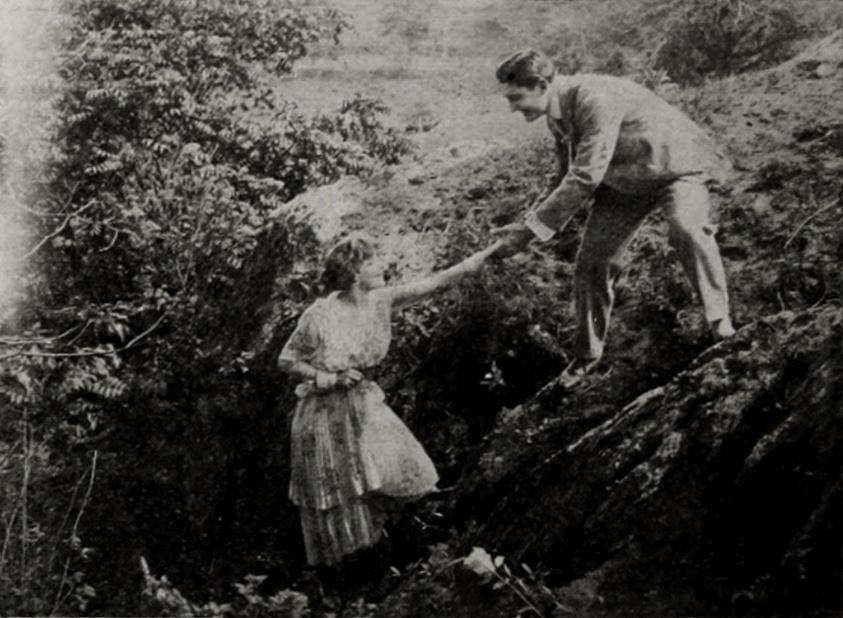
Surviving prints—mostly 9.5 mm Pathéscope reductions—bear amber, cyan, and magenta washes that semaphore mood: amber for woodland nostalgia, cyan for urban dislocation, magenta for erotic peril. Composer Ben Model’s 2019 restoration score leans on xylo-marimba and thermion cello, creating a wistful counterpoint that rescues the picture from the antique curio shelf.
Glendon’s camera trusts axial cuts over cross-cut suspense, but when he finally does intercut—Dore’s trembling hand signing a counterfeit promissory note versus Sassoon’s wife discovering her husband’s perfidy—the montage prefigures The Exploits of Elaine’s cliff-hanger cadence, albeit at a more stately tempo.
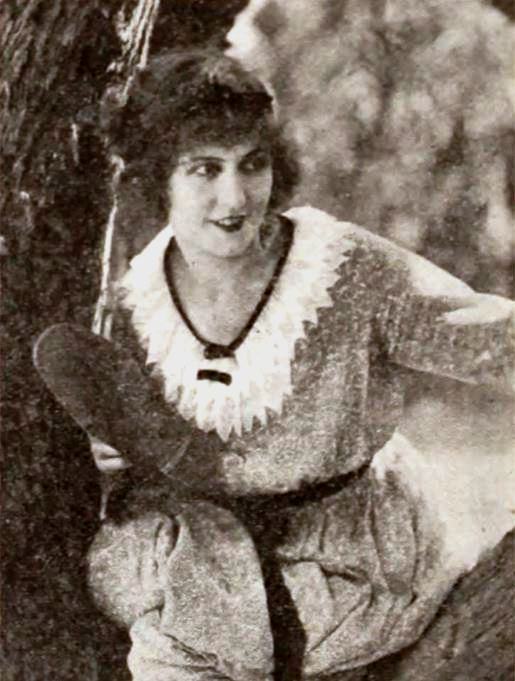
Iva Shepard, remembered primarily for the The Coquette serials, modulates from wood-spirit wonder to steel-boned strategist without traversing the coy valley of flapper caricature. Watch her pupils when she first hears Sassoon’s name aboard the train: the iris-in narrows, yet her smile stays a welcoming crescent—predator masquerading as prey.
Davenport’s Sassoon ages subtly; makeup omits the usual greasepaint gray temples, relying instead on posture collapse and a slackened jawline that betrays encroaching panic. In the penultimate gambling-hell scene, his cigar goes unlit—an economical flourish signalling impotence.
Violet Davis, as the leading lady who doubles as Sassoon’s spouse, supplies the film’s most underrated turn. Her backstage confession—delivered via side-profile close-up unprecedented for 1916—channels the same matinee-idol fatigue that would later gird Gloria Swanson in The Daughters of Men.
Long before eco-cinema became academic lingua franca, The Salamander posits land as living tissue violated by masculine cartography. Dore’s eventual restitution is less capitalist triumph than matriarchal repossession; note how the final shot frames her not in bridal white but in ranger’s tweed, striding across re-seeded acreage as Garry follows two paces behind—consort, not custodian.
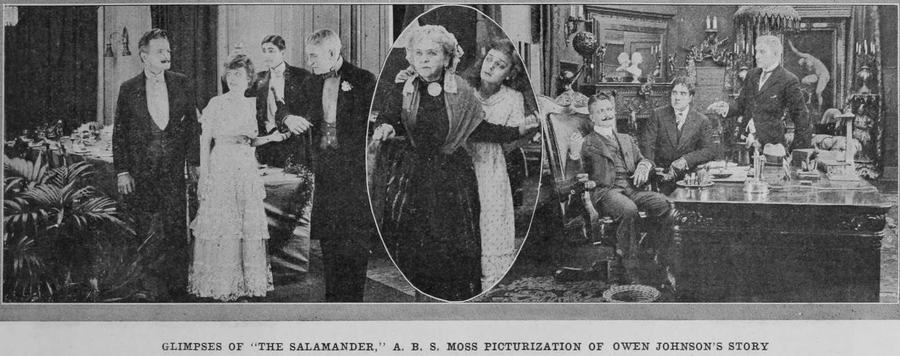
While Tess of the Storm Country sanctifies rural virtue and The Footsteps of Capt. Kidd mythologizes buccaneer greed, The Salamander hybridizes both impulses, mapping them onto the same topography. Its DNA also snakes through Fatherhood’s urban custody battles and even, obliquely, through the phantasmagoric land disputes of The Patchwork Girl of Oz.
At 42 minutes, the picture anticipates the brisk novella aesthetic later perfected by B-movie noirs. One reel devoted to a travelling shot—camera mounted on a flatbed railcar—lets the bucolic dissolve into brick façades without a single title card, achieving exposition through geography.
Yet the film dares languor when emotion demands it: a 90-second static take holds on Dore’s hand resting atop Garry’s stage prompt book, dust motes swirling like cosmic paramecia. Silent-era newcomers may twitch, but patience yields a Proustian frisson.
No complete 35 mm negative survives; what circulates is a 4K scan of a 1922 Kodascope condensation, stretched via AI interpolation to approximate original speed. While purists decry the methodology, the result—grain sculpted, scratches tamed—beats the sprocket-hole jitter of earlier DVD-R boots. Stream via Klassiki or snag the Grapevine Video BD paired with A Fatal Lie for contextual double-feature.
Is The Salamander a masterpiece? Not quite. Its gender politics, though progressive for 1916, still frame female agency within heteronormative coupledom; its racial palette is monochrome; its class reconciliation arrives via deus-ex-machina land grant. Yet the film’s central metaphor—woman as elemental fire that refines rather than consumes—retains alchemical potency.
Watch it for Shepard’s kinetic stillness, for Glendon’s proto-Stroheim flourish, for the amber-sea-blue tinting that turns each frame into living stained glass. Watch it because, in an era when real-estate barons again mint fortunes from eviction spreadsheets, the fantasy of a sylvan avenger outfoxing urban predators feels less escapist than therapeutic. The Salamander survives the fire of time; let it scorch your retinas too.
IMDb 6.9
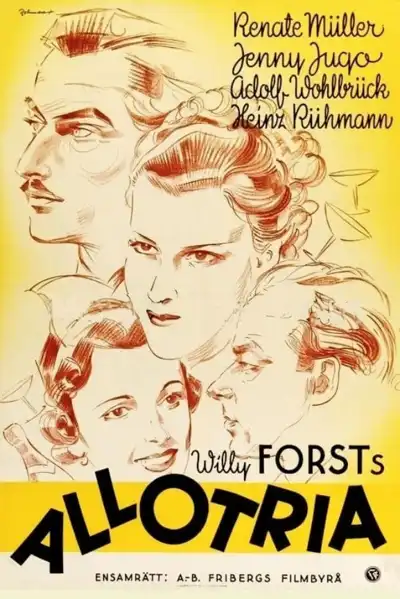
1936
Community
Log in to comment.