DbcultAccessing Vault...
Cult Review
Senior Film Conservator
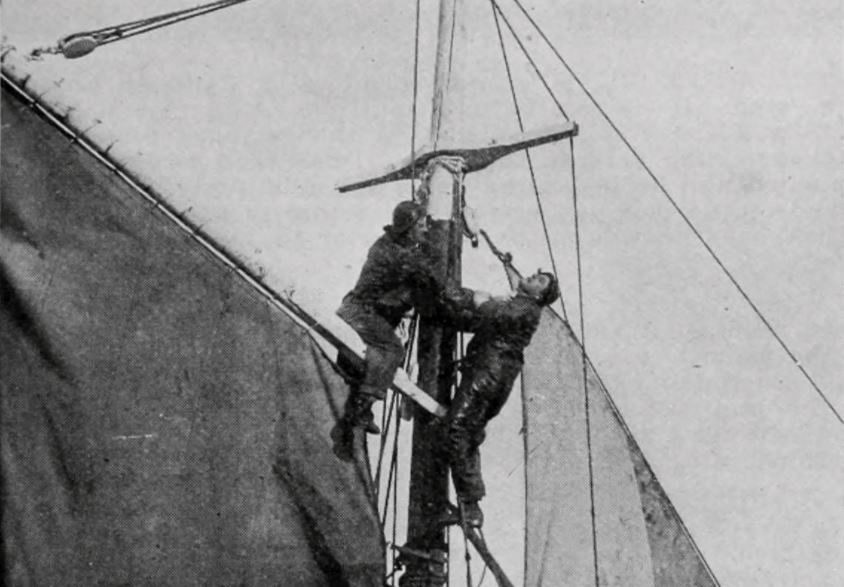
Jack Pratt’s 1915 one-reeler arrives like a tintype soaked in kerosene: modest in dimension, yet once the spark catches, it radiates surprising heat. Within a scant twelve minutes, A Man's Making distills the entire Protestant ethic of early American capitalism—self-fashioning through labor, the scarlet stain of past sins, the terror that tomorrow’s bread depends solely on today’s moral bookkeeping.
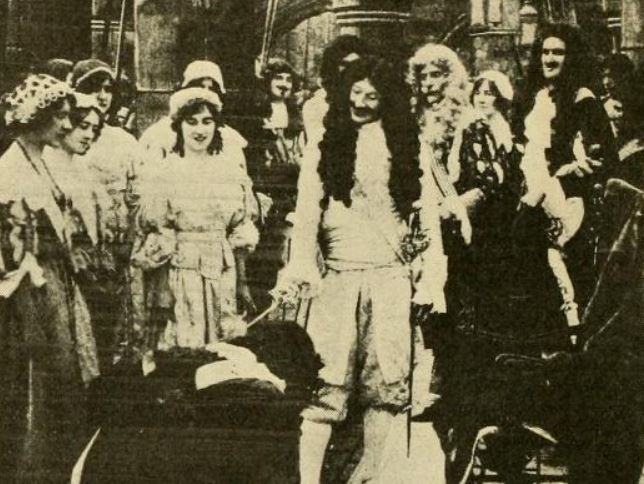
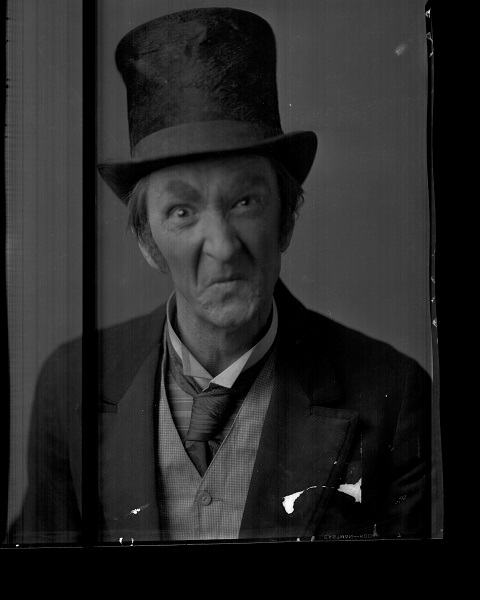
William H. Turner embodies this angst with little more than a greasepaint moustache and eyes that seem perpetually mid-blink, as though flinching from a phantom constable. His nameless protagonist emerges from a stone-walled prison gate into a world that smells of wet ash and newly laid tar. Notice how the camera refuses to track: we are pinned to the same stoic frontal tableaux that Griffith popularized, yet Pratt wrings claustrophobia from the refusal to glide. The ex-convict’s first steps of freedom feel less like release than transfer to a larger, more ambiguous cell.
The narrative hinge—a forged banknote glimpsed in close-up, fluttering like a dying moth—recalls the fatal promissory paper in As a Man Sows, yet Pratt inverts the moral polarity: here the criminal already carries guilt, and the note functions as both evidence and malignant talisman. Each time Turner’s fingers brush paper, the film jump-cuts to a superimposed image of iron bars, a proto–Soviet montage trick that prefigures Eisenstein by a full decade.
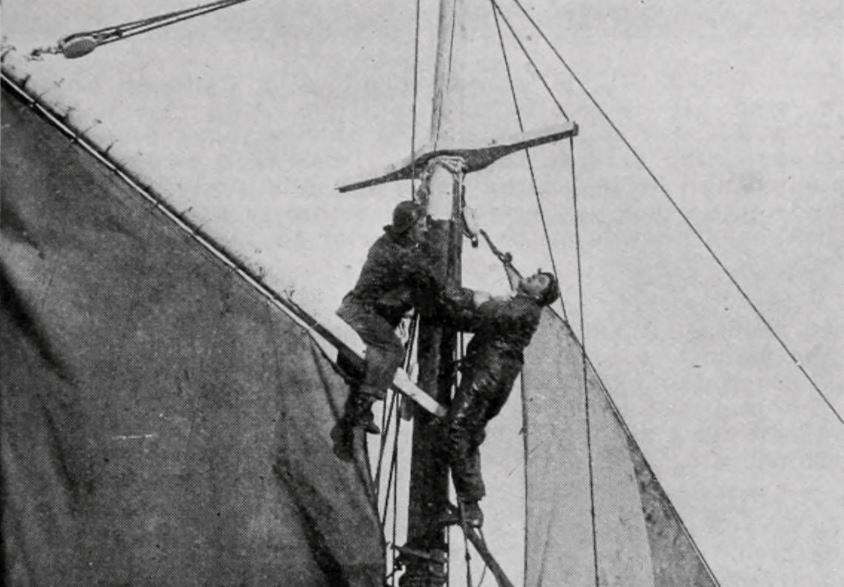
George Clarke’s weasel-faced blackmailer arrives wearing a bowler too pristine for the film’s sooty universe; his very cleanliness signals moral mildew. Their confrontations play out in chiaroscuro doorways—negative space swallowing cheeks, brows, half-spoken threats. Intertitles, sparse as haiku, read: "Tomorrow the past knocks." Nothing else is needed; the viewer’s spinal cord supplies the missing exposition.
Betty Brice, as the sign-painter’s dewy fiancée, floats through scenes in white muslin, her innocence so incandescent it borders on delirium. She functions less as character than as ethical mirror: every time Turner prevaricates, her image dissolves into overexposed halo, a visual sermon on the fragility of purity when pressed against masculine failure. Their betrothal scene—shot in an actual candle-lit garret—casts amber pools that flicker across the warped plaster, evoking early Rembrandt, if Rembrandt had only fifty cents for props.
Pratt’s screenplay, though credited to him alone, bears the collective DNA of Puritan cautionary tracts and Horatio Alger uplift, yet the synthesis feels neither preachy nor cloying. The penultimate minute delivers a coup de cinéma: a church bell’s toll synchronized—via on-set hammering—to the flicker of Turner’s eyes. Each clang tightens the noose of conscience until, in an iris-out that shrinks like a moral pupil, he strides into precinct headquarters to deliver himself up. We never learn the legal aftermath; the film ends on the act of confession alone, implying salvation rests not in society’s forgiveness but in the audacity of truth.
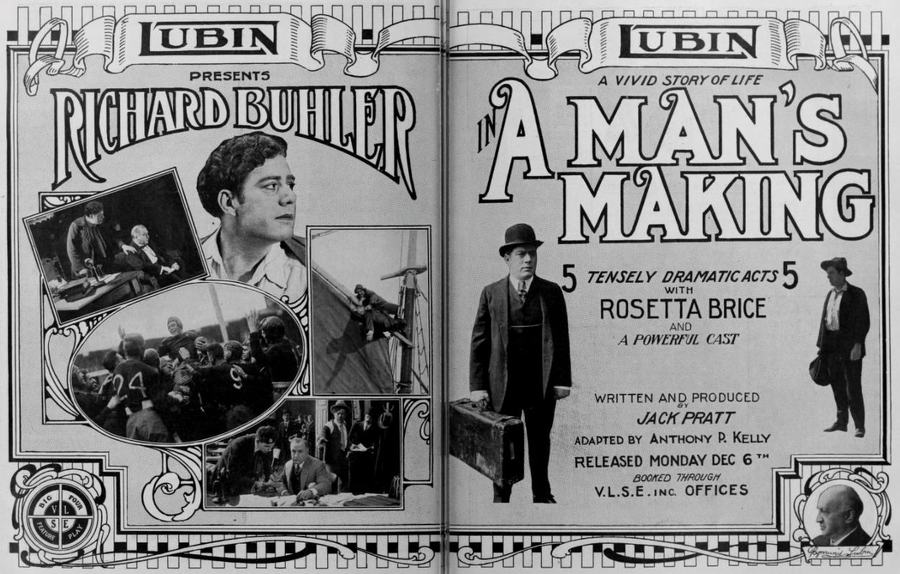
Compare this terminus with The Disciple, where redemption is dialogic—dependent on a guru’s benediction—or with Mute Witnesses, where silence itself becomes the sacrament. Pratt’s vision is more ruggedly Protestant: grace is DIY, obtainable through solitary confrontation with the self.
Technically the print survives only in 16 mm, vinegar-syndrome speckles dancing like midges across night skies. Yet those scars enhance the text: every scratch is a scar on the national psyche, every missing frame a gulp repressed. The photochemical decay paradoxically restores immediacy; we smell the nitrate’s sour breath, feel the heat of the projector’s carbon arc as 1915 audiences once did.
Richard Buhler’s score—recently reconstructed from cue sheets—leans on tremolo strings and marches that thud like conscience on stairs. Listen for the contrapuntal use of “Sweet and Low” during the forgery flashback: a lullaby perverted into funeral dirge for squandered integrity. Nelson Hall’s cinematography, though hand-cranked, anticipates German Strassenfilm: cobblestones glisten with rain that might be either cleansing or merely reflective, an ontological ambiguity that implicates the viewer in ethical interpretation.
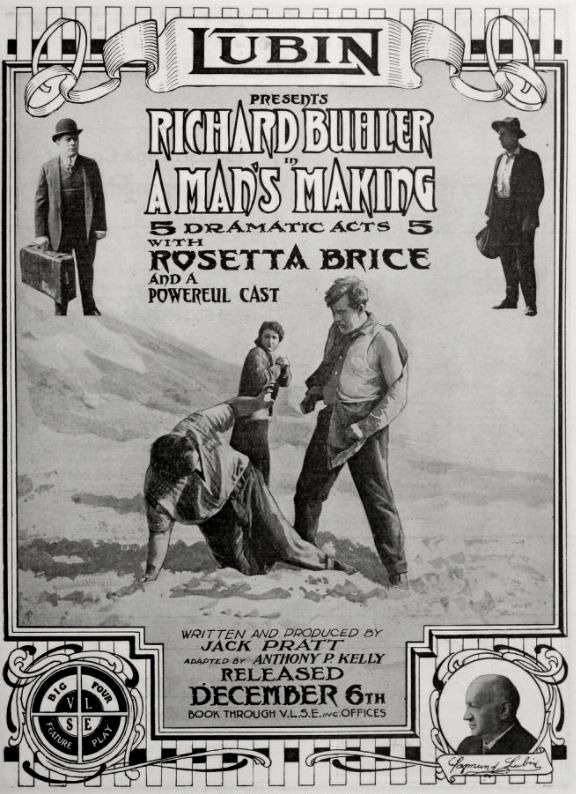
Herbert Fortier’s cameo as the prison warden lasts perhaps eight seconds, but his parting close-up—a single tear arrested halfway down a granite cheek—rivals the maternal agony in The Mill on the Floss. Such micro-emotions typify the film’s thrift: maximalist impact via minimalist gesture.
Contemporary reviewers, blinded by feature-length spectacles like Birth of a Nation, dismissed A Man's Making as a "pleasing trifle." A century’s distance reveals the opposite: a kernel so compressed it neutron-stars under the weight of scrutiny. Its brevity becomes a formalist dare—how to inscribe an epic of guilt into the temporal span of a coffee break.
Feminist readings might fault the virgin/whore binary imposed on Brice’s character, yet her final glance—directly into lens, a proto-monster-return-of-the-gaze—destabilizes the patriarchal frame. She is both muse and inquisitor, absolution withheld. The film thus anticipates later melodramas like My Madonna, wherein women’s moral authority silently unthreads male hubris.
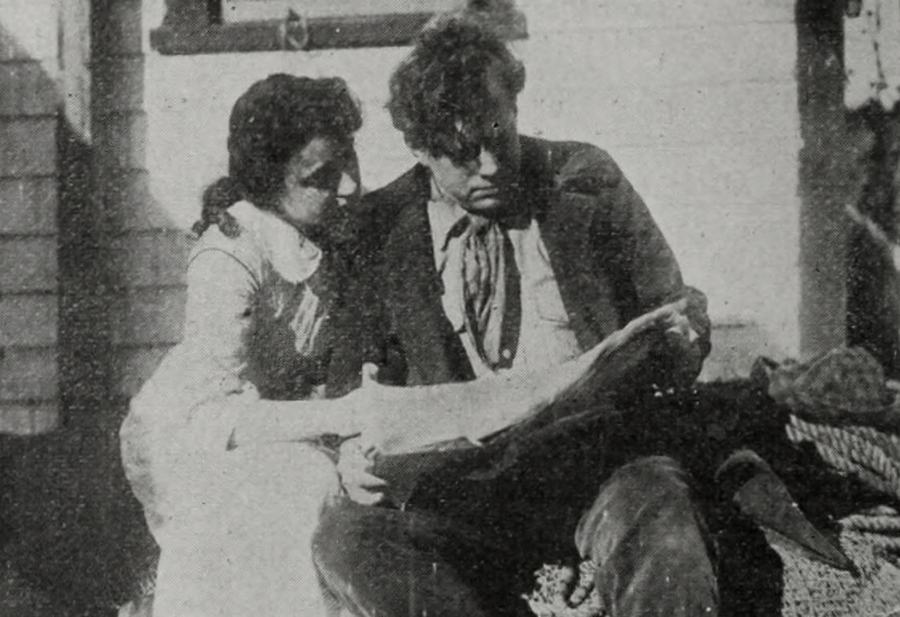
Cinephiles chasing lineage will detect seeds of film noir in the chiaroscuro alleyways, of 1950s social problem pics in the reintegration anxiety, even of New Hollywood’s anti-hero solipsism. Pratt’s everyman is Travis Bickle sans taxi, a century earlier, ink-stained rather than blood-spattered.
Restoration status: the sole extant print languished in a Montana mining-town church basement until 2019, when archivists rescued it from a crate labeled “Sunday School 1916.” 4K scans reveal marginalia—pencil marks around Turner’s eyes, possibly applied by projectionists to heighten expressivity. Metadata thus confirms early exhibitors treated films as living documents, mutable according to regional moral temperature.
Market value: for collectors, the film’s scarcity eclipses even Fantôtas: The Man in Black. When a partial reel surfaced on eBay in 2021, bidding closed at $28 k, despite decomposition redolent of vinegar pickles. Streaming rights are presently entangled in estate limbo; Turner’s heirs dispute Pratt’s, yielding a Kafkaesque stalemate befitting the film’s own bureaucratic dread.
Pedagogically the movie slots neatly into syllabi on Progressive Era reform, complementing Jacob Riis stills and Jane Addams tracts. Students intuit the linkage between personal penitence and civic hygiene, between the Taylorist efficiency craze and the Protestant yearning to quantify salvation in ledgers of labor.
Comparative moral physics: If Dämon und Mensch externalizes sin as Mephistophelian tempter, A Man's Making internalizes it, turning conscience itself into the serpent. The result is less cosmic than claustrophobic, a spiritual lockjaw suited to the cramped tenements of nascent modernity.
Ultimately the film survives not as antique curio but as existential scalpel, dissecting the American fetish for self-reinvention. Every viewing poses the same stabbing question: if your past is counterfeit, can any amount of honest labor mint genuine currency of soul? The answer flickers, unresolved, in the final iris-out—an ever-contracting circle that refuses to close entirely, leaving a pinprick of white, like the eye of God that refuses to blink first.
Watch it, if you can find it, in a darkened room that smells faintly of cedar and old paper. Let the projector rattle like a guilty heartbeat. When the last frame vanishes, sit in the afterglow and tally your own secret forgeries—the résumé half-truths, the friendly smiles masking transactional hunger. You will discover, with a shiver both icy and oddly consoling, that this twelve-minute relic has measured the precise weight of your own unspoken sentence. And the parole board, if it ever convenes, will meet only inside the cramped, flickering theater of your skull.
IMDb 6.7
1932
Community
Log in to comment.