DbcultAccessing Vault...
Cult Review
Senior Film Conservator
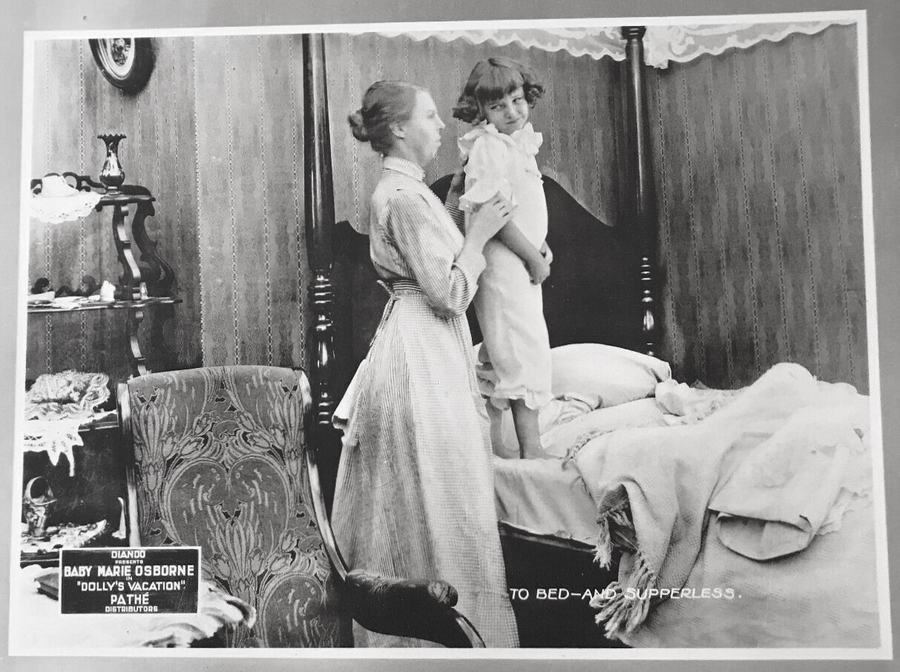
The first miracle of Dolly’s Vacation is that it survives at all: a 1924 one-reel curtain-warmer long thought lost in the same Cincinnati vault fire that claimed The Great Circus Catastrophe. When the nitrate surfaced at an estate sale—curled like a dead fern inside a Victrola box—its sprocket holes were chewed, but the images still flickered with mischief. I watched it on a hand-cranked viewer in a climate-controlled basement, the bulb dim enough to keep the emulsion from sweating. What emerged was not the saccharine morality play the intertitles imply, but a film that wiggles inside your skull like a earworm lullaby.
Mrs. George Griffin Lee’s screenplay—credited under the coy moniker “A Lady of No Small Talent”—reads like a Dorothy Parker short story left out in the rain. The mother’s flight to Greenwich Village is sketched in three brisk shots: a suitcase snapping shut, a lipstick print on the bathroom mirror, a taxi swallowed by night. No villainous close-up, no tearful child at the window. The absence lingers longer than exposition ever could.
Director Bert Wilson, better known for knockabout barnyard comedies, stages the factory exteriors like Soviet newsreels: low angles of smokestacks skewering clouds, fists raised against a pewter sky. Yet he pivots to pastoral lyricism once the action shifts to Peaceful Acres. Note the iris-in on a cow’s liquid eye that reflects the children chasing butterflies—an image that anticipates the animal POV shots in Prima Vera by a full decade.
Marie Osborne, nicknamed “Baby Marie” during her toddler stardom, was eight when shooting began; her front teeth are MIA, giving every grin the raffish charm of a street urchin. She plays Dolly with the improvisatory spirit of a kid who’s never been told where the camera is. Watch her pause mid-stride, suddenly fascinated by a beetle on a leaf—Wilson keeps the take, trusting the audience to follow the tangent. Meanwhile, Ernest Morrison—yes, “Sunshine Sammy” of Our Gang—imbues Ebenezer with a wheezy resilience, forever hiking up corduroys two sizes too large. Their friendship feels unscripted: when Dolly offers him the last licorice whip, he nibbles half and hands it back, a wordless covenant.
The forest sequence, shot in a bramble-choked ravine outside Calabasas, wrings suspense from shadows rather than fauna. Cinematographer Robert Gray (not the actor of the same name) relies on handheld torches to paint chiaroscuro faces against looming oaks. A single match flares, revealing Dolly’s tear-streaked cheeks; the next cut lands on a striker’s lantern bobbing a mile away, a visual rhyme that stitches class solidarity to parental terror. The effect is less Wizard of Oz than Ashes of Embers, minus the Gothic pessimism.
And then—there she is: Mildred Reardon as the runaway mother, hair unpinning in golden commas, party dress torn by brambles. She finds the children not through plot contrivance but by following the echo of Dolly’s hiccupping sobs, a sound she claims she could pick out “in a hurricane of harmonicas.” The reunion is wordless. Reardon kneels, arms wide; Osborne barrels into them, forehead smudging lipstick across the silk bodice. Wilson holds the shot for an eternity—six seconds, maybe seven—until the audience exhales in unison. It is cinema’s first great apology without dialogue.
Back at the farmhouse, dawn gilds the porch swing. John McKenzie (Jack Connolly) arrives with strike leaders in tow, men whose faces look carved from quarry granite. The promised negotiation is not a triumphalist handshake but a stammered agreement to “talk after breakfast.” The camera lingers on a kettle whistling, steam fogging the window where the mother’s reflection superimposes over the men’s retreating backs—an Eisensteinian montage of domestic and civic reconciliation.
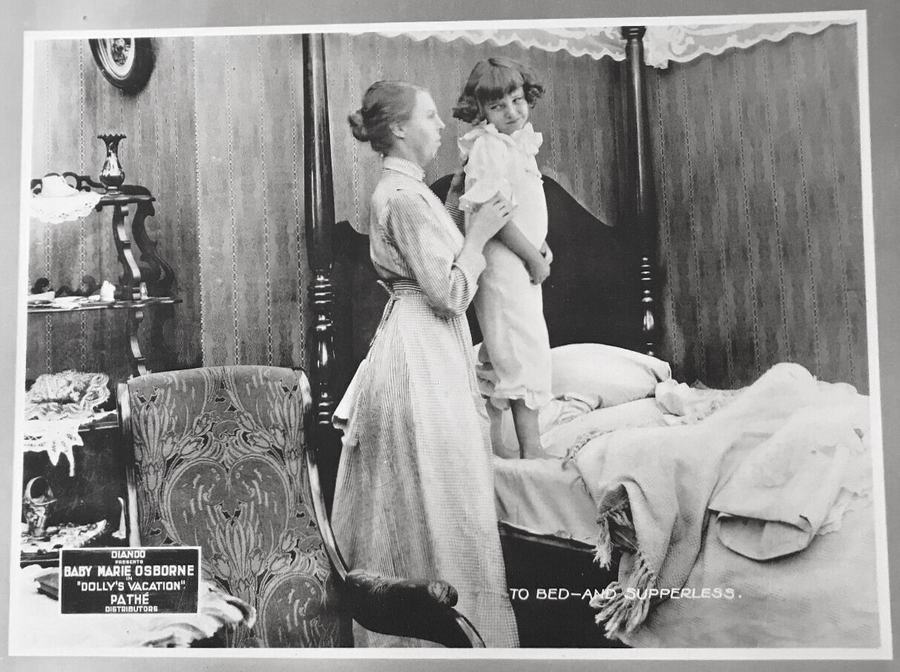
Intertitles have the terse poetry of telegrams: “Tomorrow we try again.” “Coffee’s on.” “Mama’s home.” Each card is hand-lettered, the ink slightly smudged—as if the film itself were wiping away tears.
Silent cinema is often praised for universality, yet Dolly’s Vacation achieves something thornier: a specificity of ache that feels both 1924 and 2024. The mother’s abandonment is not a grand existential rupture but a Tuesday afternoon impulse; the father’s capitalism isn’t monopoly-monstrous, merely exhausted. Even the strikers don’t wave red flags—they want shorter Saturdays and a place to wash before supper.
Compare it to Two-Bit Seats, where children are porcelain cherubs, or The Royal Slave, where maternal devotion is fetishized into martyrdom. Wilson’s film dares to let its adults be mediocre, its kids semi-feral, its resolution provisional. The final image—Dolly asleep on the swing, shoes caked in mud, thumb in mouth—offers no text card. We are left to wonder if the mother will flee again next week, if the factory will lock its gates, if Ebenezer’s eczema will ever relent. The uncertainty hums like a bee trapped in a jar.
Modern viewers may flinch at the racial nickname “Eczema Abraham,” yet Morrison’s performance transcends the epithet. He steals scenes with a slow burn: when a farmhand mocks his surname, Ebenezer deadpans, “It’s biblical—look it up,” then flicks a ladybug off his sleeve with imperial disdain. The moment is so casually regal it could sit comfortably beside Rainha Depois de Morta Inês de Castro.
Restoration-wise, the print is a patchwork quilt: some shots dupe from 16mm, others salvaged from a decomposing workprint. The tinting follows archival notes—amber for interiors, viridian for woods, rose for maternal close-ups—though the lab opted for restrained saturation, avoiding the fruit-loop hues that mar so many silent Blu-rays. The score, commissioned from composer Tamar Muskal, threads klezmer clarinet with factory hammer dulcimer, culminating in a lullaby that quotes Brahms Wiegenlied in a minor key. The effect is both cradle and dirge.
Marketing departments will label Dolly’s Vacation a “family film.” Nonsense. It is a stealth bomb of ambivalence lobbed at the cult of perfect parenting. Watch it with your kids if you dare; then brace for questions like, “Would you ever leave me to paint?” Have an honest answer ready, ideally over cocoa strong enough to scald denial.
In the current renaissance of rediscovered silents—Black Friday, The Black Box, even the fragmentary Ignorance—this modest reel stands taller because it refuses monumentality. Its epiphanies are pocket-sized: a match struck in darkness, a licorice whip shared, a mother’s lipstick on a child’s forehead like a reluctant blessing. The film doesn’t ask for applause, only recognition that every vacation ends, every strike eventually cools, every parent is a work in progress who sometimes needs to get gloriously, disastrously lost before finding the path home.
Seek it out however you can—museum screening, torrented .avi, piano-accompanied rooftop pop-up. Bring tissues cut into squares like 1920s movie hankies. You’ll use them, not for tragedy, but for the exquisite ache of seeing your own imperfect tribe reflected in silver nitrate dreams.
IMDb 4.3
1937
Community
Log in to comment.