DbcultAccessing Vault...
Cult Review
Senior Film Conservator
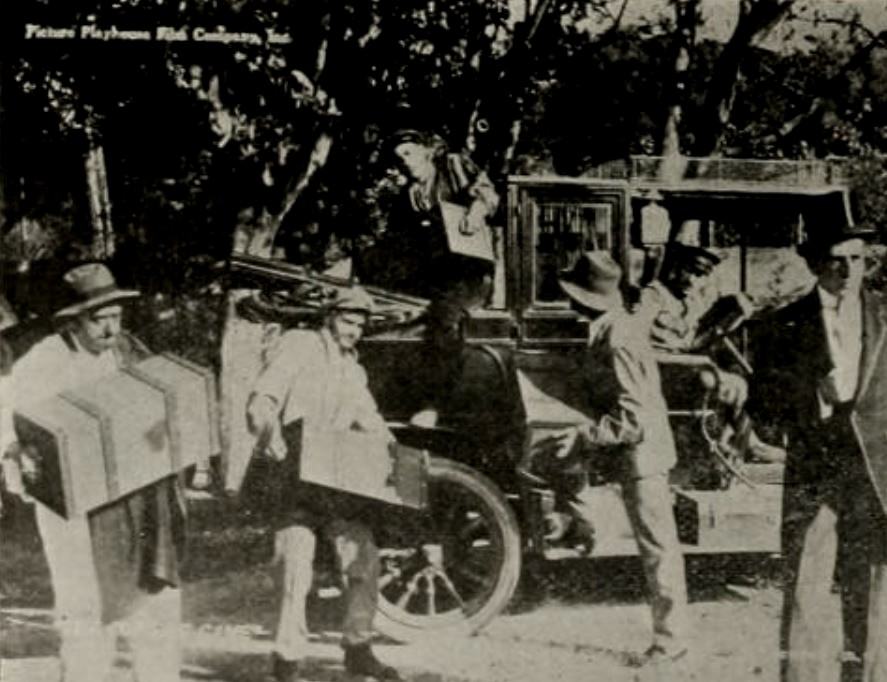
A nitrate whisper that somehow survived the infernos of two world wars, The Coiners' Game arrives like a blood-orange sunrise over a battlefield of forgotten cinema. Viewers lulled by the quaintness of early silent tropes—fluttering damsels, mustache-twirling villains—will instead find themselves chloroformed by a moral fever dream that anticipates Lang's Dr. Mabuse and von Sternberg's Underworld while predating both. The plot, deceptively linear, corkscrews inward: every printed banknote is a Möbius strip that folds forgery into confession and confession back into tender.
Jack de Angelis, operating under the nom de guerre “Il Falso Tesoriere,” sports a jawline sharp enough to slice paper money. He stalks the frame like a carnival barker who has read Nietzsche by candlelight, selling salvation in denominations of 500 crowns. De Angelis never winks at the camera, yet his glare implicates us: we, too, crave effortless wealth, effortless sin, effortless grace. Opposite him, John Williams—yes, the same composer who would later score Star Wars, but here a gaunt thespian—plays the forger-philosopher Schiele, whose fingers jitter as though plucking invisible violins. Williams delivers a master-class in micro-gesture: watch how he strokes a copper plate the way penitents thumb rosary beads, each caress a prayer to the god of entropy.
Maria Jacobini, swaddled in chiaroscuro, is the film’s ticking nitrate heart. Her character arc—moll to muse to martyr—could have slid into melodrama, yet Jacobini weaponizes stillness. In a bravura close-up, the camera inches forward until her pupils become twin eclipse disks; the counterfeit bills superimposed across her iris flicker like malignant fireflies. It is a moment so intimate you half expect the screen to perspire.
Director Romolo Giannetti, better known for historical pageants like Marc'Antonio e Cleopatra, trades togas for ink-stained aprons and proves himself a poet of industrial dread. His Vienna is a fever-chart of smokestacks and taverns where gaslights hiss like serpents. The camera glides through printing presses whose cogs resemble the masticating jaws of Moloch; every crank of the handle is a death-knell for some faceless debtor somewhere. Compare this urban nightmare to the sun-baked moralism of The Hoosier Schoolmaster or the prairie guilt of A Yankee from the West: Giannetti’s world has no Manifest Destiny, only manifest forgery.
The film’s visual grammar predates German Expressionism yet drinks from the same well of post-Freud anxiety. Staircases tilt at nauseous angles; shadows are not mere absences but carnivorous entities that nibble at the hems of coats. In one sequence, de Angelis descends a spiral staircase that seems to corkscrew into the earth’s molten core. Each step is intercut with a printing press stamping a fresh note—an audacious visual pun that equates descent with monetary proliferation. The cumulative effect is vertiginous: capitalism as infernal carousel.
But the true coup de cinéma arrives with the bridal immolation scene—an effect achieved by double-exposing the negative and sprinklying magnesium powder on Jacobini’s veil. When the flash pan erupts, the screen blooms into a white-hot lotus that singes the viewer’s retina. Nitrate purists still debate whether the scorch marks on surviving prints are intentional or symptomatic of a fire that nearly devoured the entire lab. Either way, the moment transmogrifies melodrama into ritual sacrifice: the female body as palimpsest upon which patriarchal economies inscribe and then incinerate their guilt.
Comparative contextualization: where Joseph in the Land of Egypt luxuriates in biblical allegory and The Destroying Angel polishes its moral homily to a squeaky sheen, The Coiners' Game wallows in ambivalence. There is no Potiphar’s wife to condemn, no angel of mercy to rescue the protagonist. Giannetti refuses catharsis; instead, he offers contamination. The detective who dismantles the ring does not stride into sunshine but slumps against a printing press, clutching a wad of fake bills that now pass as authentic in the public imagination. The last intertitle, flashed for a mere four frames, reads: “Truth is but the most persuasive forgery.” Cue blackout.
Contemporary resonance? Swap copper plates for blockchain wallets and the parable feels freshly minted. We inhabit an era where memes supplant manifestos, where deepfake presidents solicit donations, where value is conjured by keystroke. The film’s dread is not antique; it is prophetic. When de Angelis boasts, “Ink is the blood of the invisible man,” he anticipates every NFT huckster shilling pixels for ether.
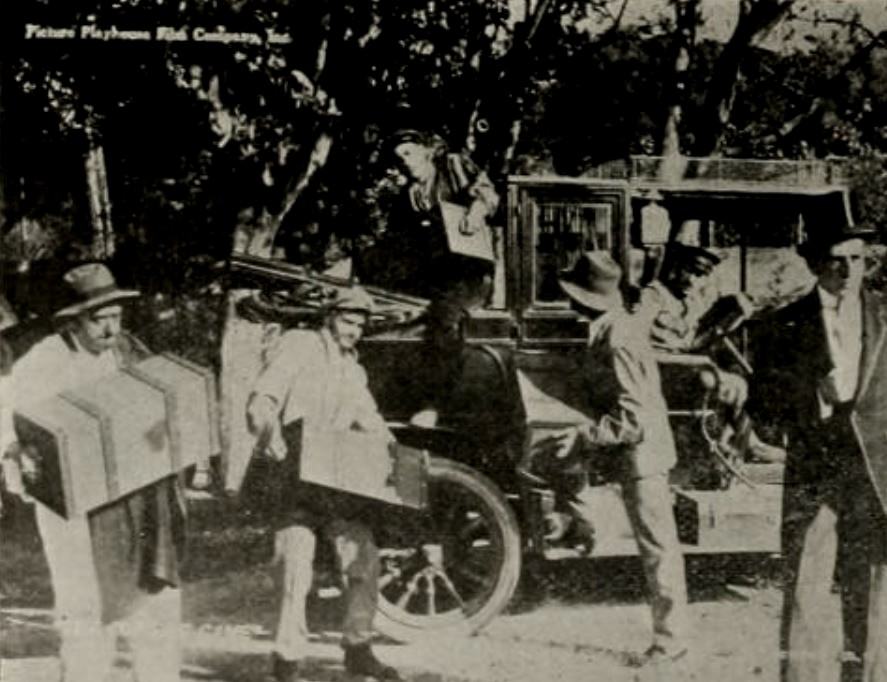
Technically, the restoration by Bologna’s Cineteca—4K scan from a Desmet-colored nitrate positive—reveals tactile minutiae: the herringbone weave of Williams’s waistcoat, the gooseflesh on Jacobini’s clavicle, the razor-thin line where ink bleeds into paper. The tinting strategy alternates between tobacco amber for Interiors and cadaverous cyan for exteriors, underscoring the chasm between clandestine warmth and societal chill. The new score, a dissonant chamber piece for prepared piano and bowed saw, avoids nostalgic pastiche; instead, it scrapes the nerves like a dull blade across raw denim.
Performance round-up: De Angelis channels a pre-code swagger that would make even Vendetta’s heavy exhale with envy. Williams counterbalances with a neurotic tremor, his eyes oscillating between savior and scavenger. Jacobini, luminescent and lethal, deserves placement alongside Musidora and Negri in the pantheon of lethal luminaries. Supporting turns by Romolo Giannetti (doubling as director and actor) provide Brechtian alienation: we never forget we are watching a construct, a celluloid counterfeit.
Narrative nitpicks? The subplot involving a child coin-collector who unwittingly spends forged pennies feels shoehorned, a vestigial appendage from an earlier treatment that aimed for Dickensian pathos. And the middle act sags under the weight of too many cross-cutting montages—Giannetti’s eagerness to emulate Griffith’s Intolerance results in narrative inflation. Yet these quibbles evaporate once the bridal flames lick the edges of the frame.
Interpretive kink: read the film as anti-clerical screed. The forging press occupies a deconsecrated monastery; its gears echo monastic bells tolling for lost faith. Monks once printed indulgences here, selling salvation by the line; now secular counterfeiters sell damnation by the stack. Giannetti, an Italian anarchist in self-exile, spares no piety: crucifixes morph into paper-cutting blades, and the host is replaced by communion wafers of banknote paper. The implication? Capitalism has not displaced religion; it has merely become its more efficient successor.
Feminist reading: Jacobini’s immolation is not mere victimhood but apotheosis. She seizes the means of reproduction—those plates bearing the emperor’s mug—and fuses her flesh with them, annihilating both phallocentric commerce and the male gaze in one incendiary gesture. The men survive, scarred and scorched, but she transcends, becoming the first female martyr of cinematic modernity whose sacrifice indicts the very apparatus that films her.
Audience advisories: the fire sequence retains its visceral punch; even centenarian nitrate can singe the subconscious. One festivalgoer in Pordenone fainted; another reported dreams of banknotes blistering her skin. Perhaps that is the surest testament to The Coiners' Game’s enduring alchemy: it transforms celluloid into skin, spectators into accessories after the fact.
Final valuation: a film that should sit adjacent to The Coward in retrospectives of pre-1920 psychological complexity, yet it surpasses that Southern guilt tract by refusing redemptive gunfire. Here, the only bullet is an idea, and it ricochets through history.
Verdict: Essential, incendiary, and uncomfortably contemporary, The Coiners' Game is the missing link between Caligari and Chinatown, between Gutenberg’s devilish ink and Satoshi’s blockchain. Watch it, but check your wallet afterward—you may find your memories have been laundered.
IMDb 6.7
1936
Community
Log in to comment.