DbcultAccessing Vault...
Cult Review
Senior Film Conservator
Is this film worth watching today? Short answer: Yes, but only if you possess a scholarly interest in the intersection of early Soviet industrialism and silent-era espionage. This film is for the cinematic archaeologist who enjoys unearthing the roots of the 'techno-thriller'; it is not for the modern viewer looking for character-driven emotional depth or fast-paced action sequences.
Aero NT-54 represents a very specific moment in history where the machine was the protagonist and the human was merely its steward. It is a fascinating, if occasionally dry, look at how a nation attempted to build its identity through the lens of a carburetor and a propeller. It works. But it’s flawed.
1) This film works because it captures the genuine, almost religious fervor of early 20th-century technological progress with a visual rhythm that feels uniquely Soviet.
2) This film fails because its narrative structure is hindered by heavy-handed moralizing and a cast of villains that lack any semblance of nuance.
3) You should watch it if you want to see how the 'invention' subgenre helped shape the propaganda of the 1920s.
Aero NT-54 is worth watching if you are looking for a historical document of the NEP (New Economic Policy) era. It provides a rare glimpse into the Soviet obsession with aviation as a symbol of progress. If you are a fan of silent cinema that focuses on industrial aesthetics rather than romantic melodrama, you will find value here. However, if you prefer the sweeping emotional epics like The Four Horsemen of the Apocalypse, this film’s clinical focus on an engine might feel alienating.
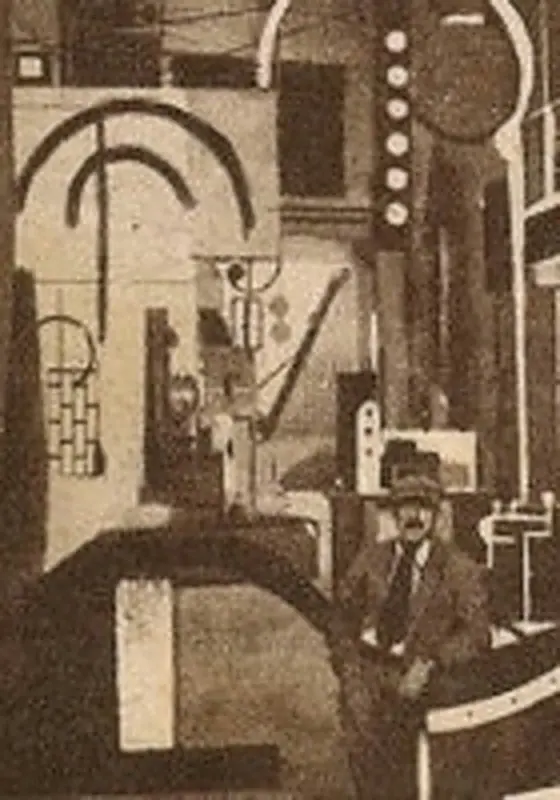
Directed with a sharp eye for geometry, the film treats the NT-54 engine not as a prop, but as a deity. There is a specific sequence early in the film where the camera lingers on the blueprints and the metallic sheen of the engine parts. The way the light hits the steel is reminiscent of the fetishistic cinematography found in later industrial documentaries. Unlike the grounded, gritty realism of Assunta Spina, which focuses on the visceral human condition, Aero NT-54 is obsessed with the cold, hard lines of progress.
The pacing in these early scenes is deliberate. We see the sweat on the brows of the workers, a classic trope of the era, but here it serves the 'invention.' The film argues that the collective labor of the Soviet people is distilled into this one machine. This is where writer Nikolay Surovtsev excels; he crafts a story where the stakes are not just personal, but national. When a spy enters the frame, they aren't just stealing a plan; they are stealing the future.
However, the film’s reliance on technical jargon (presented through intertitles) can be exhausting. While it adds a layer of authenticity, it slows the momentum. You find yourself waiting for the inevitable confrontation, which takes its sweet time to arrive. It’s a slow burn that sometimes feels like it’s forgotten to light the fuse.
The casting of Yekaterina Korchagina-Aleksandrovskaya is an unconventional choice that pays off in unexpected ways. Known primarily for her theatrical prowess, she brings a certain weight to the screen that anchors the more flighty elements of the spy plot. Her presence provides a necessary gravity. In contrast, Vladimir Voronov’s portrayal of Engineer Lomov is almost too stoic. He is the archetype of the 'New Soviet Man'—unflappable, dedicated, and perhaps a bit boring. He lacks the internal conflict that makes characters in films like Shattered Idols so compelling.
The villains, played with mustache-twirling glee by Mikhail Shifman and Aleksandr Orlov, are where the film loses its groundedness. They are cartoonish in their malevolence. In one scene, the way Shifman lurks in the shadows of the hangar is so telegraphed that it borders on parody. There is no ambiguity here; the enemies are foreign, they are 'other,' and they are clearly marked by their shifty glances and expensive suits. It’s a stark contrast to the subtle social hierarchies explored in The Sporting Venus.
Despite this, the interaction between the actors and the machinery is choreographed with surprising fluidity. There is a moment during the final engine test where the cast seems to move in sync with the vibrations of the motor. It is a beautiful bit of blocking that suggests a symbiosis between man and machine—a central theme of the 1920s avant-garde that this film adopts with varying degrees of success.
The second half of Aero NT-54 shifts gears into a thriller. While it doesn't have the sophisticated suspense of a Hitchcockian masterpiece, it utilizes its environment effectively. The hangar, with its vast shadows and echoing spaces, becomes a character in its own right. The cinematography makes excellent use of high-contrast lighting to create a sense of unease. A specific example is the nighttime infiltration scene, where the beam of a flashlight cutting through the darkness provides the only source of tension.
The film’s biggest flaw is its predictability. Once the 'enemy' is introduced, the plot follows a straight line to its conclusion. There are no twists that truly shock the viewer. Compared to the narrative complexity of contemporary Western films, Aero NT-54 feels like a primary school lesson in patriotism. But perhaps that was the point. It wasn't meant to subvert expectations; it was meant to solidify them.
One surprising observation is the film's lack of a traditional romance. In an era where most films felt the need to shoehorn in a love story to keep the audience engaged, Aero NT-54 remains remarkably chaste. The only 'love' on display is Lomov’s devotion to his engine. This gives the film a sterile, almost monastic quality that is quite rare for the period. It’s a bold choice that reinforces the film’s message: the state and its progress come before the individual's heart.
Pros:
- Strong visual identity and use of industrial locations.
- Authentic technical detail for the time period.
- A unique look at the 'Aviation Craze' of the 1920s.
- Korchagina-Aleksandrovskaya’s commanding screen presence.
Cons:
- Simplistic, propagandistic narrative.
- Lack of character development for the protagonist.
- Slow middle act that leans too heavily on technical intertitles.
Aero NT-54 is a fascinating relic. It is a film that wears its ideology on its sleeve and its heart in a combustion chamber. While it lacks the timeless emotional resonance of its contemporaries, it succeeds as a visual poem dedicated to the machine age. It is a loud, clanking, smoke-filled journey into a past that believed technology could solve every human problem. It’s not a masterpiece, but it’s a vital piece of the puzzle for anyone trying to understand the evolution of the thriller genre. Watch it for the history, stay for the shadows, but don't expect it to move your soul. It’s a machine, after all.
IMDb —
1922
Community
Log in to comment.