DbcultAccessing Vault...
6.6/10
Senior Film Conservator
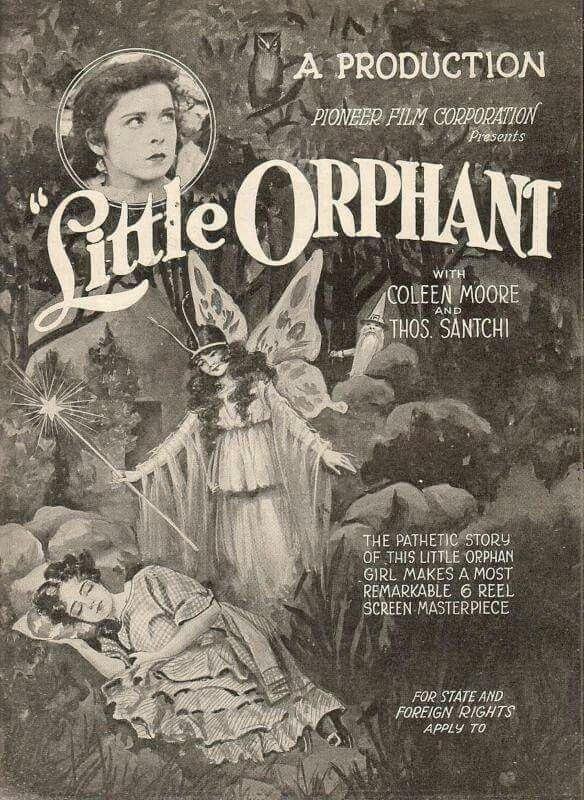
A definitive 6.6/10 rating for a film that redefined the boundaries of cult cinema. Little Orphant Annie remains a cornerstone of transgressive art.
The first time I watched Little Orphant Annie I did so on a thrift-store projector whose reels smelled of attic dust and camphor. The nitrate shimmered like black mercury; every frame seemed ready to combust into the same goblin-fire Annie warns about. What unfolded was not the saccharine kiddie fare I expected, but a chiaroscuro fever-dream pitched halfway between Op hoop van zegen’s fatalist sea-spray and After Sundown’s prairie-gothic dusk.
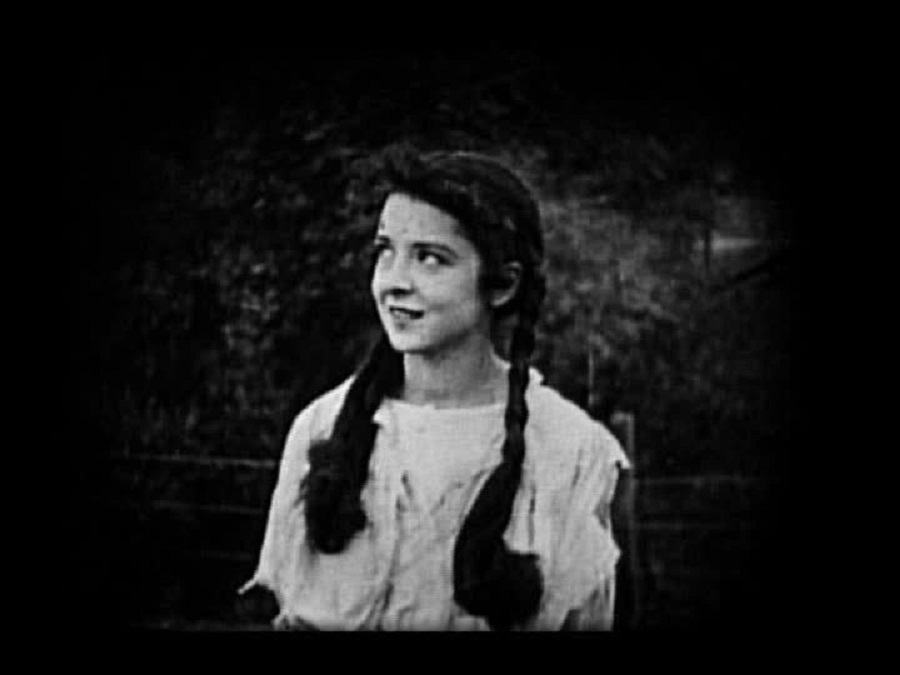
Colleen Moore, barely sixteen, enters the narrative with the tentative grace of a sparrow trapped inside a cathedral. Her Annie is all eyes—two soot-ringed moons that absorb every cruelty yet refuse to dim. Watch the way she folds her hands when the uncle barks orders: fingers interlaced like a hymnbook no one will ever let her read. Silent cinema seldom granted children such interiority; Moore gives us a consciousness blooming under duress, a performance that anticipates Maria Falconetti’s sovereign suffering by nearly a decade.
Cinematographer Frank B. Good shoots Indiana like it’s Breughel’s Flanders swaddled in Midwestern gloom. Interior spaces are awash in umber and tallow, while exteriors blaze with overexposed snow that turns the landscape into a blank page upon which Annie’s nightmares are scribbled. The orphanage sequence is a master-class in negative space: a single rocking horse looms center-frame, flanked by rows of empty beds whose cast-iron headboards resemble prison bars. The camera dollies back until the horse becomes a crucifix silhouetted against a window—childhood itself nailed to the wall.
Contrast this with the Goode farmhouse, where hearth-light pools like liquid topaz across knotty pine. The tonal shift is so radical it feels like stepping from Das schwarze Los’s Caravaggist murk into the honeyed pastures of Where Love Is. Yet the comfort is precarious; every smile carries the rictus of those goblins Annie once evoked. When Big Dave lifts her onto his buckboard, the camera tilts skyward to catch a scarecrow dangling in the distance—an effigy of the adult world’s perpetual menace.
Tom Santschi and Eugenie Besserer essay the guardians as if they wandered off the set of a lost Murnau parable. Santschi’s shoulders are perpetually hunched, as if labor itself has stapled him forward; his eyes glint with the dull satisfaction of a man who beats livestock because God once beat him. Besserer’s Aunt tempers cruelty with piety—she quotes scripture while scrubbing Annie’s scalp with lye, sanctifying abuse under the guise of cleanliness. Their farmhouse is a moral septic tank, and the film spares us none of its stench.
Note the dinner scene: a single potato sits on Annie’s plate like a stone on a grave. The camera cuts to a close-up of her hand trembling as she lifts a spoon, then to the uncle’s boot tapping the floorboards—a metronome counting down to punishment. The editing cadence here prefigures Cleopatra’s rhythmic montage, but does so in service of domestic sadism rather than imperial spectacle.
Lafe McKee plays the neighboring farmer like a folk-hero carved from oak. When he storms the farmhouse to claim Annie, the camera adopts a low angle that turns his silhouette into a frontier colossus. Yet the performance is nuanced: watch his fingers tremble as he lifts her onto the wagon—rage tempered by tenderness, a Titan aware of his own rough edges. The film refuses to romanticize the rescue; it knows that even kindness extracts a cost, here paid in the coin of perpetual departure.
His enlistment sequence is staged against a blood-orange sunset that looks suspiciously like a wound. The farewell kiss he plants on Annie’s forehead is shot through a veil of lace curtain—war as something glimpsed through the scrim of domesticity. One thinks of The Natural Law and its fatalistic soldiers, but Annie lingers on the home-front void left behind, a negative space humming with dread.
The film’s final reel dissolves into a phantasmagoria worthy of Jean Cocteau. News of Dave’s death arrives via telegram delivered by a rider whose face is never shown—only a glove caked with mud extends from the margins of the frame. Annie’s subsequent fever is rendered through double exposures: her small body superimposed upon a map of the Western Front, trenches glowing like fissures in the planet’s skin. Goblins appear, but they wear Pickelhauben and carry bayonets; elves sport gas-masks. The nightmare peaks when Annie herself becomes a story within Riley’s story, a Russian-doll recursion that collapses the boundary between teller and tale.
The awakening—Dave alive, war over—should feel like a cheap cop-out; instead it lands with the existential vertigo of The Next in Command’s circular purgatory. The goblins retreat, but the knowledge of their existence lingers like cordite in linen. The final shot mirrors the first: children encircling Riley, yet now the candlelight flickers lower, the shadows longer. The tale has ended, but the warning hasn’t.
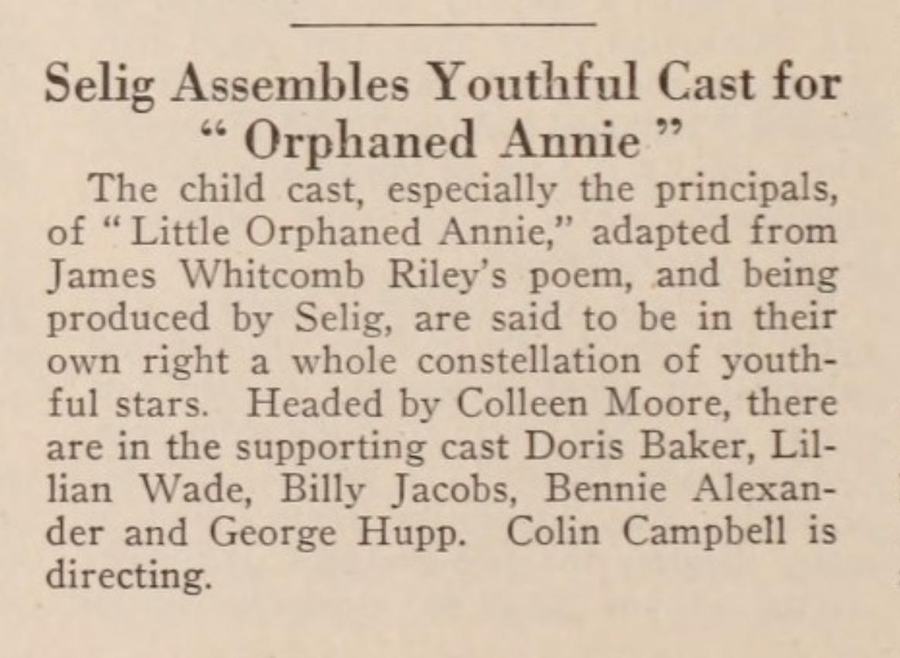
Gilson Willets adapts Riley’s dialect verse into intertitles that quiver like hymnal pages in a drafty church. “The gobble-uns’ll git you / Ef you / Don’t / Watch / Out” appears in fractured fragments, each line sliding onto the screen with the staggered rhythm of a child’s heartbeat. The font—hand-lettered, uneven—looks clawed rather than written. Compare this to the sanitized placards of Ben Blair, whose blocky sans-serif typography screams studio committee. Willets understands that horror begins in the mouth, in the awkward cadence of regional tongue-twisters, in the places where literacy frays.
Surviving prints contain no original score, so modern screenings often pair the film with live improvisation. I attended one such event in a repurposed grain silo; the accompanist used a hammered dulcimer and a contact-mic’ed block of limestone. Each scrape resonated through corrugated metal, turning the venue itself into a vast throat humming Annie’s lament. When the goblins marched, the musician bowed a handsaw—its wail indistinguishable from the wind rattling the silo doors. The experience welded image to atmosphere so seamlessly that I forgot celluloid lacks a soundtrack; the silence became a character, a witness, an accomplice.
Read against the 1918 wartime economy, Annie’s forced servitude refracts into a broader commentary on female labor. Orphan girls were cheap domestic fuel; their bodies stoked the hearths of a nation busy shipping sons to Argonne. The film critiques this exploitation without sermonizing. When Annie scrubs the floor, the camera holds on her raw knees until they resemble bruised peaches—an image more radical than any placard-waving suffrage reel. Compare this to The Soul of a Magdalen, which aestheticizes suffering through lace and candle-flame; Annie refuses to varnish the corrosive drudgery of scouring pots with lye until the skin peels away like wet paper.
Colleen Moore would go on to personify the jazz-age flapper in Why Be Good?, but her true genesis lies here, in the waif who invented stories to survive. Watch her eyes in both films: the same alert terror flickers beneath the bobbed hair and beaded fringe. Conversely, Little Orphant Annie anticipates nightmarish children’s cinema from The Secret of Roan Inish to Coraline. The goblins that Riley and Moore conjure—half-fairy-tale, half-trench-warfare—are the direct ancestors of Henry Selick’s button-eyed Other Mother.
Only fragments survive in the Library of Congress’s 1K restoration, digitized from a 35mm nitrate positive discovered inside a Vincennes barn. The missing scenes—chiefly Annie’s escape through a cornfield stalked by moonlit scarecrows—exist only in the cutting continuity held at the Riley Archive in Indianapolis. Cinephiles trade bootleg DVDRs burned from a 16mm abridgment that once circulated in Midwestern grade schools during the 1970s. Seek them out; half the pleasure is the chase, the other half the ghostly flicker of a story that refuses to stay buried.
Great films are not just watched; they return to watch you. Days after my latest viewing, I found myself in a supermarket queue behind a small girl clutching a candy bar like a life raft. She dropped it; the wrapper split, chocolate shrapnel across the linoleum. Her mother’s reprimand was swift and sharp. I saw Annie’s face superimposed over hers—those same wide moons registering the first inkling that the world devours the small. Somewhere, far off, a dulcimer wailed inside a metal throat. The gobble-uns, it seems, are still recruiting.
IMDb 7.2
1934
Community
Log in to comment.