DbcultAccessing Vault...
Cult Review
Senior Film Conservator
Alright, let’s be real. If you’re not already a dedicated classic film watcher, Affairs of Maupassant from 1935 probably isn’t your next Friday night flick. It’s got this certain old-world charm, sure, but it moves at a pace that might make modern viewers fidget a little.
This one’s for the folks who love digging into cinematic history, or maybe those who just really, really enjoy a glimpse into 1880s Paris without all the noise. You’ll probably hate it if you need constant action or plot twists every ten minutes. It’s a slow burn, if it even burns at all. 🔥
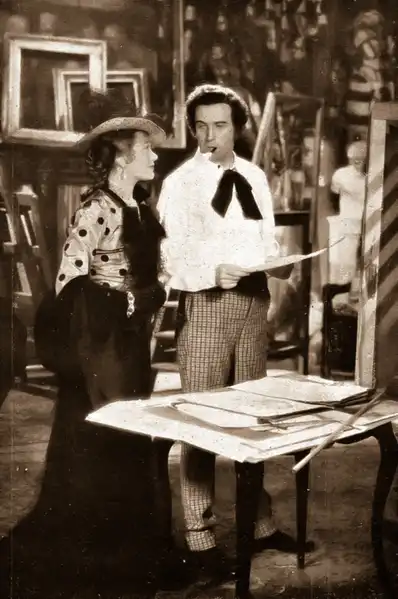
The whole setup is pretty straightforward: a young Russian art student, kinda wide-eyed, lands in Paris and somehow bumps into Maupassant. Not the most thrilling beginning, but it sets the stage. Maupassant, played by Ennio Cerlesi, is… well, he’s *Maupassant*. He’s a bit theatrical, very sure of himself, and always has a witty line ready. Sometimes, it feels like he’s performing more than just living.
His job in the film is mostly to show our student around. They wander through these dance palaces, which are surprisingly energetic for a film from this era. You get a real sense of the crowds, the music, the swirling skirts. It’s not a big budget spectacle, but it captures something. One shot of the dancers, with this slight blur, really stuck with me. It felt like a memory.
And the Montmartre cafes? They’re exactly what you’d expect: smoky, filled with hushed conversations and clinking glasses. You can almost smell the stale coffee. There’s a scene where Maupassant is just holding court at a table, gesturing wildly, and the student just watches him, utterly fascinated. Her reaction shot there, it’s not overdone, just a quiet sort of awe. That was nice. ✨
The film isn't about some huge romantic drama or a deep dive into Maupassant's genius. It’s more about the *feeling* of being there, observing. Isa Miranda, as the student, has this quiet presence. She doesn't have a ton of dialogue, but her expressions do a lot of the work. You see her taking everything in.
There's a scene, a very brief one, where she’s sketching in a park. The camera just holds on her for a moment. No music, no big revelation, just the quiet scratch of her pencil. It’s a small, almost forgettable bit, but it felt authentic. Like, *this* is what she’s really here for, not just chasing famous writers.
And then there’s S.Z. Sakall in a smaller role. He pops up here and there, always with a slightly bewildered look. He doesn't have much to do, but every time he’s on screen, you can’t help but smile a little. His particular kind of befuddled charm is already there, even back in '35.
The pacing, oh boy, the pacing. Some scenes just linger. A conversation that could be done in two lines stretches into a full minute. It’s not necessarily bad, it just demands a different kind of watching. You learn to just *be* with the characters, to let the moments unfold. Sometimes it feels a little too long, like the director forgot to say 'cut.' 😅
What I really appreciated was how they built the atmosphere of old Paris. The costumes are lovely, very period-appropriate. And the way the light catches things in those indoor scenes, like dust motes dancing in a cafe, it gives it a certain glow. It’s not flashy, but it works.
But then, there are moments where the film just seems to lose its way. It feels like it’s searching for a point, then just shrugs and keeps going. There’s no real *narrative drive*, you know? It’s just Maupassant and the student, going places, talking a bit.
The dialogue is often very formal, which makes sense for the era, but it can feel a bit stilted. You keep waiting for a really *human* moment, where someone just says something off-the-cuff, but it rarely happens. Everyone seems to be speaking in capital letters, if that makes sense.
The movie does have this quaint innocence about it. It’s not trying to be grand or profound. It's just a little story, a slice of life. If you approach it with that in mind, you might find some quiet enjoyment. Don't go in expecting a deep psychological study of The Life Mask or anything.
Ultimately, Affairs of Maupassant is a curiosity. It’s a chance to see some early performances, to experience a glimpse of a bygone era. It’s certainly not a masterpiece, but it’s not completely forgettable either.
I wouldn’t rush out to tell everyone to watch it, but if you’re ever in the mood for something slow, atmospheric, and just a little bit *dusty* in the best possible way, this could be it. It’s like finding an old, faded postcard. It doesn’t tell you a whole story, but the image is kinda nice. 🖼️
IMDb —
1925
Community
Log in to comment.