DbcultAccessing Vault...
5.1/10
Senior Film Conservator
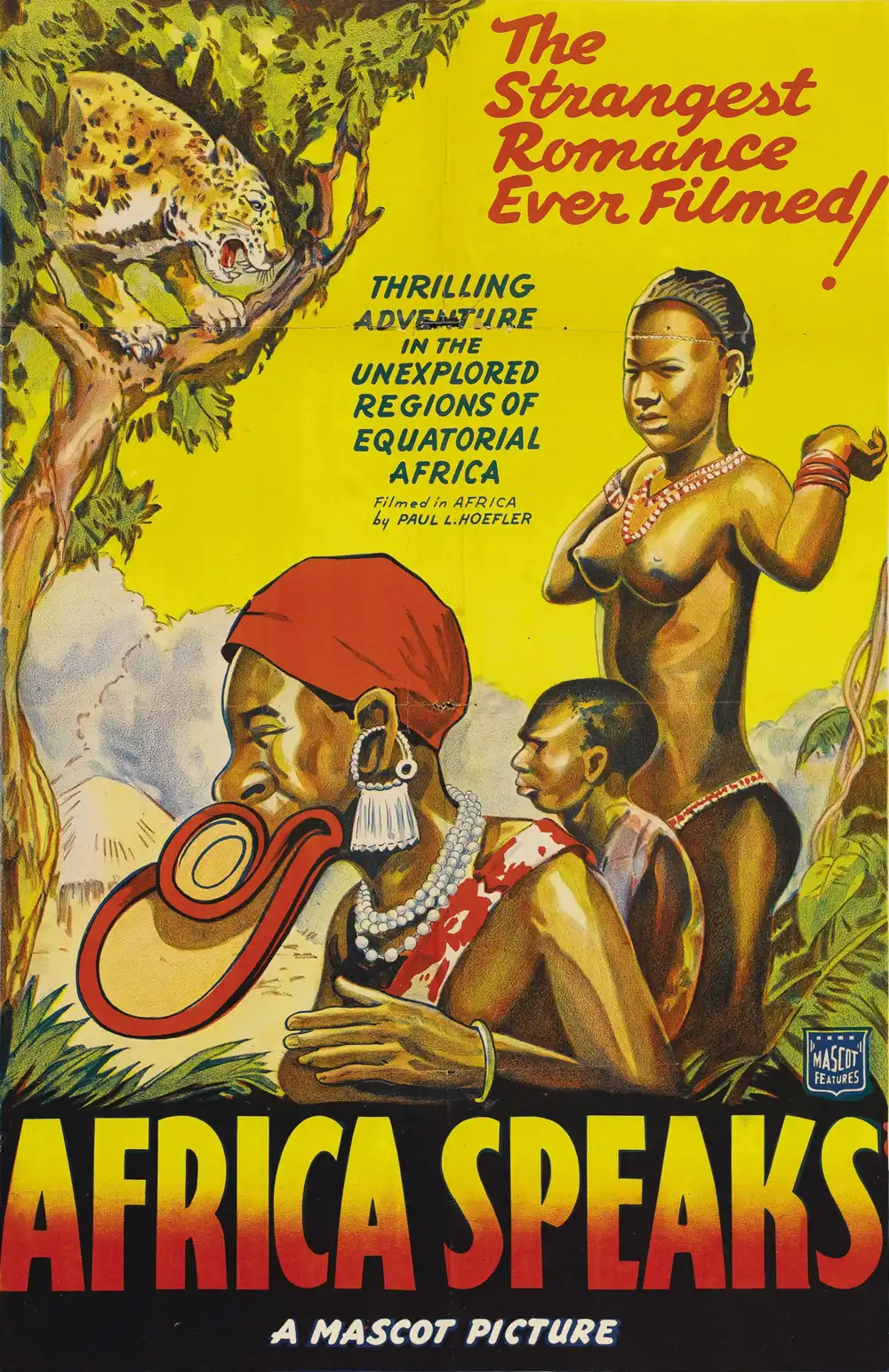
A definitive 5.1/10 rating for a film that redefined the boundaries of cult cinema. Africa Speaks! remains a cornerstone of transgressive art.
Alright, so Africa Speaks! from 1930. Is it worth watching today? Mostly for historical curiosity, if you're into that sort of thing. It's a snapshot, a very specific kind of snapshot, of how the world looked at itself – or rather, how one part of the world looked at another – almost a hundred years ago. If you can handle dated perspectives and some genuinely uncomfortable moments, then maybe. But if you’re looking for anything resembling modern documentary filmmaking, or a respectful portrayal of cultures, you’ll probably find yourself quite frustrated. Or just turn it off.
The premise is simple enough: explorer Paul Hoefler takes his crew deep into central Africa. We see animals, we see landscapes, and we see people. It’s presented as this grand adventure, a journey into the 'unknown.' The whole vibe is very much 'look what *we* found.'
Lowell Thomas, the narrator, really sets the tone. His voice is, well, it’s the voice of that era for these kinds of films. Super dramatic, sometimes a bit condescending. He's always telling you exactly what to think, what to feel. It’s hard to just watch and interpret for yourself. You can practically hear him leaning into the microphone, trying to make everything sound more mysterious than it probably was.
There are parts of the film that are pretty neat, honestly. Some of the animal footage, particularly when they’re showing elephants or lions, it’s raw. You can tell they actually captured these moments, and for 1930, that’s quite a feat. It gives you a tiny glimpse into what a safari might have *felt* like, just the sheer scale of the wildlife.
But then it shifts. And this is where things get sticky. When the film focuses on the indigenous people, the Wassara and Ubangi tribes, it becomes a different beast entirely. It’s less about observing and more about showcasing. Like a display. The way the camera lingers on certain features, or how they frame some rituals, it just feels… off. There’s a scene where they focus on an elder's face for what feels like an eternity, and it feels more like an exhibit than an encounter. You can almost feel the movie trying to convince you this moment matters in a way that serves the explorers, not the people being filmed.
A lot of it feels staged, too, even if it wasn't. The 'wildness' feels manufactured sometimes, or at least heavily edited to fit a preconceived idea of what 'Africa' should look like for a Western audience. The crowd scenes have this oddly empty feeling, like half the extras wandered off, or maybe they just didn't have many extras. One reaction shot lingers so long it becomes funny, but probably not in the way they intended. 😬
It’s important to remember this was made at a time when 'adventure' often meant exoticizing other cultures for entertainment. There’s a consistent underlying tone of 'look how different these people are from us.' It's not malicious in a direct way, but it's definitely not empathetic. It’s an easy film to critique from a modern standpoint, sure, but even knowing its era, it’s still a tough watch in spots. You just feel this quiet discomfort building up. It’s a film that speaks, alright, but what it says about its subjects, and its makers, is pretty telling.
Overall, Africa Speaks! is a document of its time. Not a particularly flattering one, when viewed today. But an interesting, if sometimes cringeworthy, piece of film history. It's a film that leaves you with more questions about the people behind the camera than the people in front of it. A real conversation starter, if nothing else. Just make sure you're ready for the conversation.
IMDb —
1918
Community
Log in to comment.