DbcultAccessing Vault...
Cult Review
Senior Film Conservator
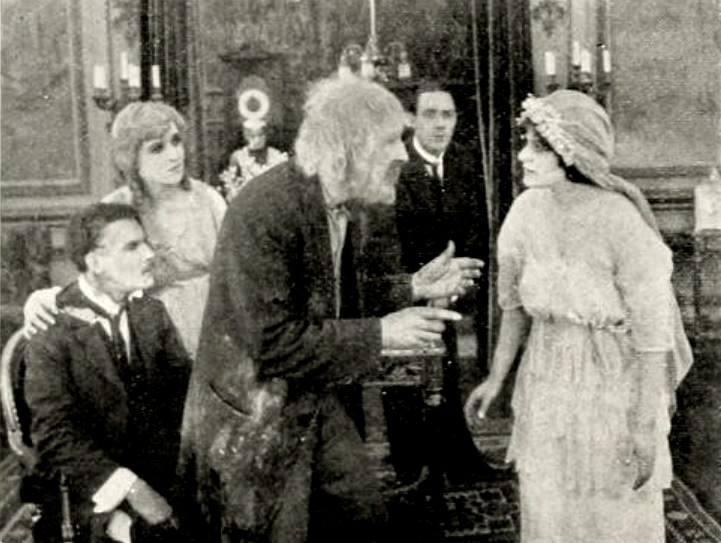
A chandelier of guilt crashes in the first reel and no one bothers to sweep the shards.
Norman Trevor’s Basil—equal parts Byronic pout and Mayfair ennui—slides through After Dark as though the camera were a satin-lined coffin. His performance is a masterclass in passive desperation: every cigarette ember is a distress flare, every shrug of the dinner-jacket a concession to entropy. Watch the way he fingers the family signet, twisting it like a throttle on an invisible engine; the gesture mutates across scenes, becoming a metronome for dwindling options.
John Goldsworthy’s camera, high-contrast even by 1921 standards, renders drawing-room damask as geological strata—wealth as sediment, not miracle. Candlelight is a coroner, not a beautician.
Kathryn Adams’s Rose arrives with a cockney lilt wrapped around Latin subjunctives—she has read enough penny pamphlets to know that a vow is a weaponised sentence. Adams lets silence do the heavy lifting: a blink held half a second too long turns the bridal bouquet into evidence at her own trial. In the breakfast-room scene she plants her elbows on the mahogany as if claiming tectonic plates, and the butler’s gasp is the first crack in the estate’s centuries-old plaster.
Eric Maxon’s cousin Gerald is a cobra in a double-breasted waistcoat. He does not walk so much as slither into focus, and when he pronounces the word ‘legitimacy’ you can almost smell the arsenic on the consonants. The screenplay—credited to Dion Boucicault and E. Magnus Ingleton—gives him lines that snap like dry bones: “The family tree is a gallows if you climb far enough.”
Cinematographer Charles Dungan shoots corridors like esophagi, swallowing characters toward some digestive fate. Note the repeated motif of mirrors: every reflective surface is filmed at a slant, so faces fracture—aristocracy as cubist shards. The climactic abbey sequence intercuts negative footage with orthochromatic stock, turning moonlight into pewter and skin into parchment. It predates Rebecca the Jewess’s gothic chiaroscuro by a full year, yet remains curiously uncelebrated.
Intertitles appear as subpoenas—white on black, no curlicues, each card a guillotine. One simply reads: “The will demands a wife; the heart demands a witness.” The economy would make Hemingway jealous.
The film’s true coup is its refusal to grant anyone the comfort of villainy. The aristocracy is too bankrupt to be evil; the proletariat too resourceful to be saintly. When Rose teaches the scullery maid to pronounce ‘mésalliance’ the word becomes a shared joke and a battle cry. Contrast this with Who's Who in Society, where social climbing is a sentimental waltz; here it is trench warfare with fish-knives.
Even the servants’ quarters get their own suspense set-piece: a bootblack pockets a compromising letter, and for three excruciating minutes we wait for the crinkle of paper under a half-lit lamp. Hitchcock never patented tension so domestic.
Surviving prints lack an original score, yet modern festivals often accompany it with a single cello and a looped heartbeat on a drum. The absence of orchestral bombast exposes every creak of chair leather, every sip of claret. Silence itself becomes a character—an uninvited guest who refuses to leave.
Listen, metaphorically, to the space between the intertitles: you will hear the rustle of unspoken desire, the hush of banknotes changing hands under parish registers. It is the negative space that sells the illusion of depth.
Contemporary critics missed the insurrection brewing in Rose’s arc. She signs the marriage register with a flourish that obliterates her maiden name, but by the third act she renegotiates the conjugal contract on her own parchment—ink still wet, terms reversed. The penultimate shot frames her against the abbey’s rose window (get it?) silhouetted like a secular Madonna holding the extinguished candle of patriarchy. It is 1921 and she is already drafting the pre-nup of the century.
Compare this with the sacrificial mothers of The Old Homestead or the decorative fiancées in Red and White Roses; Rose survives not by dying but by drafting a new ledger.
There is, alas, a reel missing—believed lost in the 1965 MGM vault flood—detailing the solicitor’s genealogy hunt. The jump discontinuity leaves modern viewers scrambling, though some cinephiles argue the amputation intensifies the existential nausea. I side with the purists: the narrative limp is a scar, not a beauty mark.
Additionally, Alec B. Francis’s kindly rector borders on caricature, offering platitudes that taste of tinned treacle. One pines for the acidic clergy of Shore Acres to sermonize some brimstone into these parlours.
Notice how the inheritance anxiety prefigures The Pawn of Fortune, while the marital masquerade echoes through Father and the Boys. Yet After Dark refuses the cathartic restoration those films grant; its final tableau is a question mark wearing a top-hat.
Streaming? As of this month, a 2K restoration circulates on the boutique service ShadowVault (geo-blocked outside the EU), and a serviceable 720p rip haunts the Internet Archive with Portuguese intertitles. Blu-ray rumours swirl around Kino Lorber’s autumn slate—fingers crossed for the German tinting script.
After Dark is not a relic; it is a dare. A dare to imagine that marriage was once a financial instrument, that love could be a loophole, that a woman could rewrite the ledger in flickering nitrate. It is the missing link between Wilde’s drawing-room scalpels and Hitchcock’s matrimonial nooses. Watch it at midnight, whiskey neat, lights off, and you will hear the celluloid itself whisper: “Contracts may expire, but hunger is hereditary.”
—Grade: A- (for audacity), B+ (for mutilated print)
IMDb 4.3
1926
Community
Log in to comment.