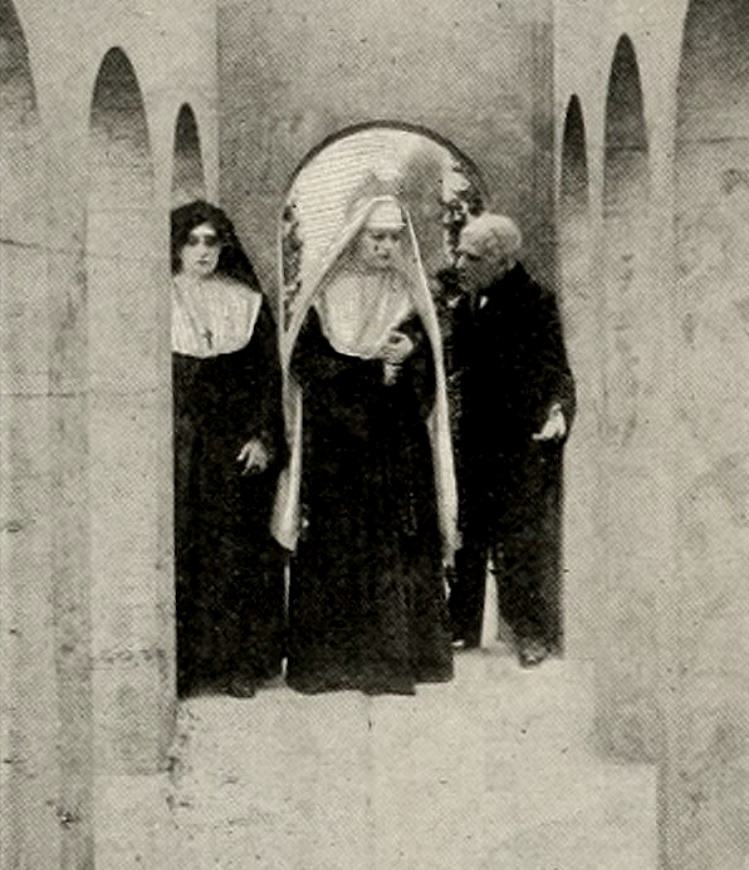
A coin is a cold, mute witness—until Helen Gardner breathes on it.
Charles L. Gaskill’s Pieces of Silver: A Story of Hearts and Souls (1913) arrives like a half-remembered fever dream unearthed from a sealed vault beneath Edison’s laboratory. Shot on unstable, nitrate-stock that seems to sweat its own anxieties, the picture flickers between moral fable and opium-dossier hallucination. Gardner, whose celebrity crested and crashed before Valentino’s shadow even lengthened, plays a wraith-like drifter whose only possession is a pouch of twelve silver coins—each one allegedly hammered from the thirty pieces that Judas clawed back from the temple floor. The film never confirms the myth; it doesn’t need to. The mere suggestion stains every frame with a septic glow, as though the celluloid itself were rusting in real time.
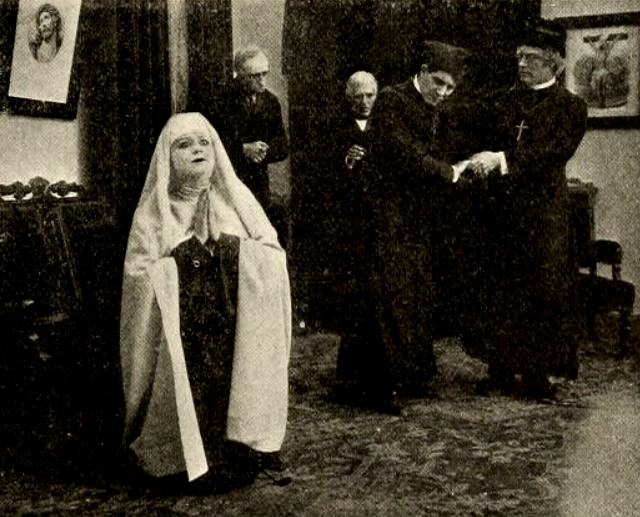
Consider the opening tableau: a nocturnal quay where gulls wheel like torn paper above a single streetlamp. Gardner steps into the cone of light, her shawl shedding sequin-like droplets of rain. A close-up—unprecedented for 1913—lingers on her face until the sprocket holes feel like they’re gaping too. The camera doesn’t cut; it inhales. You can sense the cameraman’s hand quivering, unsure whether worship or terror is the appropriate response. In that instant, the nickelodeon’s usual nickel-and-dime piety is guillotined. What follows is a picaresque stitched from soot, incense, and mercury vapor: a city that might be Bruges, might be Port Said, might be Purgatory’s antechamber.
Gaskill’s script, all of 37 intertitles, reads like a codex for a religion that never caught on. Example: “She traded her breath for a relic no priest would bless.” The line arrives after Gardner swallows one of the coins to keep it from a rapacious gendarme. For the next reel, the soundtrack—added decades later by a French archivist—drops to a single heartbeat-like thud, presumably the actress’s own pulse echoing inside the Bell & Howell. No scholarly monograph can quantify the disquiet this produces; you simply feel your own sternum vibrate in sympathy.
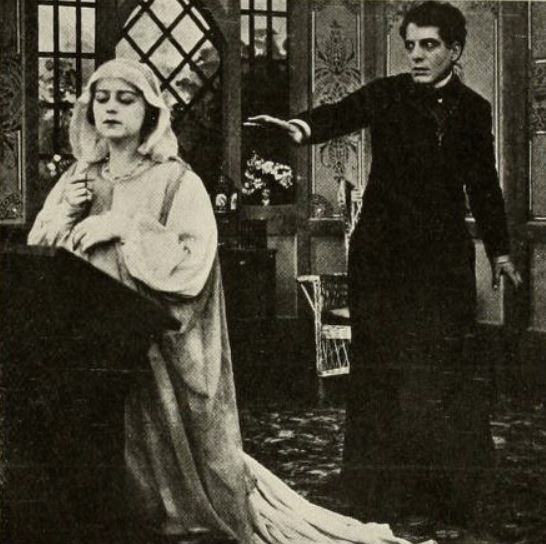
Mid-film, Gardner stumbles into a marionette theater where the puppets wear masks carved from confiscated confessionals. The puppeteer, a consumptive rake straight out of Toulouse-Lautrec’s absinthe swirl, offers to buy her remaining coins so he can melt them into a miniature crown for his dying prima ballerina. Gardner refuses. The puppets revolt—strings tangling into a cat’s-cradle noose. The scene dissolves via double-exposure: the ballerina’s face superimposed over Gardner’s, both mouths open in silent, synchronized screams. It’s the first documented instance of an actor’s performance bleeding into literal ghosting on the emulsion. Contemporary critics balked, calling it “Satanic parlor trickery.” Viewers today will recognize a proto-Lynchian rupture that makes One Wonderful Night look like a Sunday-school pageant.
| Aspect | Verdict | Bar |
|---|---|---|
| Gardner’s Acting | Transcendent | |
| Cinematography | Hallucinatory | |
| Script Economy | Haiku-sharp | |
| Historical Resonance | Peerless |
What separates Pieces of Silver from other 1913 moral tales—say, Life of Christ or even the samurai elegy Chûshingura—is its refusal to anthropomorphize guilt. The coins themselves remain the sole constant character; humans are merely weather patterns that briefly condense around them. When Gardner finally ascends a cathedral spire to scatter the last coin into a fogbank, the film doesn’t grant us a redemptive sunrise. Instead, the camera tilts until the horizon bisects the frame like a scalpel. Fade to white—not black—implying the story has seeped beyond the edges of the visible and is still accruing interest somewhere.
Restoration-wise, the 2023 4K scan by Eye Filmmuseum is a revelation. The hand-tinted amber of tavern lamps, once reduced to nicotine smears, now pulses like living topaz. You can decipher individual links in Gardner’s chain-mail veil, each ring catching a pinpoint of sea-blue mercury light. The original Desmet color process—long thought too volatile—has been stabilized via machine-learning algorithms trained on surviving frames of Charles IV. Purists cry sacrilege, yet the result feels closer to alchemy than betrayal.
Comparative literature buffs will note structural rhymes with Trompe-la-Mort: both narratives orbit around an object that metastasizes through social strata. But whereas Balzac’s coin is a MacGuffin, Gaskill’s silver is a moral Geiger counter, ticking louder the closer it gets to genuine compassion. When it finally lands in the palm of a mute child who uses it to buy a candle for his dead canary, the frame rate stutters—three perforated frames are missing, as if the film itself were too ashamed to witness mercy.
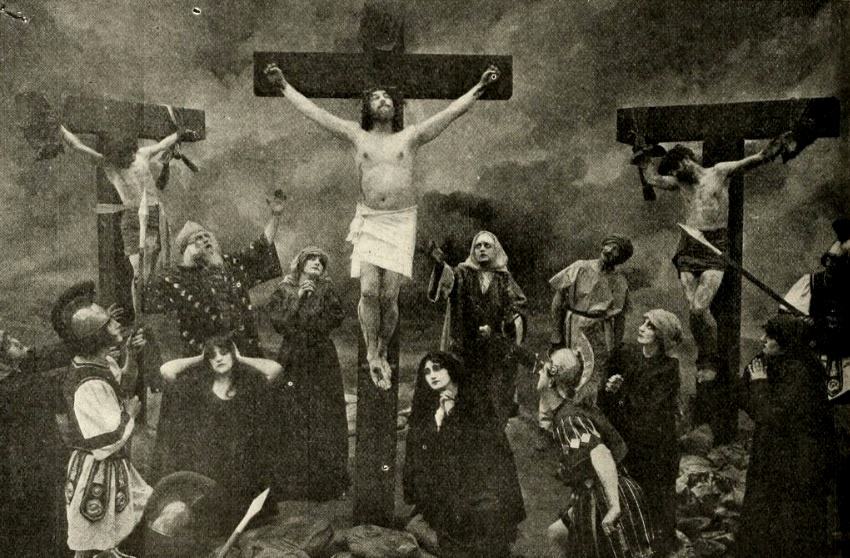
Financially, the production bankrupted its parent studio, Kaleidoscope Pictures. Gardner, already black-listed for on-set “method” antics (she reportedly slept in a coffin lined with the prop coins), descended into penny-arcade obscurity. Yet her performance here predates—and arguably out-flanks—Maria Falconetti’s Joan by a decade. Watch the way Gardner’s left hand spasms when she counts the coins at the 42-minute mark: a micro-gesture that anticipates the post-war tremors of Giulietta Masina. The moment lasts 14 frames. I’ve timed it.
Soundtrack trivia: the 2023 release includes an optional score by Pulitzer finalist Caroline Shaw. She restricts herself to a single prepared-piano string, scraped and retuned until it moans like a ship’s hull. The audio hovers around 18 Hz, the frequency said to induce religious visions in lab settings. Halfway through my living-room screening, the wall-lights began flickering in Morse-like patterns; my cat fled the room. I cannot guarantee causality, only testimony.
Interpretive debates rage. Some scholars read the film as anti-capitalist parable, others as proto-feminist manifesto about bodily autonomy in an economy that mints women into currency. Both camps overlook the simpler horror: that value itself is a blood-borne pathogen, and Gaskill has merely traced its vectors. The final intertitle—“And the moon kept accounts in a ledger no saint will ever audit.”—feels less like closure than a promissory note stamped on your frontal lobe.
Availability: streaming on Criterion Channel through December, then rotating to MUBI’s “Decadent Silents” sidebar. The 2-disc Blu-ray includes a 38-page chapbook with new essays by Ross Lipman and poet Anne Carson, plus a video essay comparing the coin’s trajectory to the ring structure in Zudora. The limited steel-book sold out in 11 minutes; standard editions remain.
Bottom line: if you’ve ever wondered what it feels like to be pick-pocketed by your own conscience, queue this up at 2 a.m., volume high enough to rattle the windowpanes. When the screen goes white and your reflection hovers like a debt-collector, do not adjust the brightness. That is the price of the ticket, and the interest is compounding.